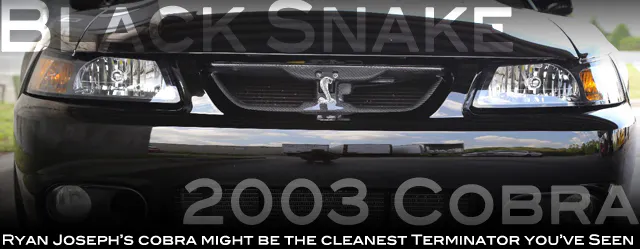
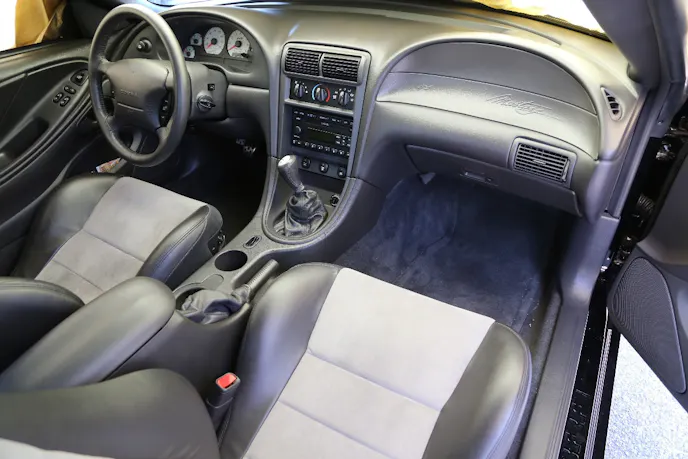
We’ve seen a lot of Terminators in our day, and in our opinion, the 2003-2004 Cobras were some of the most revered Mustangs ever built. Sitting in one for the first time, we couldn’t believe that Ford’s Special Vehicle Team had actually done it. SVT birthed a Mustang with a six-speed manual, a supercharger, and an independent rear suspension. These are features we take for granted today, but at the time they were groundbreaking.
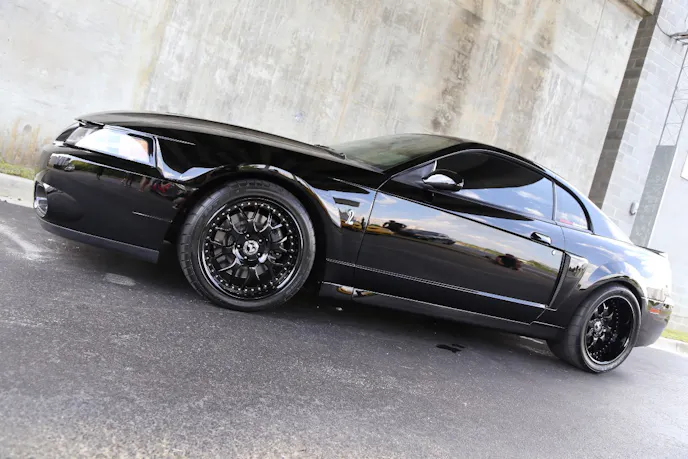
In the ensuing years the Terminator’s robust Four-Valve 4.6-liter engine was legendary for its bolt-on power gains and the durability to support power well beyond the 390 ponies it was born with. Today, these Cobras aren’t the king snakes, but they still command a lot of respect. However, because there is a definite recipe of mods that works for these cars, most modded Terminators are similarly configured, so it takes a lot for one to slither apart from the pit.
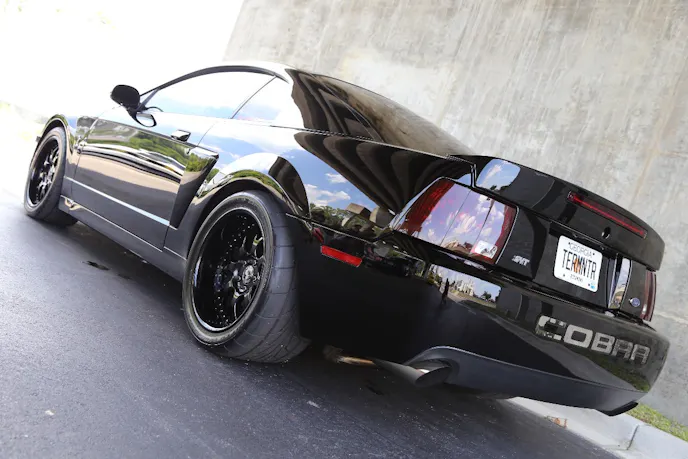
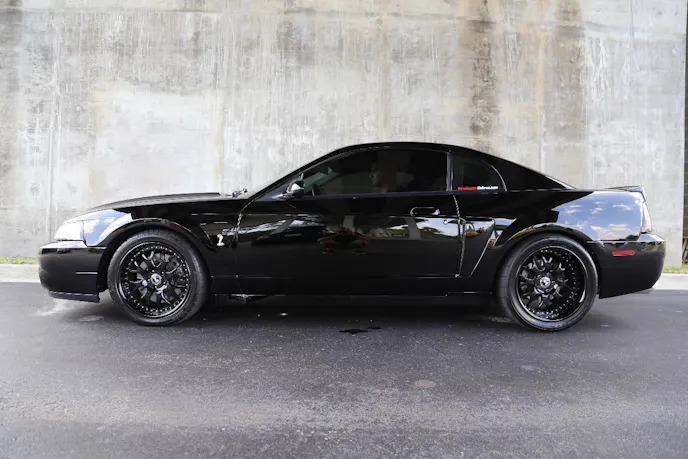
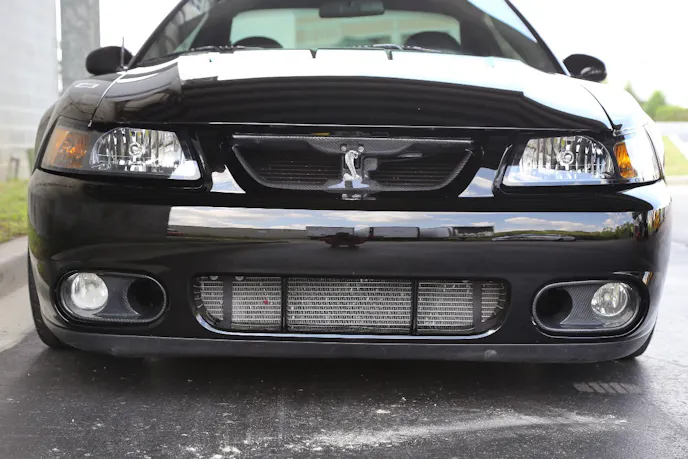
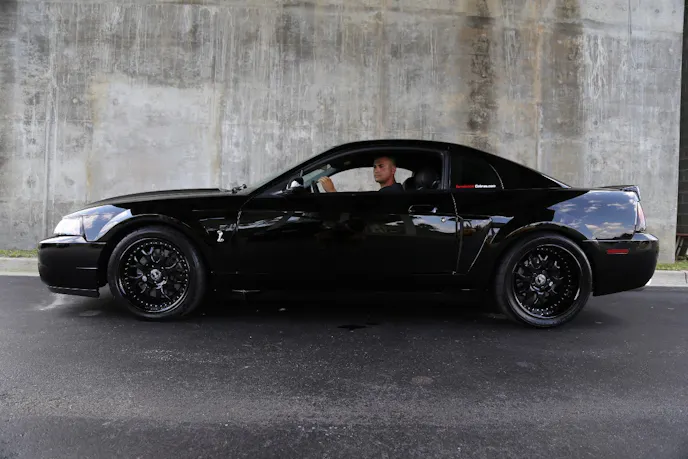
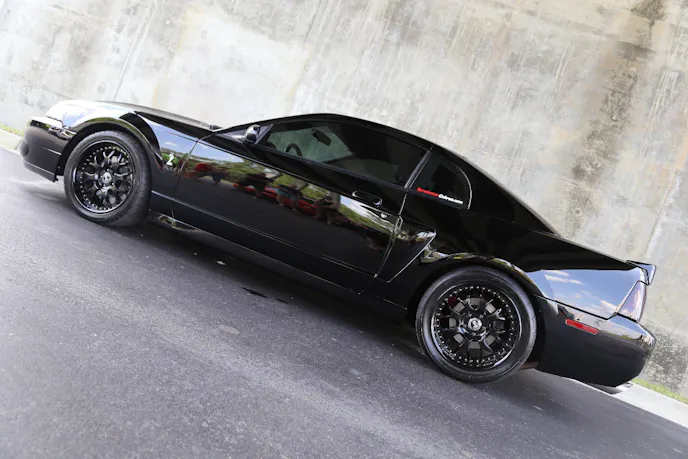
Ryan Joseph’s striking black 2003 Cobra did just that. While at Mustang Week 2016 your scribe stumbled onto a photo session several CoBros were having under an overpass. All the Terminators were beautiful, but there is something about a black car that is clean. Ryan’s was not only pristine and shiny, but its attention to detail really stood out.
![Under the hood Ryan went to an insane level of detail blacking out parts on the engine with powdercoating. He even blacked out the engine valley, so if you peek under that Whipple, you can see how serious he was. Under those black cam covers are Comp Stage 3 cams supported by Comp beehive springs with Comp steel retainers. The coolant and intercooler tanks are from True Forged and the cooling system is helped out by a custom 170-degree ‘Termi-stat’ from Joe Goffin.[/B]](https://speednik.imgix.net/2016/12/2016-12-03_21-38-32.jpg?w=688&auto=format,compress&fm=webp)
The Definitive Choice
I had to decide if I would spend more money to build it or look into a car that was already setup to accept massive power from the factory.—Ryan JosephAs the owner of such a beautiful car, you might assume that Ryan was a Terminator man from the jump, but he actually made his first move on a 2006 Mustang GT. After longing for a performance car, Ryan was finally able to afford one after years serving our country in the Army. After much longing, he finally had the means to buy the S197 new and he spent three years modding it to his liking, but eventually he was pushing the limits of the stock engine.
“I enjoyed the redesigned looks of the S197 platform but even after extensively modifying the car for increased performance, it left a lot to be desired as far as horsepower was concerned,” Ryan explained. “The stock GT short-block couldn’t handle the type of power I was looking for, so I had to decide if I would spend more money to build it or look into a car that was already setup to accept massive power from the factory. The Terminator seemed like the definitive choice.”
My journey with that platform ended one day when I lined up against a 2003 Cobra.—Ryan JosephWhile he was well versed in Three-Valve S197s, Ryan needed to bring himself up to speed on supercharged Four-Valve Cobras before making the jump to a new platform, he did a little bit of online research.
“My journey with that platform ended one day when I lined up against a 2003 Cobra. He walked me like I had a V6. After our race I spoke to him and asked him about the car. I had no idea the way that conversation would change the future of my performance car adventure,” Ryan explained. “Within a month the GT was for sale and I lived in the Terminator Talk section of SVTPerformance. The GT sold two months before my fourth deployment to Iraq and I picked up a bone stock 2004 Cobra convertible.”
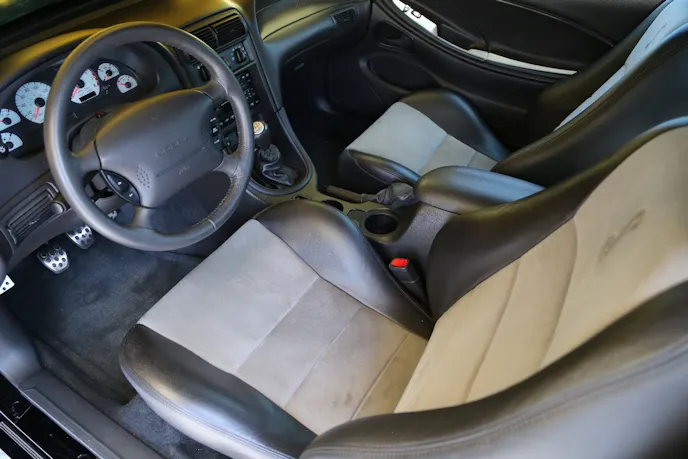
Building A Battle Plan
With plenty of time away from his car, Ryan was able to put in a lot of research to develop sound project build plan.
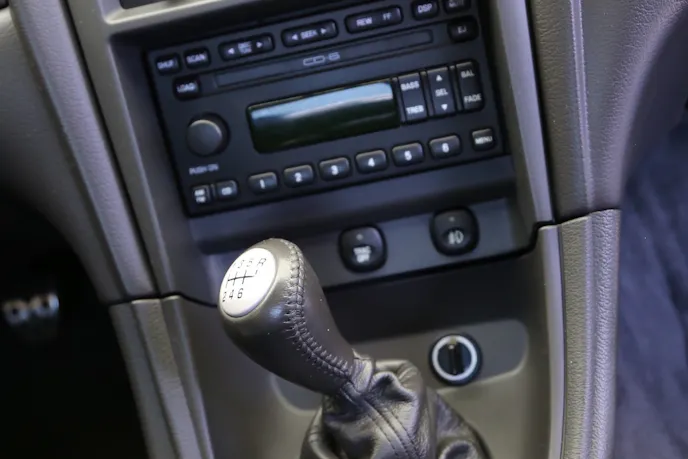
I knew what I wanted out of the car, but I knew I needed to educate myself on it first.—Ryan Joseph“At the time, I was extremely knowledgeable on the Three-Valve platform but had no clue when it came to the Four-Valve supercharged 4.6. Moving from a five-speed to a six-speed and from an SRA to an IRS was quite a change,” he added. “I knew what I wanted out of the car, but I knew I needed to educate myself on it first. I spent the better part of six months in the Terminator Talk section researching parts, mods, tech, and performance. Once I had decided on a certain part, I would jump over to the market and buy it from another member or grab a deal from a vendor.”
After following the expected path of escalating modifications on his droptop Terminator, Ryan felt something wasn’t quite right. He wanted a real roof over his head, so he sold the convertible and went on the hunt for a Cobra coupe. He found one that had been freshly repainted in stunningly shiny PPG black. He bought it and put it in the garage while he deployed for several months.
It’s A Keeper
2003 Cobra Mods
PowertrainBlock: Stock iron 4.6-liter
Crankshaft: Stock forged
Rods: Stock Manley forged
Pistons: Stock forged
Camshafts: Comp Stage 3 w/ Comp valvesprings, Comp beehive springs, and Comp steel retainers
Cylinder Heads: Stock Four-Valve
Intake: Stock intercooled lower
Power Adder: Gen II Whipple 3.4-liter supercharger w/ Accufab throttle body, Metco lower pulley and an Afco dual-pass heat exchanger
Fuel System: Two Division X 340-lph fuel pumps w/ Division X fuel lines, Fore fuel rails, Division X fuel-pressure regulator and Ford Performance Parts 80 lb/hr fuel injectors
Exhaust: MAC ceramic-coated long-tube headers w/ MAC ProChamber mid-pipe and a Magnaflow axle-back
Transmission: Stock Tremec T-56 six-speed manual w/Mcleod RXT twin disc, McLeod lightened steel flywheel, and an aluminum driveshaft
Rearend: Stock IRS 8.8-inch w/ Driveshaft Shop Level 2 halfshafts and 3.55 gears
Electronics
Engine Management: Stock w/ custom tune
Ignition: Stock w/ NGK TR-6 spark plugs
Front Suspension
K-member: Maximum Motorsports tubular
A-arms: Maximum Motorsports tubular
Struts: Bilstein w/ Maximum Motorsports caster/camber plates
Springs: Maximum Motorsports coilover
Brakes: Stock
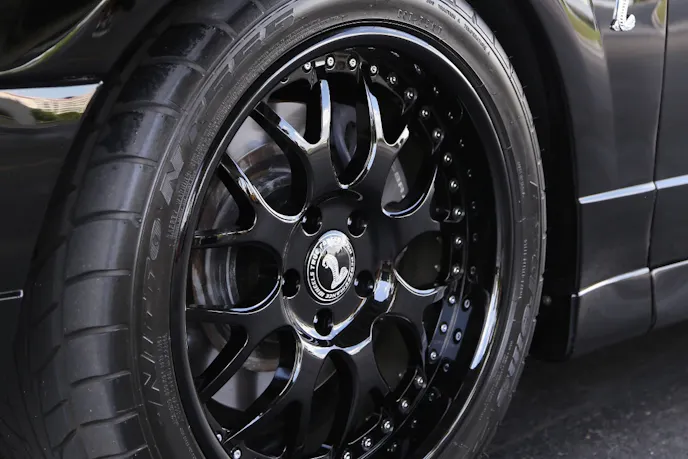
Wheels: True Forged Competition, 18×9-inch
Tires: Nitto NT-555, 275/35-18
Rear Suspension
Shocks: Bilstein
Springs: H&R Springs race
Brakes: Stock
Wheels: True Forged Competition, 18×11-inch
Tires: Nitto NT-555R, 335/30-18“Having this car while deployed was extremely helpful when it came to keeping me connected to home. I spent a lot of free time reading and researching about the car and was able to piece together my build,” Ryan added. “Being able to come back from a long day’s patrol in a dangerous place and know that there is something I can pour myself into, that can take my mind off the day-to-day stressors, was a huge help. I’ll never forget coming home after a year gone and firing her up again for the first time. They say money can’t buy you happiness, but I guarantee those people never owned a Terminator.”
The key pieces of his build included a 3.4-liter Whipple supercharger, Comp Cams, a McLeod Racing clutch, and a set of black True Forged wheels. He also removed all the external engine parts and had them powdercoated by Deke Hoffman. To dial in the combination on pump gas, Ryan turned to Randy Carter at Carter Tuning in Pooler, Georgia. All this came together in the four months leading up to Mustang Week, which makes it all the more impressive.
“Randy ensured all the parameters were set and we opened her up. The final numbers on a stock 2003 short-block on 22 psi at 15.5 degrees of timing were 703 horsepower and 735 lb-ft of torque,” Ryan enthused. “No one was more ecstatic than me, considering this was all achieved on 93 octane! The car is an absolute beast. Looking back I could have never imagined I would be where I am today but I couldn’t be happier. This one isn’t going anywhere.”
Terminators definitely elicit that sort of loyalty from their owners, but when a project turns out like this, we can understand never wanting to part with it.
You might also like
Street Class Burnout Contest To Rock Mustang Week Texas
Showcase your burnout skills on the skidpad at Mustang Week Texas 2026 during the Street Class Burnout Contest!