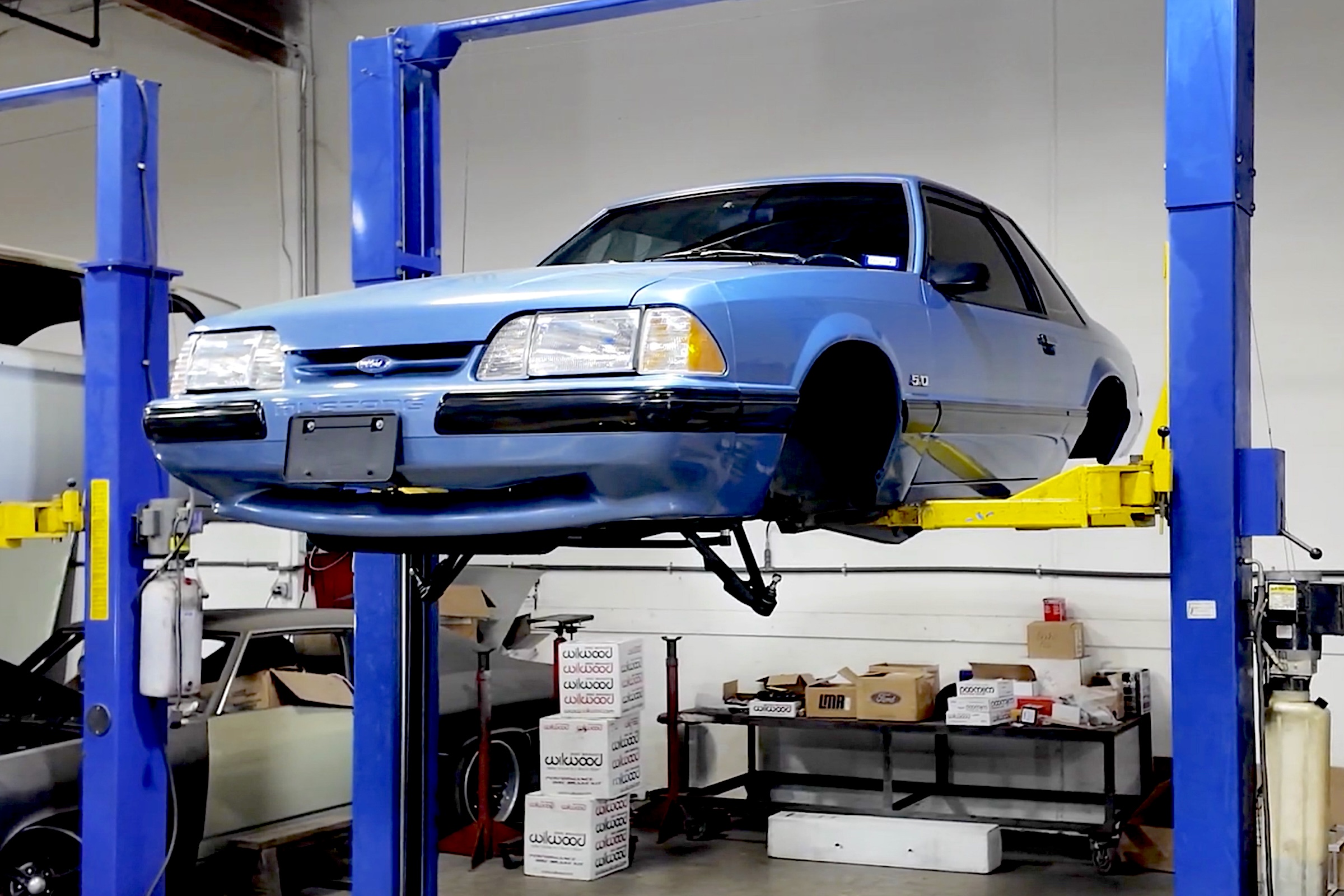
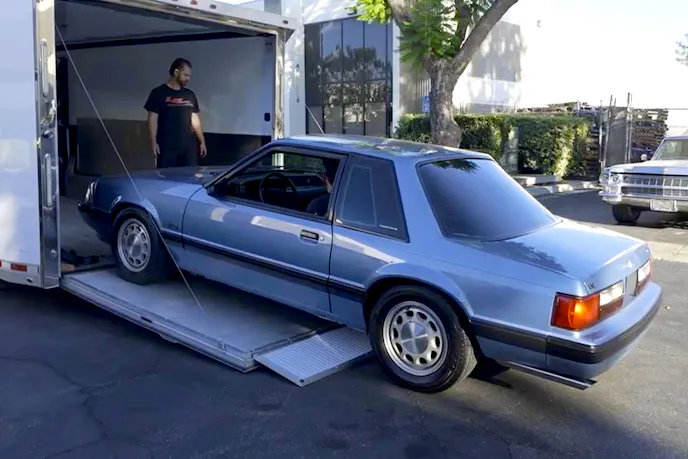
Regular readers know that the latest installment of the Horsepower Wars series will pit a humble Fox coupe against a European exotic that currently sells for $125,000. That will also be our budget to build a Fox to take them on at the track and on the street. Before it can do so, however, we need to heavily modify our 1990 Mustang LX to hang with the big boys. The first step in that process was a stop at LP Racing, where the crew tore it down to the bare shell and began building it back up again by fortifying the chassis and ensuring it is ready for its new powertrain.
That is where this project gets serious. Anyone can bolt horsepower onto a Fox Mustang, but making an old unibody chassis work with modern suspension, a turbocharged Coyote, and an eight-speed automatic is a different proposition. Our Fox v Ferrari Mustang needs to do more than make a big dyno number. It has to accelerate, stop, turn, and behave on the street well enough to go head-to-head with some genuinely sophisticated performance machines. So, before we get anywhere near the fun stuff, we needed to build a solid foundation.
Strip It Down
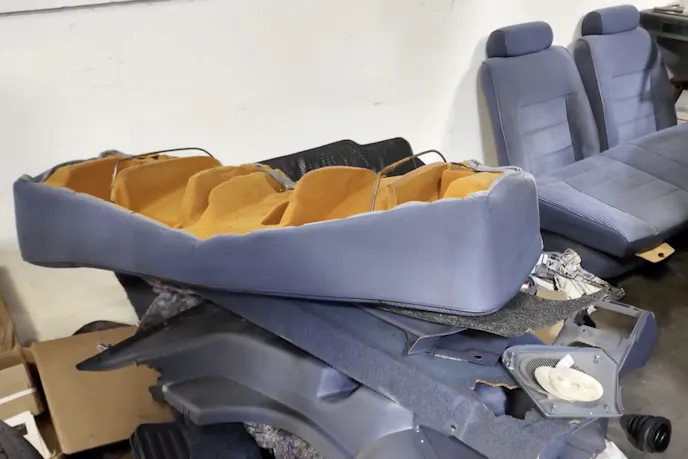
The transformation started with a familiar sight for anyone who has watched a serious project come together. Soon after arriving at LP Racing, our Mustang no longer resembled a car so much as a collection of parts. That too didn’t last long, as the team there made quick work of revamping our Fox.
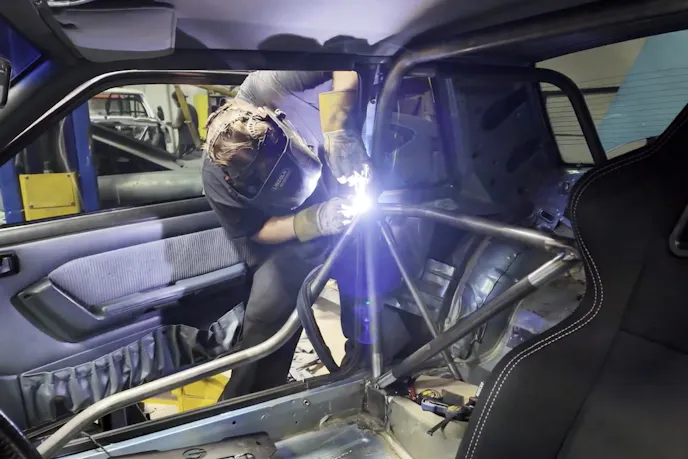
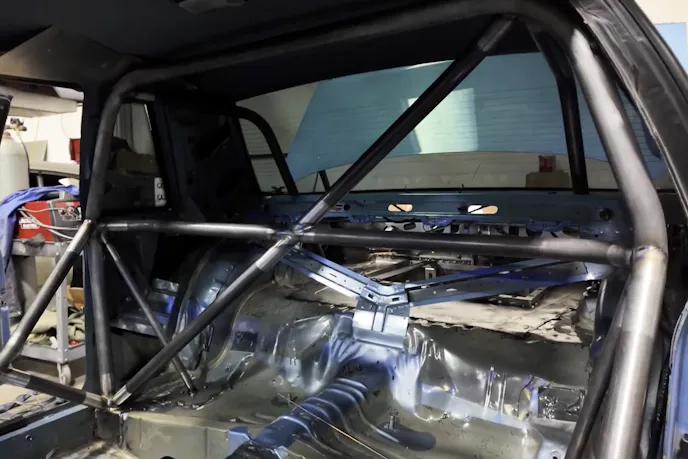
LP Racing stripped the 1990 LX down to its bare shell, exposing the floors and chassis so the team could attack the structural work properly. That meant adding through-the-floor subframe connectors, fabricating a custom roll cage, and preparing the chassis for the suspension and drivetrain that will follow.
The Fox platform has plenty going for it. It is light, compact, and blessed with decades of aftermarket development. But the factory chassis wasn’t designed around the loads we’re planning to put through it, especially once the 5.2-liter Predator and turbo system arrive.
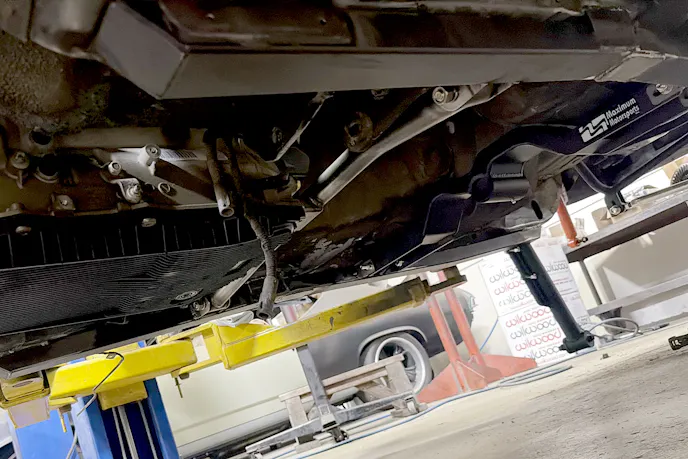
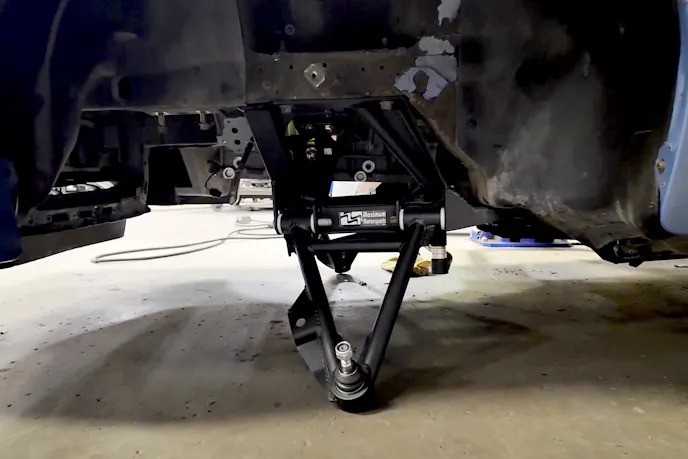
“First and foremost is to get the suspension taken care of. Maximum Motorsports supplied a whole package for this with the torque arm and the K-member, basically the Maximum Grip Box,” LP Racing’s Lang Paciulli said.
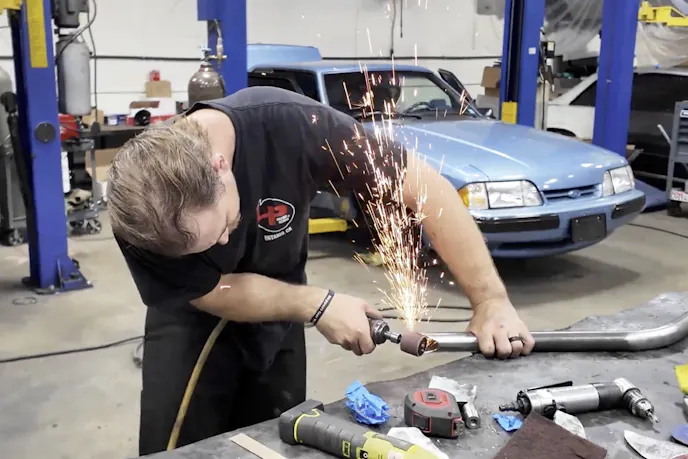
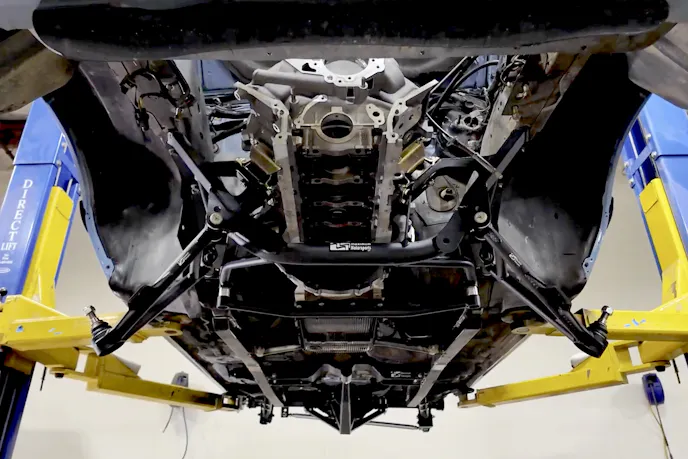
That Maximum Motorsports hardware starts up front with the tubular K-member (P/N: MMKM-2.1). Besides providing a stronger and more capable foundation for the front suspension, the tubular structure is part of the packaging solution for the modern Coyote engine.
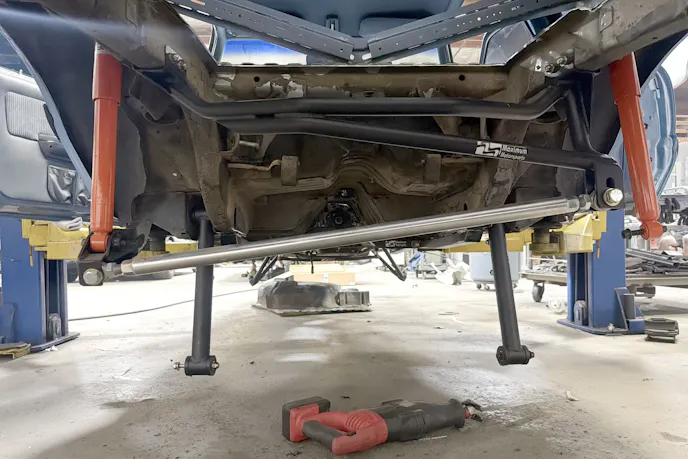
Out back, the suspension strategy moves away from the factory arrangement with a torque arm, Maximum Motorsports control arms, and a Panhard bar. The goal is to give the Fox predictable axle control and a much more modern foundation for handling.
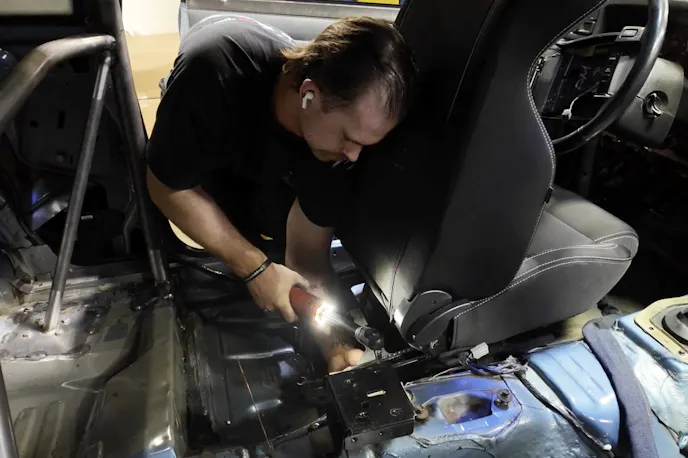
“Your front tubular K-member gets you great geometry, and then we’re doing a torque arm at the rear, subframe connectors, and a square tire setup all around,” Paciulli said.
The square tire setup is important to the bigger picture. This Mustang isn’t being configured around a giant rear tire and a narrow front tire. It needs to corner, and that means giving the front end enough tire to make use of the chassis and suspension upgrades.
Ties That Bind
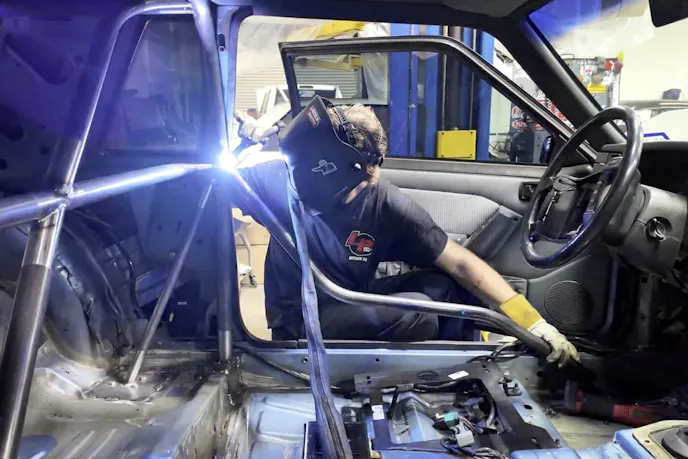
The through-the-floor subframe connectors are one of those modifications that won’t add power, but they may prove to be among the most important parts of the entire build. They reinforce the Fox’s unibody structure and provide a much stronger foundation for the suspension loads that will eventually be generated at all four corners. The roll cage further supports that mission while adding safety for the driver.
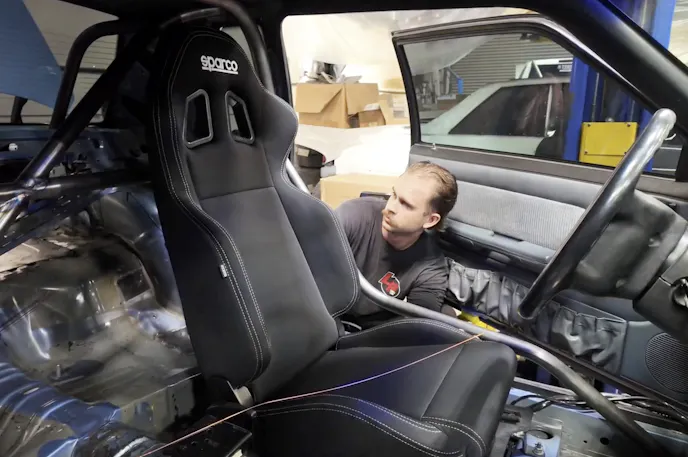
LP Racing fabricated a custom six-point-style roll cage, including the door bars, and test-fitted the structure with the Sparco seats in place. That allowed the team to establish the proper relationship between the cage, seats, and driver before everything was permanently welded.
“We’re putting subframe connectors in, and a six-point style roll bar to tie it all together. The goal is to stiffen the chassis, keep it streetable, and still allow a back seat,” Paciulli said.
That last part is particularly relevant to this build. The goal isn’t to turn the LX into a race car that happens to have license plates. The Horsepower Wars rules call for a streetable machine, and the car eventually has to complete a streetability and drivability evaluation along with the Speed-Stop Challenge, roll race, and lap-time competition.
The cage and subframe connectors therefore serve two masters. They make the Fox structurally sound enough for serious performance while keeping the overall package livable.
Make Some Room
With the chassis reinforced, LP Racing turned its attention to another system that needed a clean-sheet approach to the fuel system. A turbocharged Coyote is going to demand considerably more fuel than the original Fox Mustang system was designed to provide. Rather than simply hanging a larger fuel system underneath the car, the team cut into the trunk floor and fabricated the structure necessary to properly integrate a fuel cell and surge tank.
“This car is getting a Coyote with a turbo, so you need a much better fuel system. The stock system isn’t even close. We’re retrofitting a fuel cell and modifying the floor to sink it in safely,” Paciulli said.
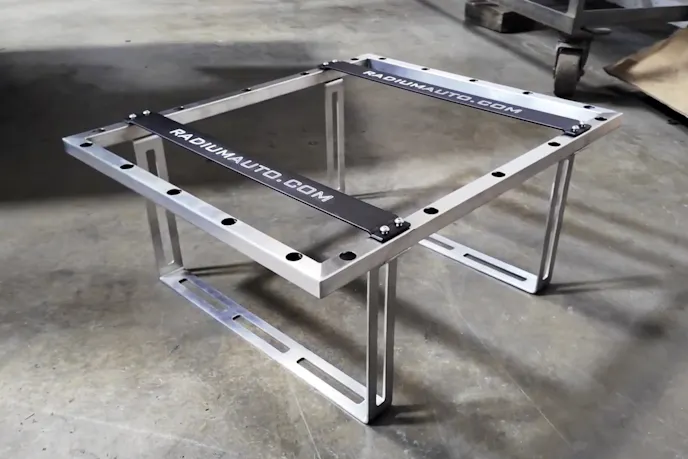
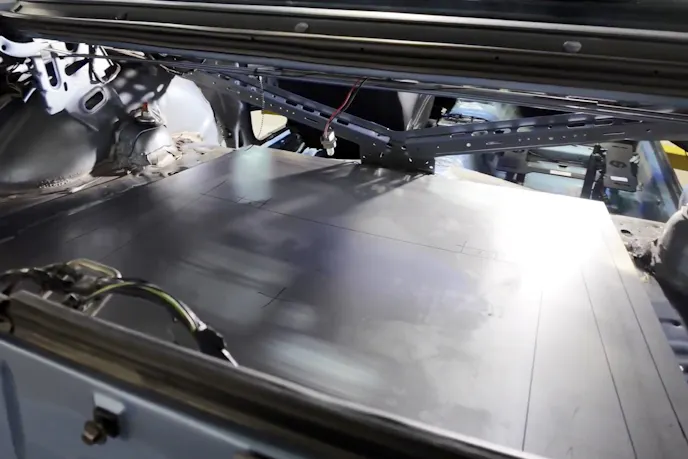
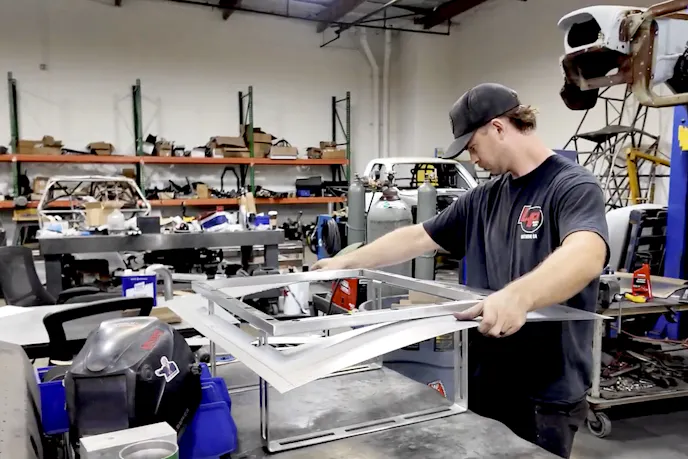
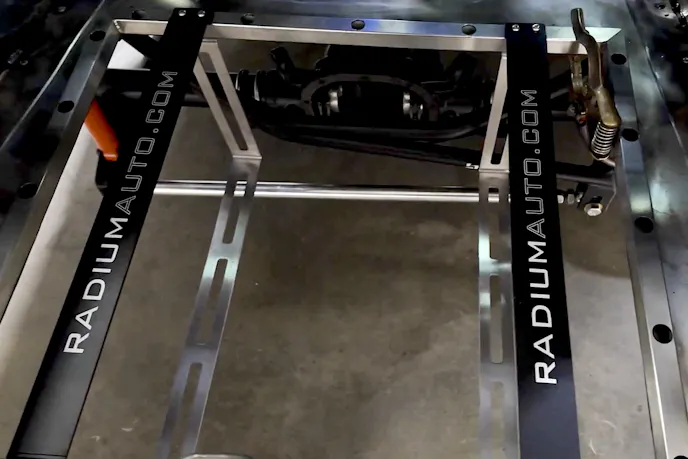
That fabrication work gives the fuel system a proper home while preserving the basic functionality of the trunk. More importantly, it prepares the Fox for the fuel demand of a combination that is expected to make serious power.
“A car like this needs about 1,000 pounds per hour of fuel flow at full steam, with a proper return-style regulator for safety,” Paciulli said.
It’s another example of why this stage of the build matters. The goal is not simply to install parts. Every system has to work with the others, and the chassis needs to be prepared for what is coming.
Embrace The 8HP
Then came one of the most interesting parts of the entire project: putting a modern Coyote powerplant and ZF 8HP automatic transmission into a 1990 Mustang LX. The 8HP swap has become one of the hottest trends in performance transmission conversions, and for good reason.
The ZF eight-speed combines a wide ratio spread, closely spaced gears, rapid shifts, and modern electronic control in a package that can handle serious power. Performance builders are finding ways to put these transmissions behind engines that were never designed to work with them, and our Fox is getting in on the action.
For a street-and-track project like this, the appeal is obvious. An automatic with eight forward gears can keep a turbocharged engine in the meat of its powerband while still providing relaxed cruising manners. It also gives the Fox another piece of modern drivetrain technology that simply wasn’t available when this LX rolled off the assembly line.
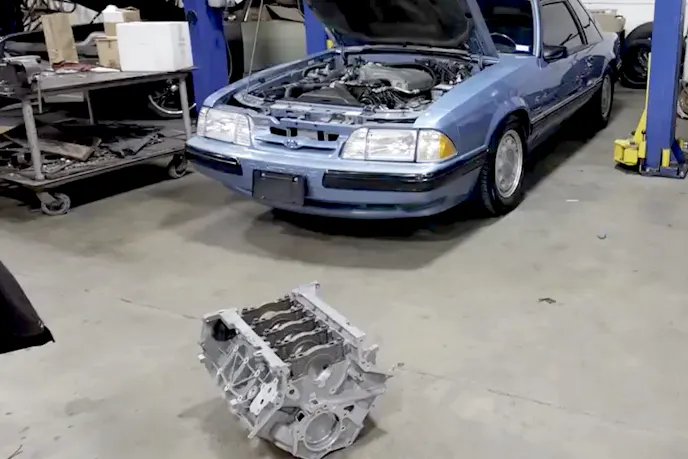
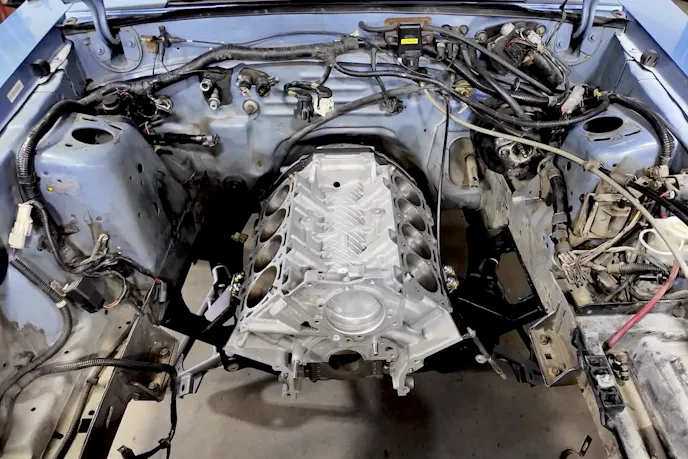
The engine foundation will be a Ford Racing 5.2-liter Predator block (P/N: M-6010-M52B), while LMR motor mounts (P/N: LRS-6038BPR-K) and the Maximum Motorsports K-member establish the basic mounting arrangement. An LOJ Conversions kit will adapt the rugged transmission to our Coyote powerplant. That makes the combination possible, but getting it into the Fox still requires some old-fashioned fabrication.
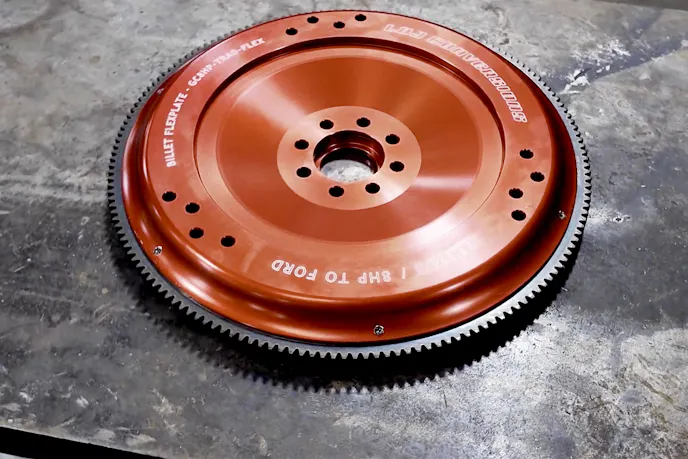
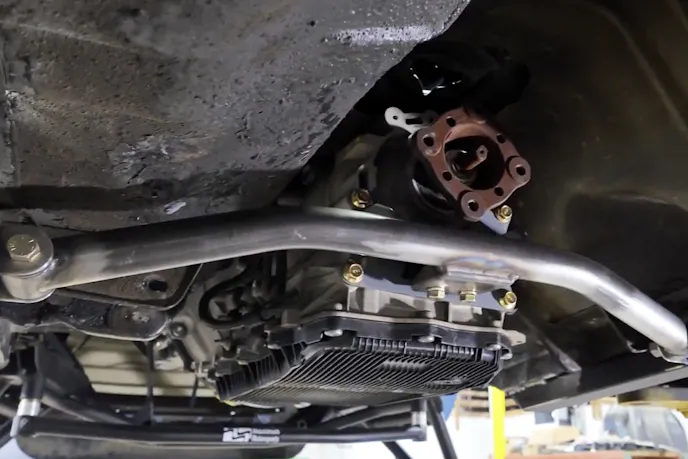
“Believe it or not, it’s not that bad. The 8HP is bigger, but the upper shape is compact, similar to a 4L80 or TH400,” Paciulli said. “In this car, it goes right in with a little persuasion.”
That “little persuasion” included clearance work around the transmission tunnel and fabrication of a custom crossmember to properly support the gearbox. The detailed 8HP installation deserves its own story, and we’ll get into those details in a future story. For this phase, the important part is that the combination physically fits. The Predator block and 8HP were test-fitted in the freshly reinforced chassis, giving LP Racing the reference points it needed to continue building around the drivetrain.
It’s a particularly fitting transmission choice for this project. The entire point of Fox v Ferrari is to take a lightweight, decades-old Mustang and use modern performance technology to attack cars that were engineered much more recently. The 8HP is one of the clearest examples of that philosophy.
Robust Rearend
At the back of the car, we could have gone straight to a different rearend architecture. Instead, we’re sticking with the Mustang’s proven 8.8-inch foundation and addressing the areas that need improvement. The stock housing was modified for 9-inch-style ends, eliminating the factory C-clip axle-retention arrangement. Moser supplied the 33-spline axles (P/N: A11M0), 3.31:1 ring-and-pinion (P/N: 88F331F) and the Wavetrac differential (P/N: 5W8833).
“We’re sticking with the 8.8. It’s a proven combination. First, we switched to a 9-inch housing end to get rid of the C-clips,” Paciulli explained. “That way, if you break an axle, the wheel doesn’t come out.”
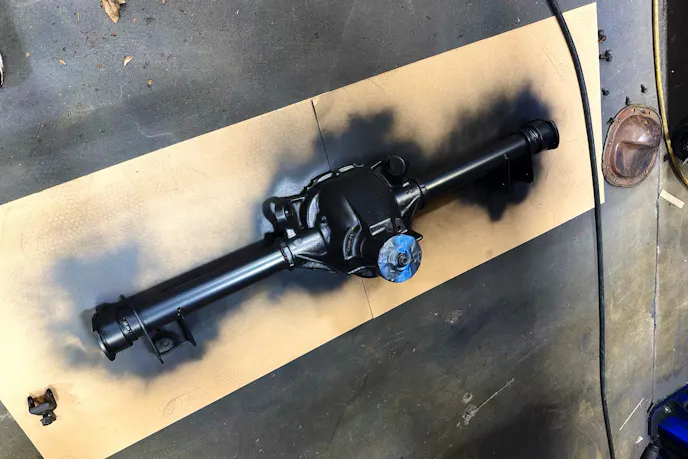
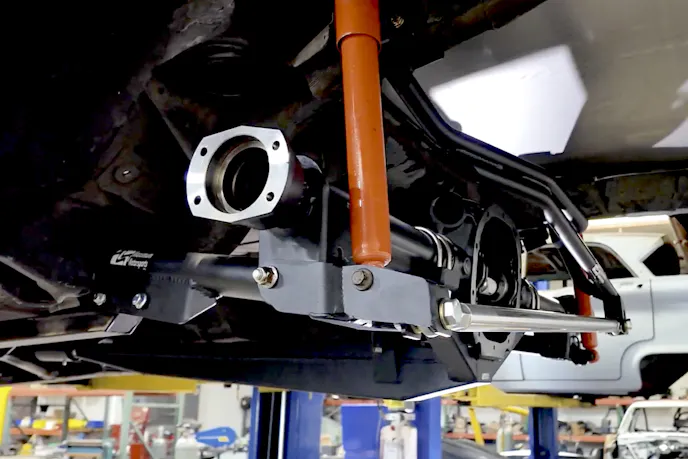
This rearend is much better suited to the abuse we’re expecting the Fox to dish out on the track. The Wavetrac differential also gives the combination a more capable limited-slip solution, while the 3.31 gears complement the wide ratio spread of the ZF 8HP.
“We’re upgrading to a Wavetrac differential with 3.31 gears. With the eight-speed automatic, this combo should work really well,” Lang said.
Once assembled, the Moser-equipped rearend went back under the Mustang with Maximum Motorsports control arms and a Panhard bar. The result is a substantially more serious version of the humble 8.8-inch assembly than Ford supplied.
Driver Focused
The cockpit is receiving the same no-nonsense treatment as the chassis. Sparco seats (P/N: 009014NRNR) mount to Sparco brackets (P/N: 600SB010L/600SB010R), while Sparco harnesses (P/N: 04610RNR) provide the restraint system. A Sparco steering wheel (P/N: 015R383PSN) connects through a Sparco quick-release hub (P/N: 015R98TU).
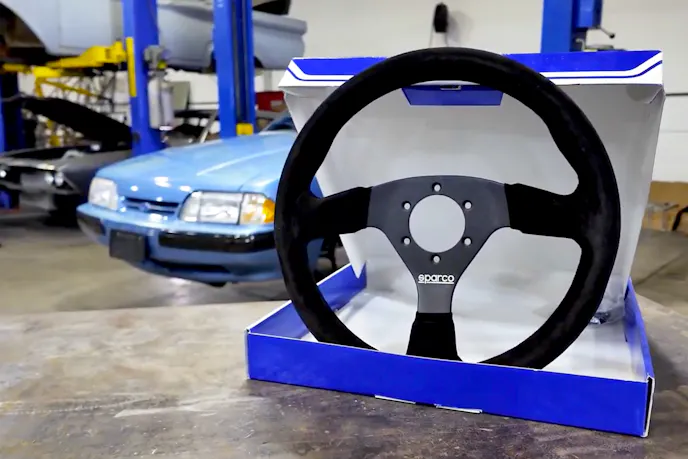
Those parts are more than cosmetic upgrades. The seats, cage, and steering wheel establish the driver’s relationship with the car, which becomes increasingly important as the performance envelope expands. The Fox v Ferrari Mustang is supposed to be something you can drive, not just something you can blast down a drag strip.
Foundation First
By the time the Predator block and 8HP were sitting in the chassis for test fitment, the 1990 LX had already undergone a remarkable transformation. The stock shell was now reinforced with through-the-floor subframe connectors and a custom cage. The front suspension had a Maximum Motorsports foundation, the rear had a torque-arm and Panhard-bar strategy, and the 8.8-inch rearend had been rebuilt around stronger Moser components and a Wavetrac differential.
Just as importantly, the chassis had been physically prepared for the modern powertrain and fuel system. That is the real point of this phase of the build. Before we chase horsepower, boost, or lap times, we have to make sure the Mustang can handle what we’re asking of it.
The exotic machine on the other side of this Horsepower Wars matchup was engineered from the beginning to combine power, handling, braking, and refinement. Our 1990 Mustang LX has to get there a different way, with one fabrication job, aftermarket component, and hot-rodding trick at a time. That’s what makes Fox v Ferrari fun. We aren’t pretending the Fox platform was born to do all of this. We’re taking a lightweight, inexpensive, and incredibly adaptable Mustang and adding the pieces that exponentially improve its performance. The chassis is now ready for the next phase. Stay tuned for the next installment of the Fox v Ferrari build as our humble Fox coupe travels to Papini’s Garage for suspension, brakes, and more.
Horsepower Wars would like to thank its sponsors for making this show happen, including (and in no particular order): Old World Industries/PEAK, VP Racing, COMP Cams, ARP, ATI Performance Products, JE Pistons, Boostline Connecting Rods, Total Seal, Cometic Gasket, Moroso, Hoosier Racing Tire, ECU Master USA, HP Turbo, Pure Drivetrain Solutions, SPE Motorsport, Moser Engineering, Delta ABS, Forgeline Motorsports, and Maximum Motorsports.
You might also like
First Drive! The 795HP Dark Horse SC Does It All In Dominating Fashion
We drove the 2026 Mustang Dark Horse SC on the street and track. It is an impressive machine, and the Track Package is the star of the show.