For years, fans of Brand X engines said their V8 powerplant of choice was all about affordability, thanks to the bountiful availability of junkyard engines that could make big power with a few mods. As evidenced by a build series from Willis Performance Enterprises, Ford’s latest pushrod powerplant, the 7.3-liter Godzilla V8, has clearly entered its budget swap era.
I believe between this and the Coyote platform, Ford will be the swap platform of choice in the future… — Brian Wolfe, Willis Performance Enterprises
That isn’t just wishful thinking, as it is backed up by documentation of a salvage-yard engine with simple modifications that delivered impressive results on the dyno. This wasn’t just a bench-racing fantasy. It was a used Godzilla pulled from a commercial application, torn down, refreshed, and proven on the dyno.
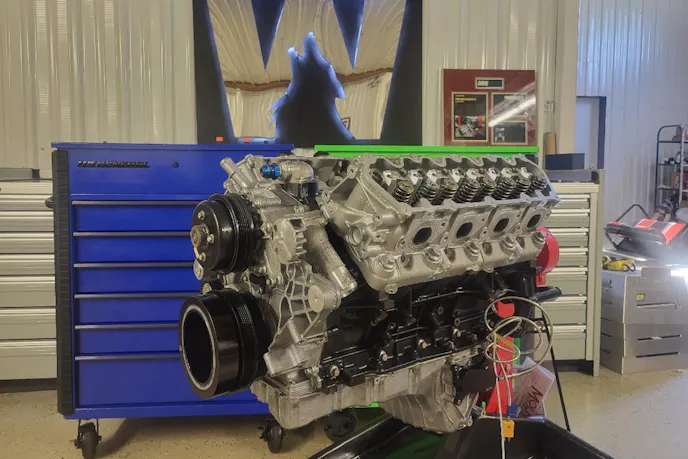
If you aren’t fully up to speed on Ford’s monsterously monikered powerplant was a somewhat surprising return to factory pushrod power. This engine was designed as a rugged, affordable option for the Blue Oval’s popular Super Duty trucks. The man who spearheaded that project was none other than Brian Wolfe, who at the time served as Ford’s Director of Global Engine Engineering.
“It was not a tough sell to the Board of Directors as they liked the metrics/characteristics of the engine, including the performance, fuel economy, package size, investment, and cost versus the alternative,” Wolfe recalled of the engine’s development. “The tougher sell was my technical team that initially saw this as a step backwards, but after understanding the business case and that this delivered all the corporate needs in a smaller, lighter, lower-cost alternative, they got excited and delivered a great product.”
Built For Speed
It is less shocking that the resulting engine is a desirable high-performance option. Wolfe, who has a long history of performance credentials, including a stint as the Director of Ford Racing as well as being a notable Pro 5.0 racer during the heyday of the Fox Mustang movement, now runs Willis Performance Enterprises, an outfit specializing in Godzilla upgrades.
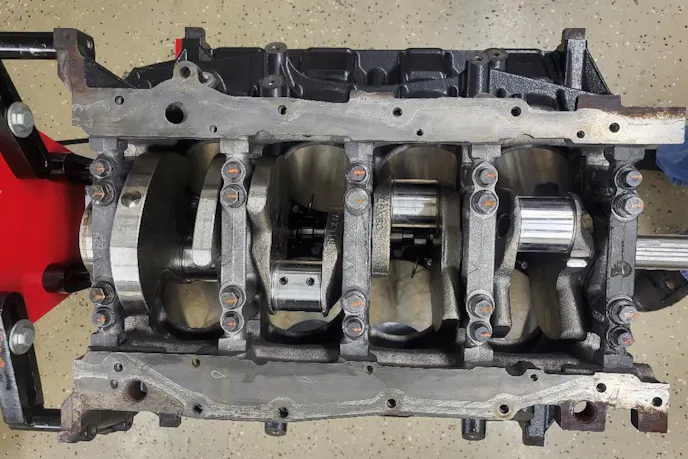
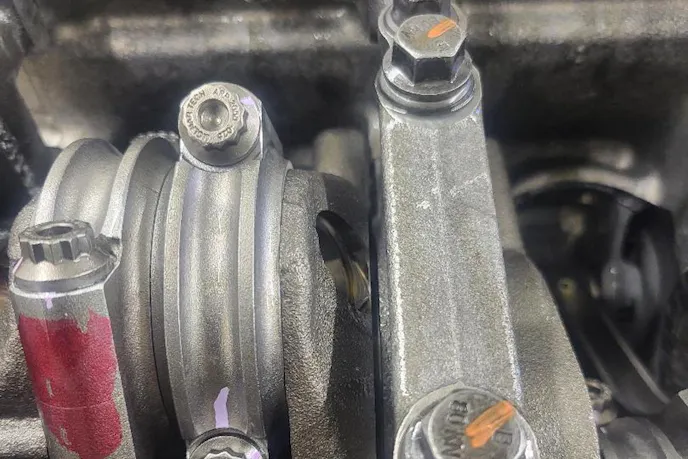
“The team’s goals were a very durable, fuel-efficient engine, which also resulted in a great performance foundation. The focus was the Super Duty application and some of the features that made the Super Duty efficient, like the deep oil pan with a variable displacement pump, which does make it more difficult for swaps, but it was the right decision for Super Duty,” Wolfe explained. “Other features like the deep-skirt block and long head bolts (a common design principle on the 1991 4.6-liter V8) make for superior durability and NVH for the Ford Super Duty, but then offer very high power in the aftermarket, we have made north of 1,800 horsepower with a stock block, stock cylinder head castings, and a stock crankshaft.”
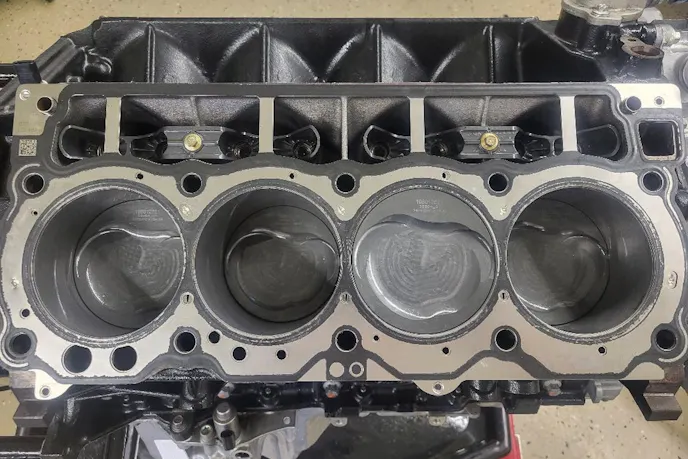
While the Godzilla engine offered a tantalizing option for Ford fans who might be tempted by a Brand X engine or bored with the ever-popular Coyote option, it needed to reach a critical mass of availability to move into the budget-swap zeitgeist, and it would appear that time has arrived.
“I believe, yes, cores can be purchased for under $1,500, and I have talked to people who said they paid $500,” Wolfe said. “Ford builds over 350,000 per year, so there will be a lot in the salvage yards for years to come.”
Budget Build
This project, dubbed “Homegrown,” and documented in the videos seen here, set out to see if a junkyard Godzilla can realistically serve as a cost-effective, naturally aspirated performance engine without exotic parts or extensive machine work.
“The goal was to demonstrate that the Godzilla is a great platform for swaps and restomods that can provide impressive output for very little investment,” Wolfe said. “The package size is similar to a 351 Ford but can make north of 600 horsepower very economically.”
The starting point for this project was a complete long-block purchased for $1,500 from G-Cor Automotive after a camshaft and lifter failure sidelined the donor vehicle. The engine was missing its intake, coils, and some accessories, but the core components were intact. Rather than treating it like a worn-out core destined for a full machine-shop rebuild, Willis Performance approached it like a realistic home-garage project, emphasizing inspection, measurement, and selective upgrades instead of wholesale replacement.
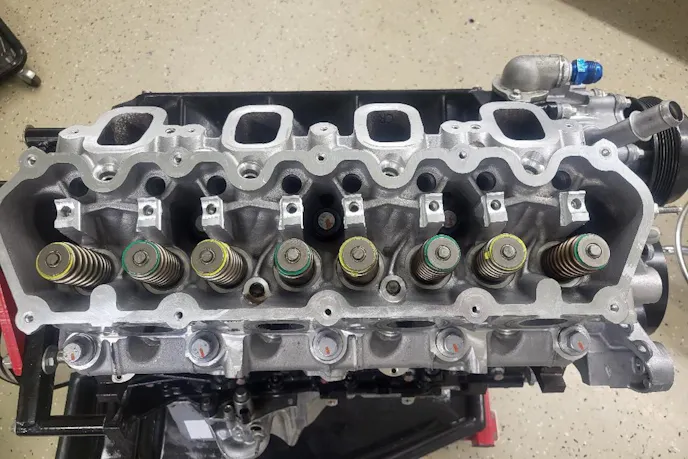
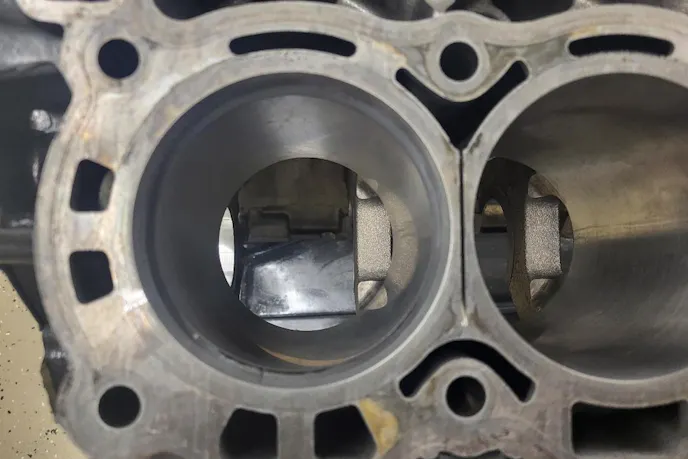
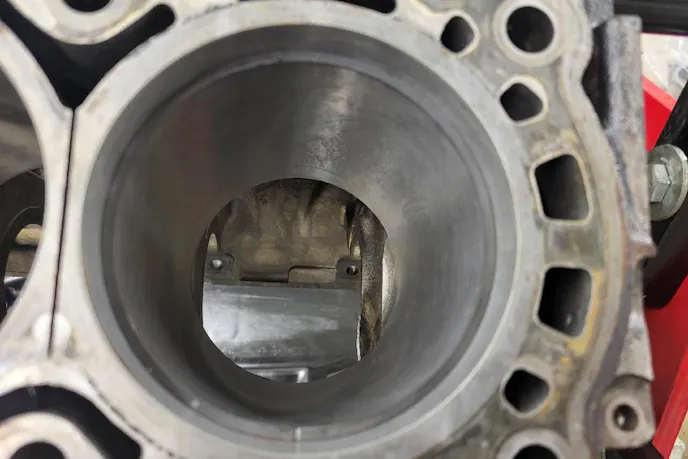
That approach extended to the block prep. The cylinders were refreshed in-house using a dingle-ball hone followed by a plateau brush. Instead of assuming the finish was “good enough,” surface roughness was measured with a profilometer to verify that the crosshatch provided adequate oil retention and ring-seating characteristics.
The finish wasn’t textbook-perfect, but it met functional targets, and the dyno data later confirmed that the ring seal was not an issue.
Minimal Mods
Internally, the engine retained much of its factory hardware. The stock forged steel crankshaft remained, as did the OEM main caps and fasteners. Factory MLS head gaskets and torque-to-yield head bolts were reused after careful inspection. These decisions were deliberate. The goal was not to showcase idealized engine-building practices, but to demonstrate what is realistically achievable when cost containment is a priority.
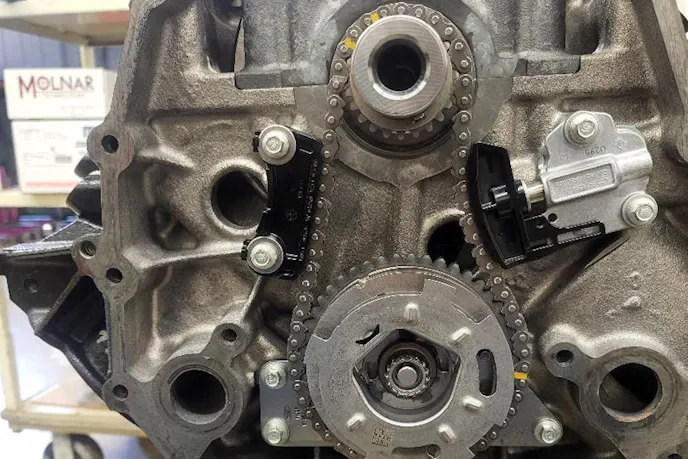
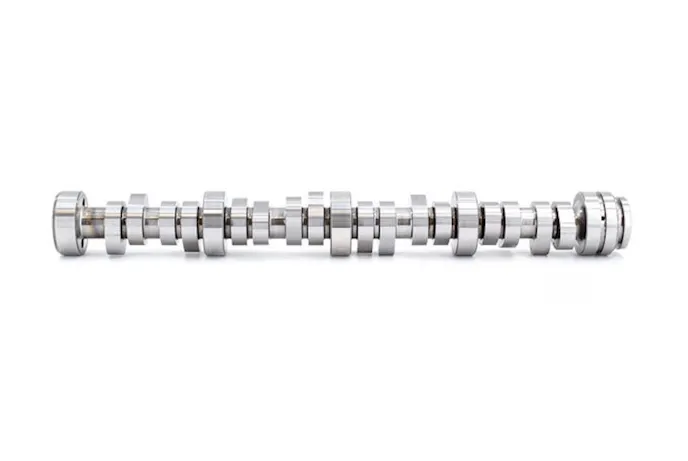
A cam swap was the primary performance upgrade. The Willis team installed a Brian Tooley Racing Truck Norris camshaft along with VCT limiters to retain variable cam timing while optimizing valve events for power. Lifters were upgraded to LS7-style units, while stock pushrods were retained. Rather than locking the cam at a single position, cam timing was optimized during dyno testing to balance torque and horsepower across the operating range.
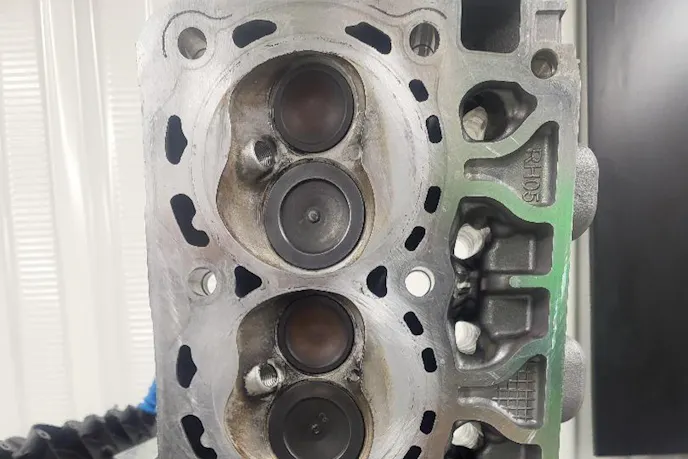
They retained the factory cylinder heads without porting, aftermarket valves, or upgraded springs. Aside from cleaning and valve lapping, the heads were untouched, underscoring the airflow capability Ford engineered into the Godzilla castings from the factory. The engine breathed through a stock truck intake to establish a baseline before stepping up to aftermarket induction.
Dyno testing followed common engine-builder practices rather than OEM certification protocols. The engine was run with an electric water pump, no accessory drive losses, and swap-style headers designed for a Fox Mustang. The engine ran on pump premium fuel, and the test results were corrected using SAE J607 standards, ensuring repeatable, averaged pulls rather than glory-pull peaks.
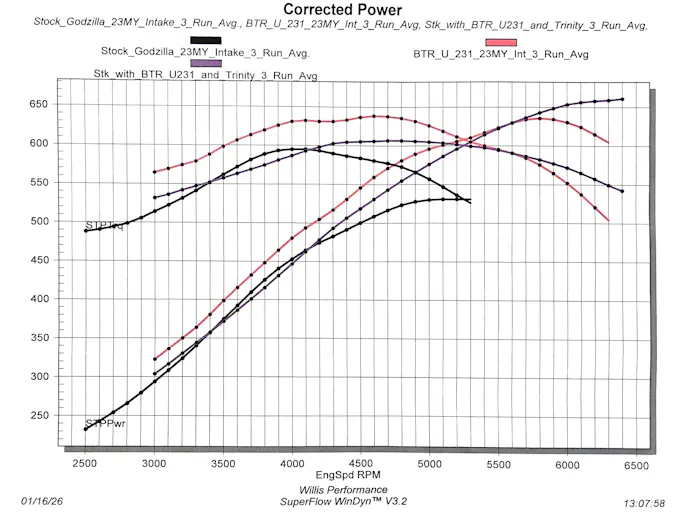
In baseline trim, the junkyard Godzilla produced 627 horsepower at 5,900 rpm and peaked at 646 lb-ft of torque at 4,000 rpm. More telling than the peak numbers was the curve itself. Torque exceeded 500 lb-ft from roughly 2,600 rpm to beyond 6,000 rpm, delivering the kind of midrange that makes a street car or restomod genuinely fast instead of just impressive on paper.
Monster Power
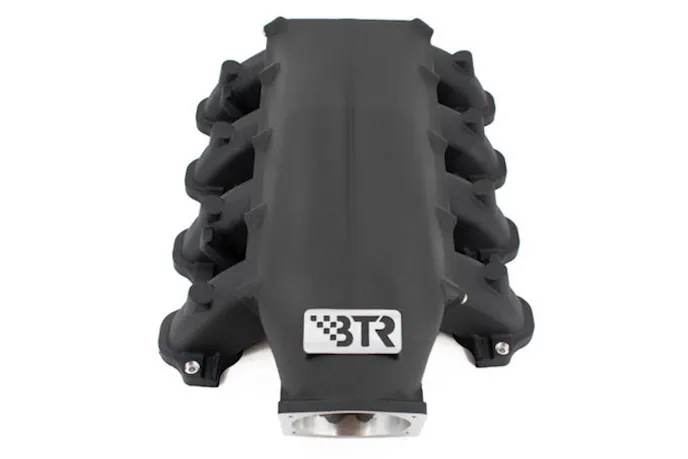
Swapping to the BTR camshaft, a BTR Trinity intake manifold, and a 95mm throttle body pushed output higher. In that configuration, the engine delivered an impressive 661 horsepower and 607 lb-ft of torque, with more than 530 lb-ft available from 3,000 rpm through the 6,400-rpm redline. Even at the top of the tach, torque remained north of 540 lb-ft, which was strong evidence that the stock heads and valve springs were not the limiting factor at this power level. This was impressive, but Wolfe recommends a forged piston and rod with this camshaft, as the engine could still make power to 7,000 rpm, but be sure to confirm piston-to-valve clearance on the intake side in the full advance position.
“I was very happy with the results, given all the work I have done on the conventional small-block Fords and what was required to make north of 600 horsepower, this was just a camshaft change,” Wolfe said. “I believe between this and the Coyote platform, Ford will be the swap platform of choice in the future.”
Cost is where this junkyard Godzilla states its strongest case. Including the original $1,500 engine, camshaft, lifters, intake components, ignition hardware, damper, and supporting parts, the naturally aspirated combination landed under $4,000 with the stock intake and only slightly higher with the Trinity manifold added. Labor, as always, is the variable, but for enthusiasts willing to do the work themselves, the performance-per-dollar equation is hard to ignore.
“There are multiple options available,” Wolfe said of the upgrade choices. “For example, the Truck Norris BTR cam provides 90-100 horsepower over stock. The stock intake is super good to 5,000 rpm, but the BTR trinity intake will provide 10-15 horsepower at the cost of low-end torque.“
For comparison, similar naturally aspirated Brand X combinations often rely on aftermarket cylinder heads, stroker kits, and professional machine work to achieve comparable output. Here, the Godzilla delivered similar horsepower and substantially more torque while retaining stock heads and factory displacement.
The Willis crew installed forged drop-in pistons and rods during assembly, not because they were required for the naturally aspirated results, but to support future high-RPM and power-adder testing. Compression ratio and piston geometry mirrored the factory setup, and dyno data showed no measurable effect on output in this configuration. Their inclusion simply prepped the junkyard 7.3 with a solid foundation for even more performance down the road.
For Ford enthusiasts who grew up building pushrod engines from junkyard cores, the formula of simplicity, displacement, and durability is familiar. Project Homegrown demonstrates that there is another viable budget engine-swap option within the Blue Oval family. Junkyard Godzilla cores are becoming more common, aftermarket support is expanding, and the results from a used engine with basic modifications are attainable.
You might also like
Ridetech’s Four-Link Rear Suspension Adds Formidable F-150 Traction
Ridetech created an F-150 four-link rear suspension upgrade. This system improves traction, geometry, and adjustability.