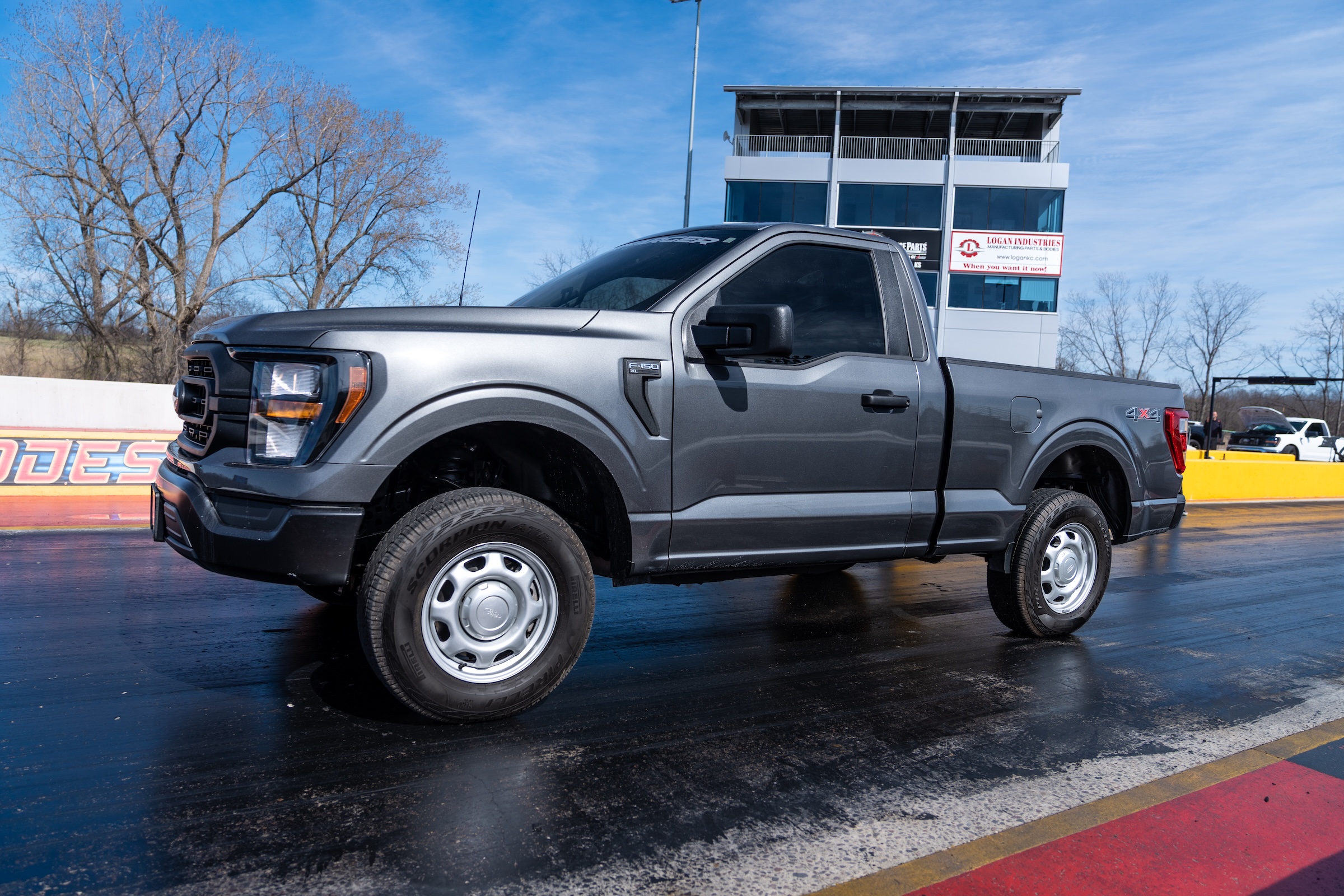
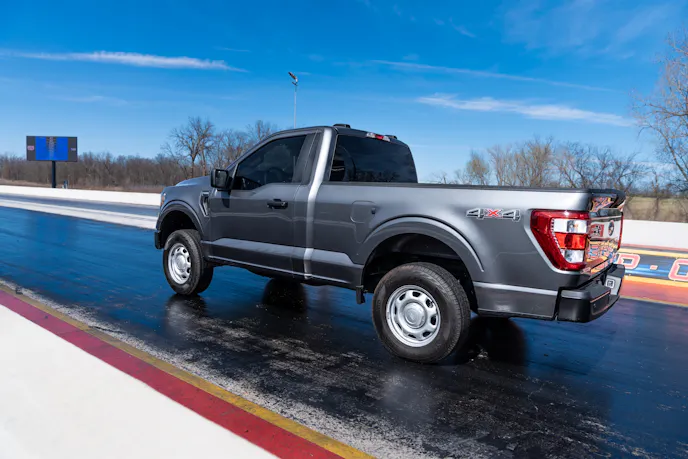
If you are just tuning in, Project Airstrike is a Ford Muscle x House of Boost collaboration meant to see just how far we can push the streetable performance of Ford’s Coyote-powered pickup. After making big gains with the ProCharger P-1X blower, our humble 2023 Ford F-150 XL work truck was ready to soar with more performance.
With HOB’s Jordan Overstreet spinning the wrenches, we set out to further our pickup’s performance by optimizing the supercharged combo with the most logical next upgrade.
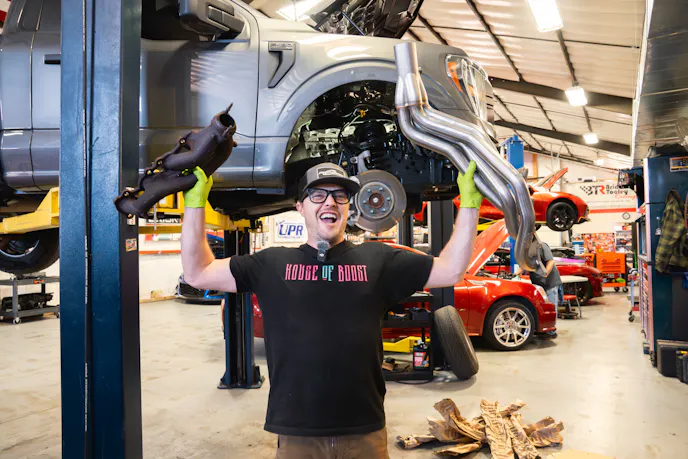
“Last time out, we were limited by the stock catalytic converters. That’s really the biggest restriction on these new Coyote trucks — they’re just not designed to handle boost,” Overstreet said. “Even at stock power levels, they can be a failure point. So today, we’re getting rid of that limitation, removing the factory cats and manifolds, and stepping up to a set of Stainless Works headers so we can actually see what this combo will do.”
Uncorking The Exhaust
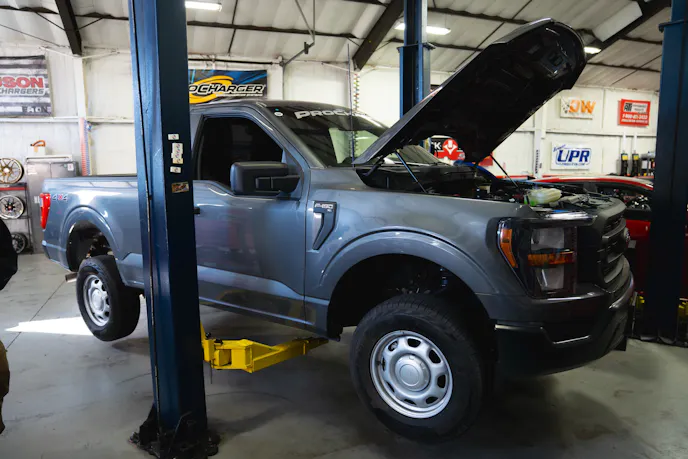
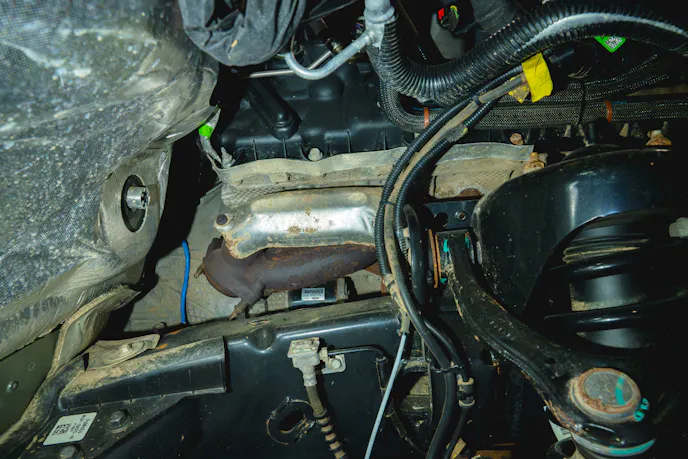
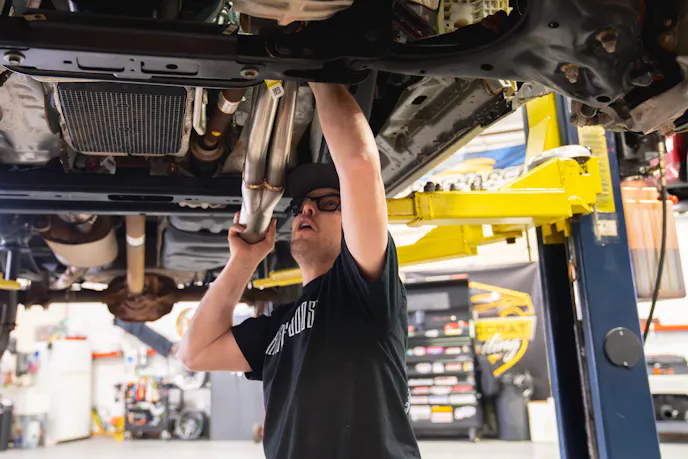
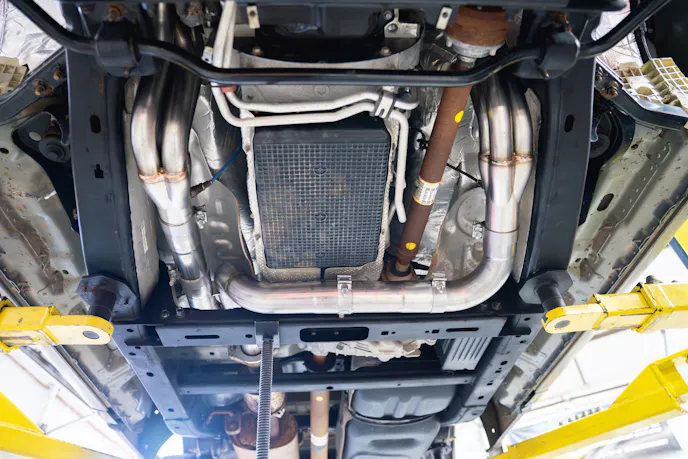
The first step to removing that restriction requires disassembling the factory exhaust and preparing the engine bay. Removing the crossmember, heat shields, starter, and even the air conditioning compressor allowed free access to the cylinder heads. The stock Y-pipe and manifolds came out, along with mounting studs and fasteners.
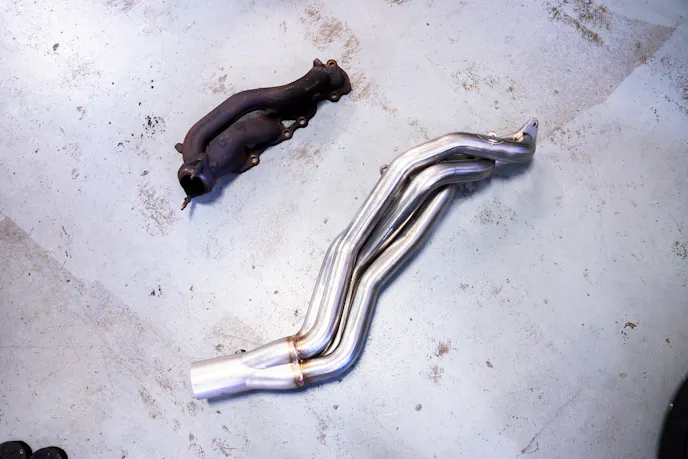
“When you lay the factory manifolds next to these 1-7/8-inch Stainless Works headers, the difference is obvious,” Overstreet explained. “The stock pieces are extremely restrictive, and this is a major upgrade in both flow and overall construction.”
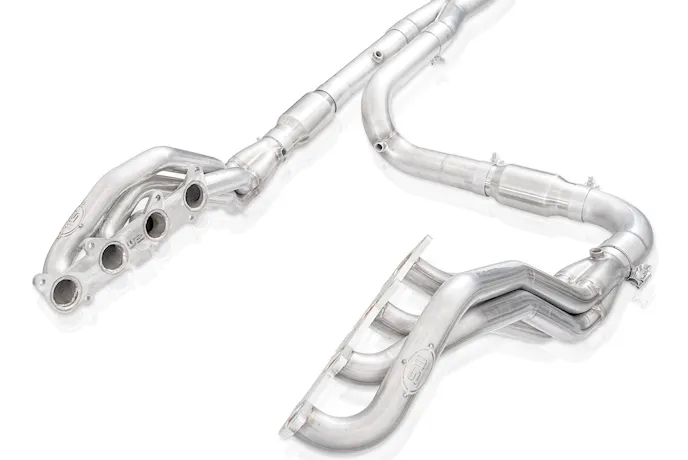
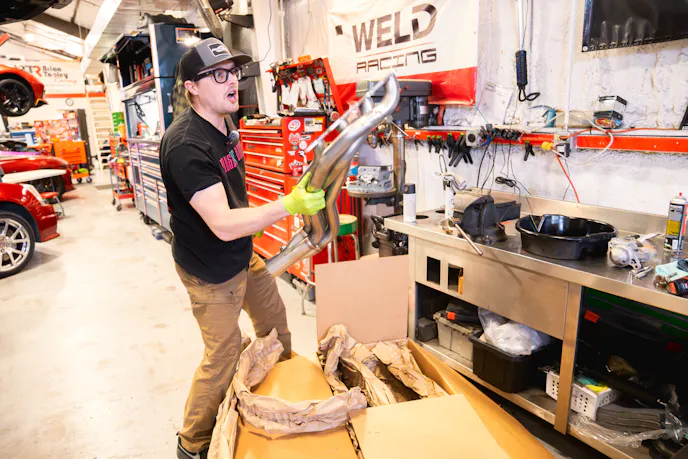
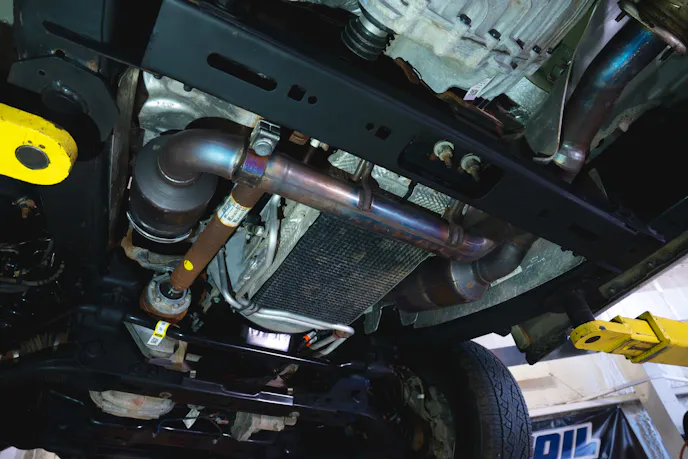
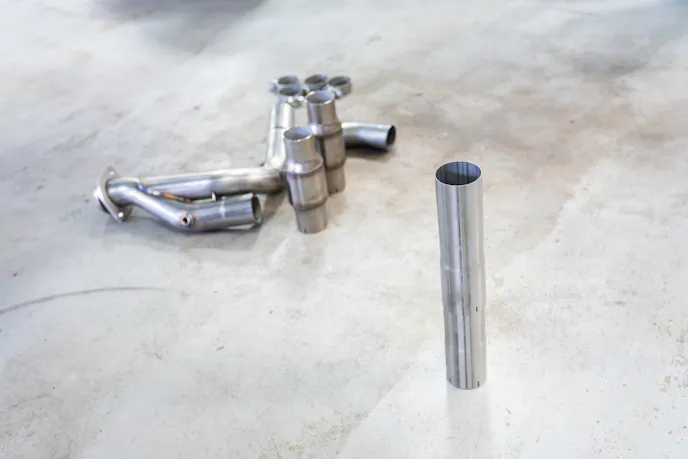
For drag and dyno purposes, the headers were installed with cat deletes to remove as much restriction as possible and gather clean dyno data.
“Since we are planning on high-boost testing, we’re running cat-delete pipes for now, strictly for dyno and development purposes,” Overstreet explained. “This truck will have catalytic converters back on it when it leaves the shop, but for testing, we want to remove as much restriction as possible and get clean data on what the blower and headers can do together.”
Bolt-On Upgrade
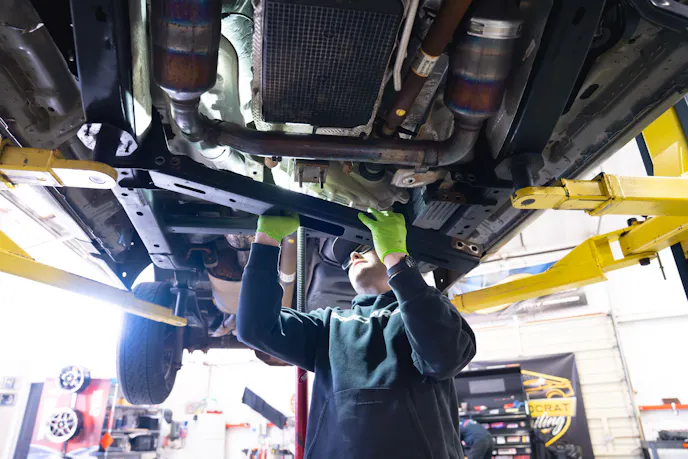
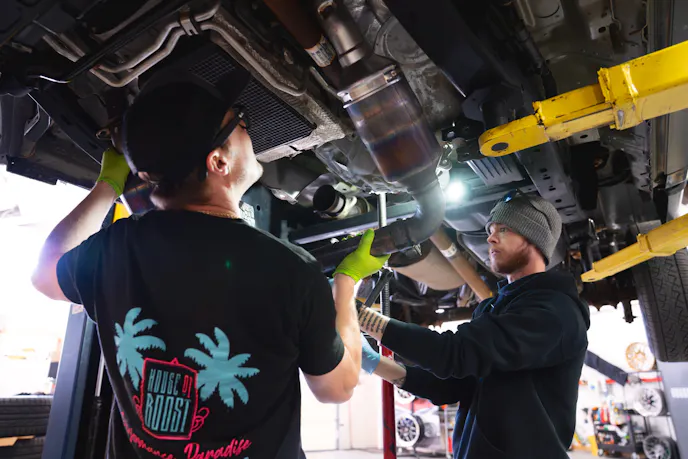
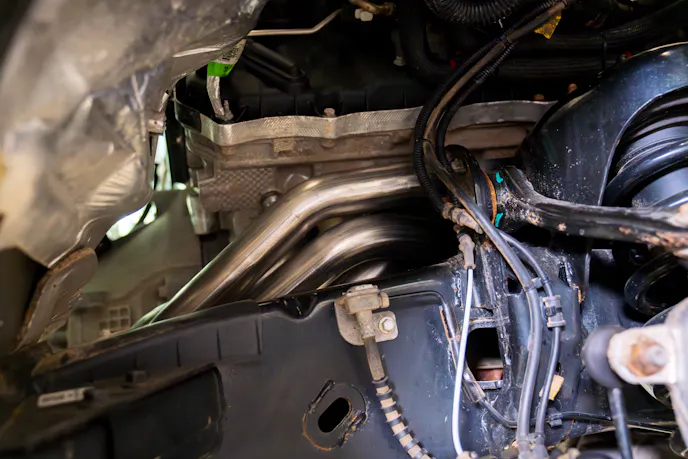
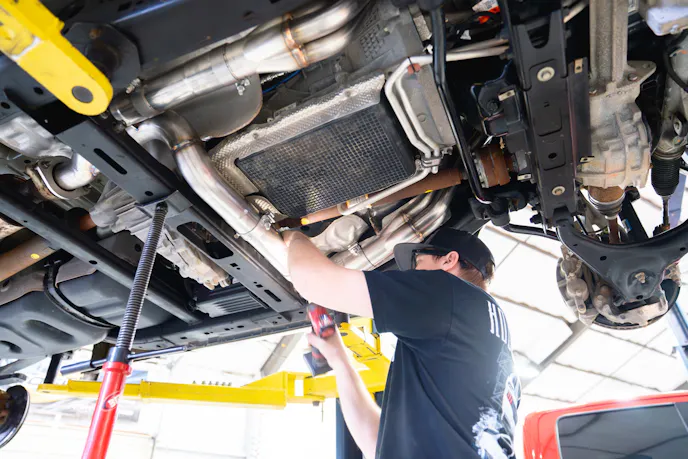
The Stainless Works headers (P/N FT18HCAT; $2,695) are long-tubes with 1 7/8-inch mandrel-bent primaries designed to improve scavenging and reduce backpressure. Surfaces were prepped with O2 sensor-safe high-temp RTV, studs and nuts torqued to OEM specifications, and clamps left slightly loose until final alignment. Lead pipes were attached with 3-inch slip-fit clamps, and we reinstalled the factory oxygen sensors using the provided wiring extensions.
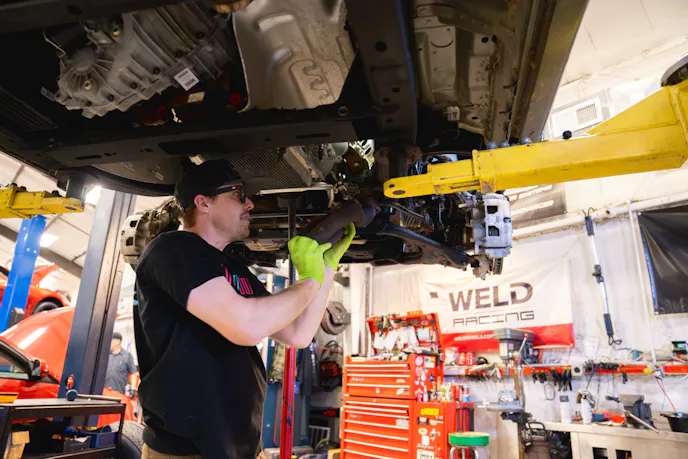
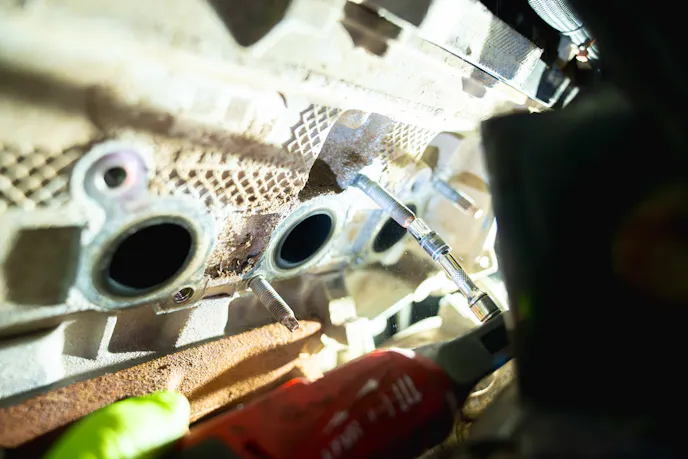
Overstreet pulled the fender liners to improve the view for the camera and make the job a bit easier. He also unbolted the air conditioning compressor to make more room to work, but overall, the installation is a simple remove-and-replace operation. After removing the factory manifolds and factory studs, you clean the head surface and bolt on the Stainless Works long-tubes using the high-temp RTV and fasteners.
He then double-checked the clearance around wiring, hoses, and the driveshaft. Once the setup was heat-cycled during testing, he re-torqued the header bolts and retighted the exhaust clamps to ensure the system was leak-free.
Rolling Strong
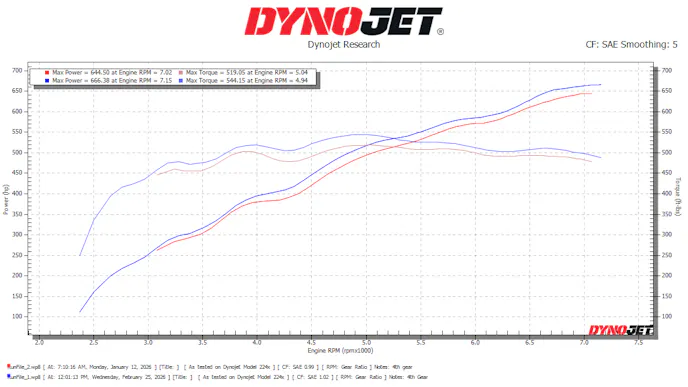
Back on the dyno, the gains were immediate. Headers alone, with no other changes, increased wheel horsepower from 644.50 to 666.38 and torque from 519.05 to 544.15 lb-ft, for gains of 21.88 horsepower and 25.10 lb-ft of torque, respectively.
“That’s the kind of gain you want to see from a header upgrade — real, measurable power just from removing restriction,” House of Boost’s Larry Hamilton said. “It takes the ceiling off the factory catalytic converters.”
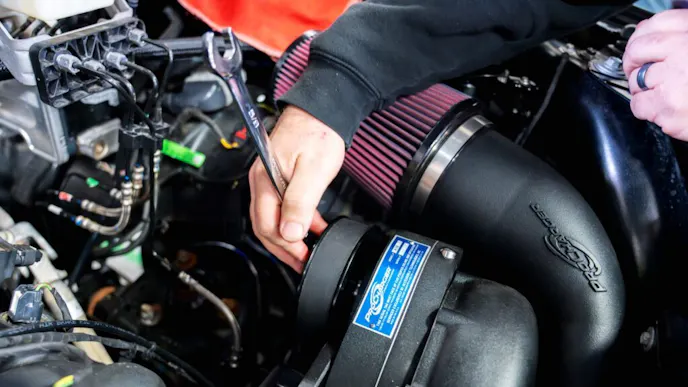
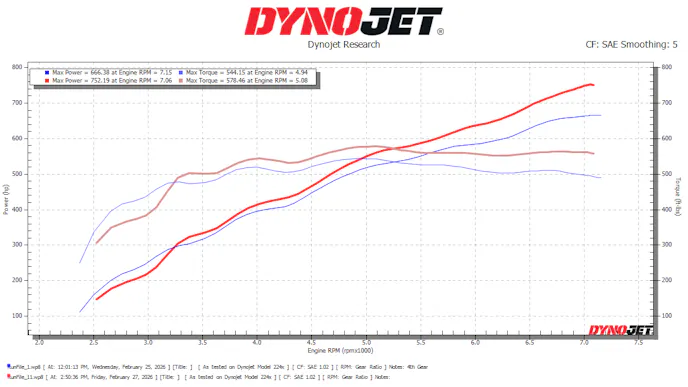
Next, HOB swapped to a smaller blower pulley — from 4.63 inches to 4.25 inches —increasing boost from roughly 11 psi to 14 psi. Still on 93-octane fuel and the base ProCharger calibration, Project Airstrike gained 85.81 horsepower and 34.51 lb-ft of torque at the wheels with peak outputs of 752.19 wheel horsepower and 578.46 lb-ft of torque.
“After swapping to the 4.25 pulley, the truck jumped to 752 horsepower at the wheels. That’s a massive increase from just pulley and airflow changes,” Hamilton added. “This is exactly what testing is about — making one change at a time, validating the results, and building a combination step by step.”
Those gains are really a testament to the potential baked into Ford’s Coyote 5.0-liter V8 engine platform, especially when a generous dose of ProCharger boost is applied. We plan to keep pushing that envelope in the near future, but for now, it’s worth savoring these gains.
“Going from 644 wheel with a completely stock exhaust to 752 with headers and a pulley — on pump gas and a stock fuel system — shows just how much these trucks respond to airflow and boost,” Hamilton added.
Track Tested
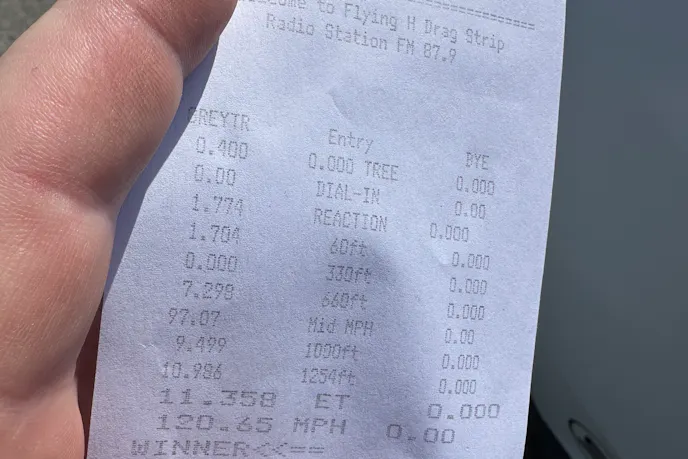
While the dyno is useful for quantifying the gains from each mod, the real performance is where the rubber meets the road. Some impromptu street testing showed the truck could pull mid-7-second eighth-mile runs near 100 mph even while fighting traction. However, a trip to the local drag strip delivered an impressive improvement despite only logging one conservative pass.
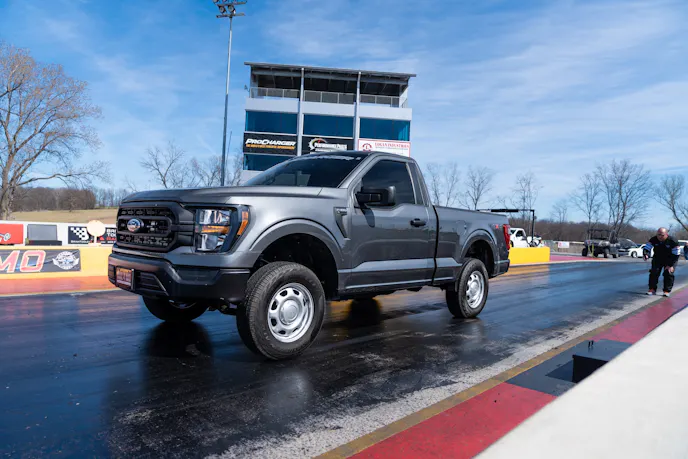
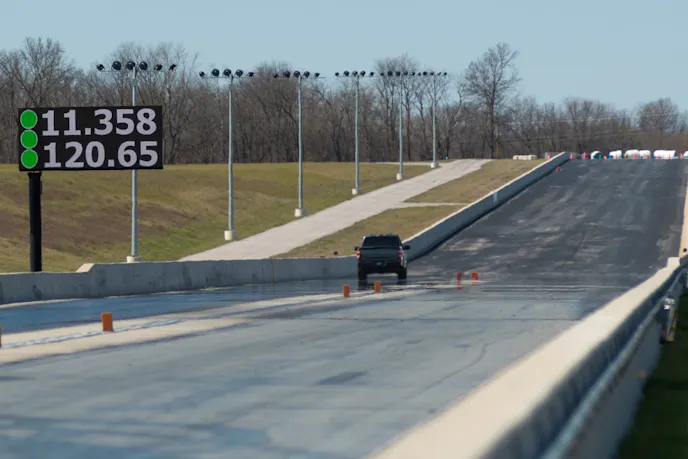
“We finally got it out to the track and made a pass on 93 octane. It went 11.35 at 120 mph…that was a conservative hit,” Hamilton said. “For a full-weight truck on pump gas, that’s a strong number, especially considering there’s more in it based on the datalogs.”
In stock form, this unassuming pickup ran a solid 14.01 seconds at 98.63 mph, but with the supercharger and headers, it shaved 2.65 seconds off its elapsed time and tacked on 22 mph. Those are impressive gains, especially considering we are still running the out-of-the-box ProCharger calibration and burning 93-octane pump gas.
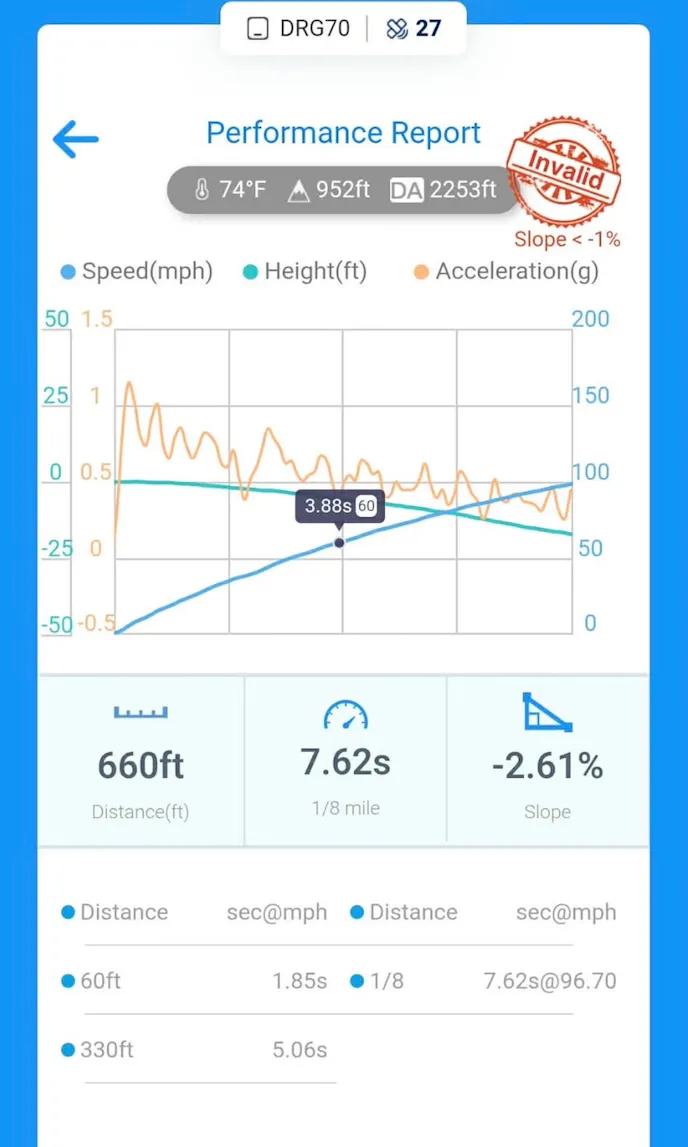
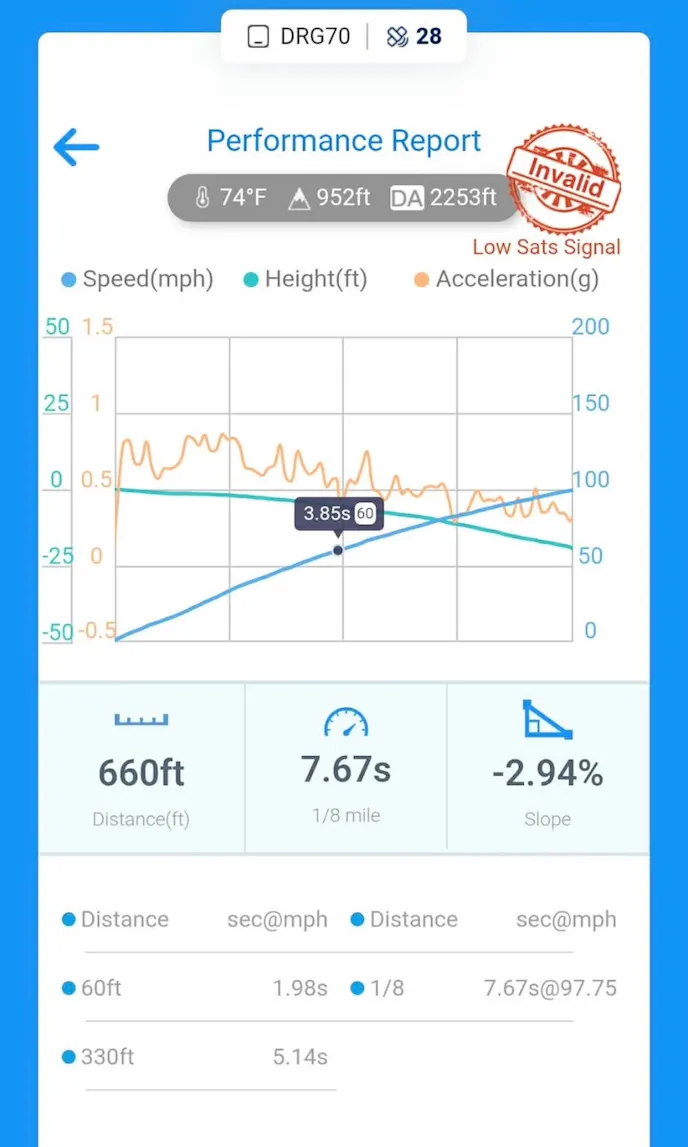
“I’m impressed just to take a truck that looks like your regular, old work truck that you’d see at every construction site in America, and watch it go 11.30s in the quarter mile is pretty impressive,” Overstreet added.
As impressive as it is at this stage, Project Airstrike is really just gaining altitude. Next, we plan to upgrade the fuel system so we can push harder with higher-octane E85 fuel, elevate the combination, and open the door to more gains with additional upgrades.
You might also like
First And Last Classic Shelby GT500 Droptops On Display In Vegas
See the first and last classic Shelby GT500 convertibles in Las Vegas. These rare muscle cars are on display through December 15.