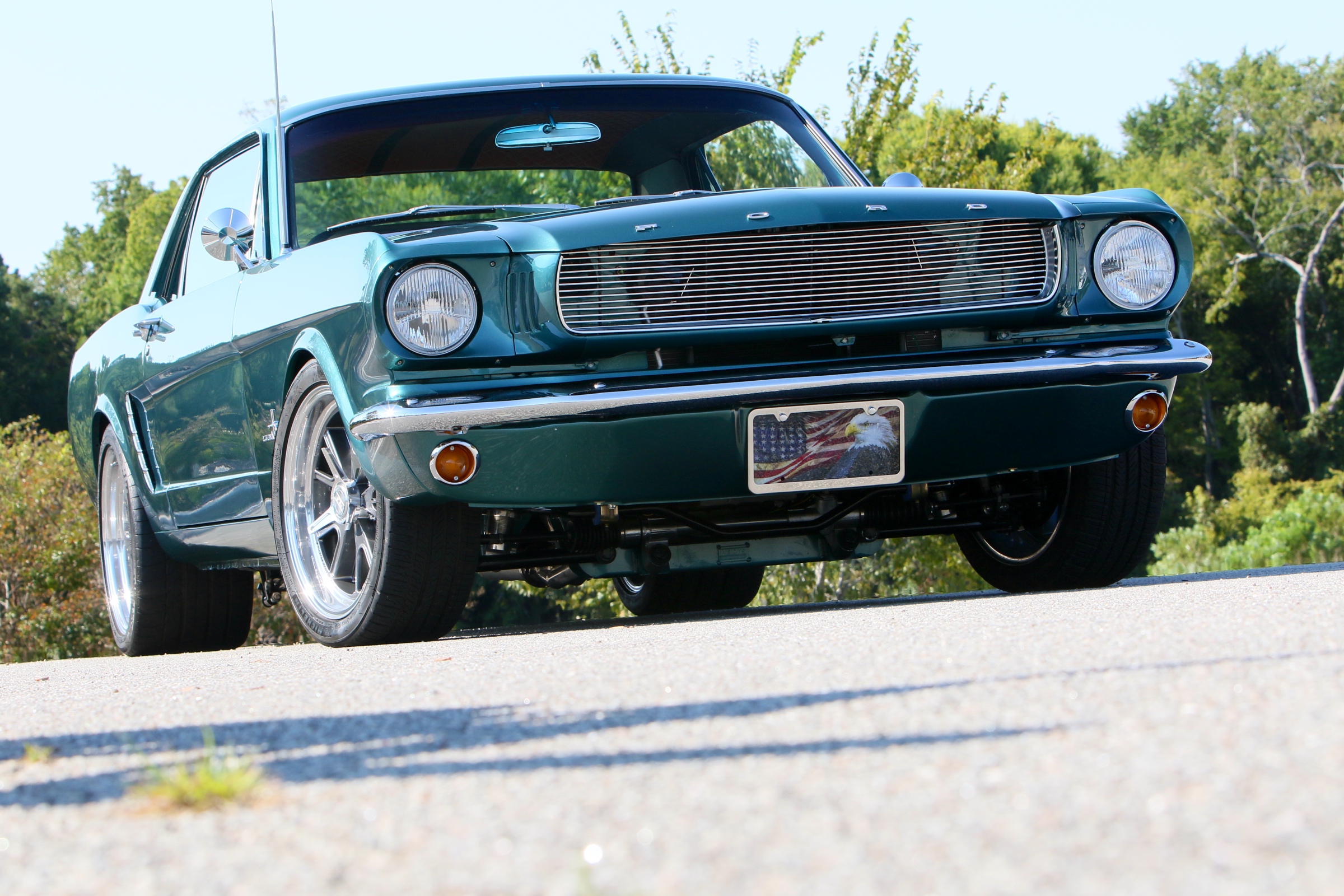
The first-gen Mustang has always been a willing canvas, but getting one to feel right with modern power takes more than just parts. Christopher Boykin’s 1965 coupe started as a father-and-son project — something rough around the edges, sitting under a tree and barely running — but solid where it counted. What followed wasn’t a simple refresh.
The guy who tuned it said it was ‘like putting an M80 on the back of a Hot Wheels.’… — Christopher Boykin
Eventually, the car was stripped, reengineered, and rebuilt around a modern Coyote drivetrain, transforming it into a capable street machine that delivers both performance and drivability without giving up its classic style.
“I worked in a Volkswagen shop, and we started building Volkswagen engines for hot rods. After that, I kind of got away from it for a little while, moved away, and my son turned 15,” Christopher Boykin recalled. “We were riding out the road, and he’d been looking for a Mustang. He saw this Mustang underneath a tree that hadn’t moved in years. So we pulled over and asked the guy if he was interested in selling. So, ended up purchasing the Mustang from it.”
What they found was a car that needed everything mechanically, but offered a rare advantage for a build like this: a largely rust-free unibody. Aside from a pencil-sized blemish in the floorboard, the structure was intact, giving Thompson a clean foundation to reinforce with subframe connectors, torque boxes, and minitubs without chasing corrosion with patchwork repairs.
Stalled Progress
“It barely ran. It ran down the road, but it was not in good shape. But the car itself only had one tiny rust spot in the middle of the floorboard. I’m talking about a pencil size,” Boykin said. “The rest of the car was pretty solid for what I could tell.”
Early attempts to revive the car didn’t deliver. Between inconsistent mechanical work and a subpar paint job, the project stalled out, sitting partially assembled with mismatched upgrades and no clear direction — exactly the kind of situation where a build either dies or gets a complete reset.
“I took it over to the office that I had, and he was putting on electric fans. some reason, it just sat there for about a year, and I kind of got upset,” Boykin said. “A fellow that worked for me told me about Jim, and he came over and looked at the car and said, ‘Yeah, I can wire this up.’”
That introduction to Jim Thompson, of Big Jim’s, reset the trajectory. What started as sorting out a no-start condition quickly exposed deeper issues with the existing combination, and instead of chasing problems, Thompson steered the build toward a modern, fully integrated drivetrain package.
“He actually took the car to me to get it running, because they had pulled heads off the engine, and put it all back together, and they couldn’t get it started,” Thompson said. “Then we were talking about the performance, and he said, ‘I’d like to have something a little more,’ and I said, ‘I haven’t done one, but we could put a Coyote in it. So, we went and bought a Coyote motor and transmission, which came out of a 2015 Mustang, and the car kind of got built around the engine.”
Straightforward Approach
Before committing, Boykin paid attention to the kind of details that matter when you’re handing over a project at this level, including the organization, cleanliness, and the way a shop operates day to day. In a build that requires custom wiring, fabrication, and meticulous crafting, those factors directly impact the final product.
“I looked around in the shop, you tell. A lot of places are, things are just thrown all over,” Boykin said. “His place was all in order. It’s kind of like walking into one store, and everything’s just thrown all over, all around, but the other is all stocked and organized.”
That attention to detail came with a straightforward approach that immediately reframed expectations, starting with undoing prior work that didn’t meet the standard required for a high-end restomod.
“When he first brought it over, I looked at the paint. He goes, ‘I just paid to get that paint.’ I said, ‘You got what you paid for,’” Thompson said flatly. “I told him the same as I tell every customer, every new customer that I talk to, the first thing I tell him is, ‘You may not like what I tell you, but I’ll never lie to you.’”
Changing Direction
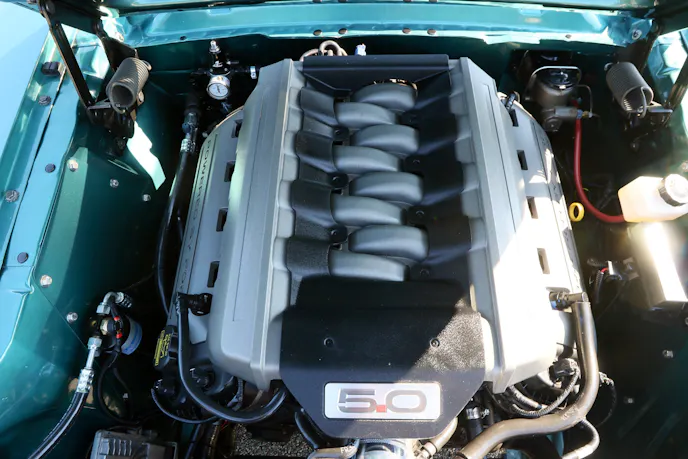
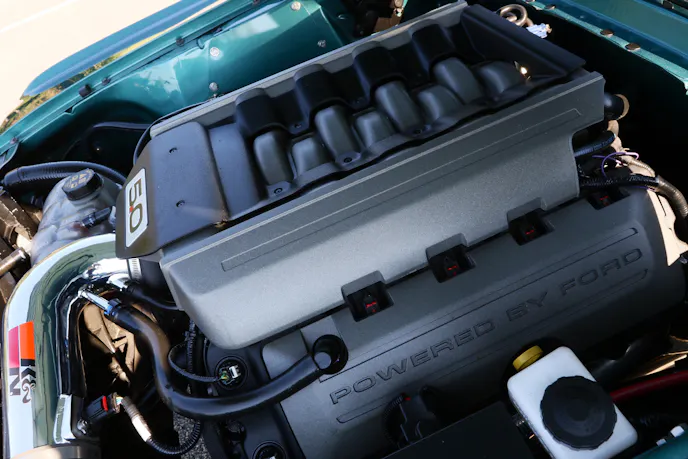
With the direction set, the focus shifted to eliminating the inconsistency of the existing carbureted setup. In its place went a Gen 2 5.0-liter Coyote — an all-aluminum, DOHC platform capable of 435 horsepower — paired with modern electronic controls that deliver repeatable cold starts, stable idle quality, and precise fueling under load.
“We got it over to Jim’s place, and we were sitting around talking, and I was talking about the four-barrel carburetor. You could crank it up one time, it’d run out fine. Then the next time, you’d have to stop and start adjusting the carburetor. He said, ‘Well, I can get you away from all that,” Boykin recalled. “If we put a Coyote engine in it, you won’t have carburetor problems anymore.’ I turned around and said, ‘Well, let’s just redo the whole car again.’ And from then on, Jim pretty much took it over.”
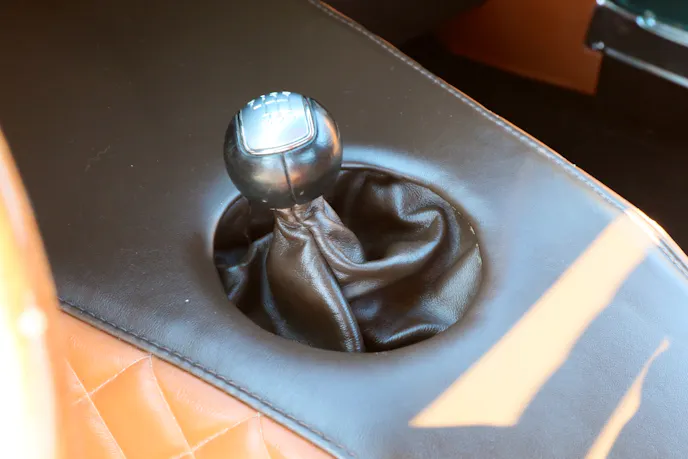
The idea of an engine swap sounded great, but so did a move to the kind of transmission that would allow him to row his own gears and really ring that Coyote engine out when the time was right.
Powertrain Swap
“It wasn’t automatic to start with, but we changed it over because we bought the engine and transmission,” Thompson explained. “Bought the whole car, actually, and pulled the drivetrain and all out of it, and actually built this car around the engine.”
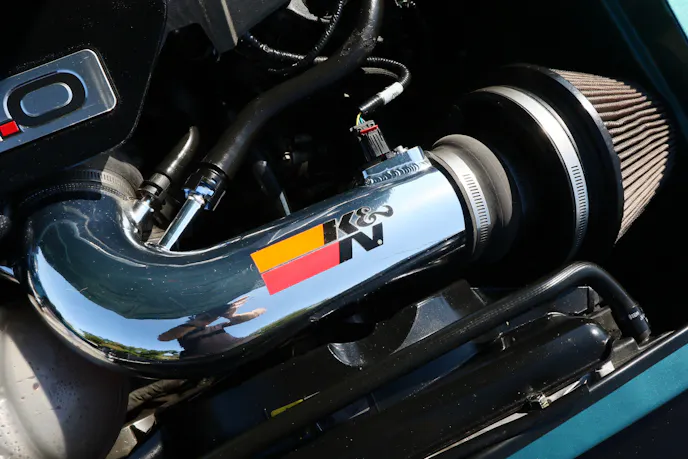
That decision triggered a full teardown. The car was stripped to a bare shell so the unibody could be modified to properly accept the Gen 2 Coyote and MT-82 six-speed, including firewall revisions, shock tower clearancing, and a reshaped transmission tunnel to maintain proper driveline geometry and serviceability.”
The scope of the project had expanded greatly, but its new steward was up for the task and dove right into the project with aplomb.
“When I left, it was all together. I came back about two weeks later, and it was down to the shell again,” Boykin said. “Then Jim pretty much took over. I just told him, ‘Do what you want, let’s get it together.’”
Fresh Foundation
From there, the build became a complete chassis system. Detroit Speed subframe connectors, torque boxes, and mini tubs increased rigidity and created room for serious rear tires. A Heidts Mustang II front suspension improved geometry and engine bay clearance, while a matching rear setup delivered better articulation and control. Wilwood brakes at all four corners brought modern stopping power to match the increased speed potential.
“When you decide to put a Coyote in one, you just don’t put a Coyote in one. I reckon you can, but to make it fit and look right, you move the shock towers, move the firewall back, recess the master cylinder, and redo the transmission tunnel,” Thompson said. “…Of course, you’ve got to add a mini tub to put bigger tires under, plus add subframe connectors and torque boxes.”
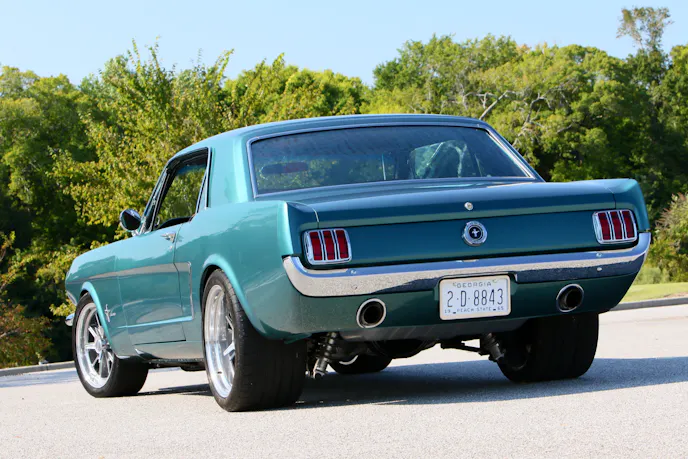
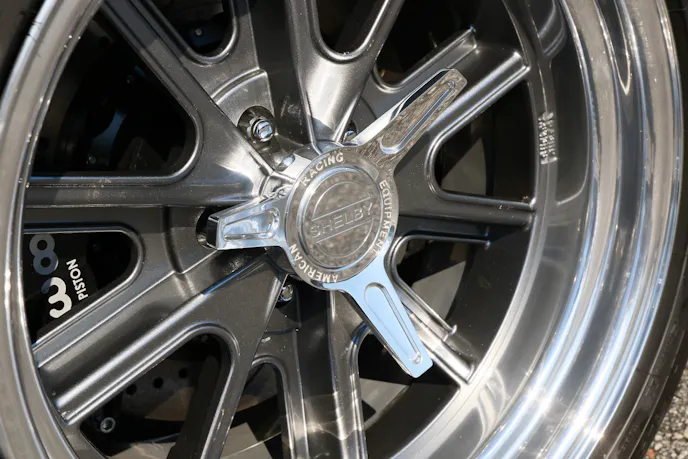
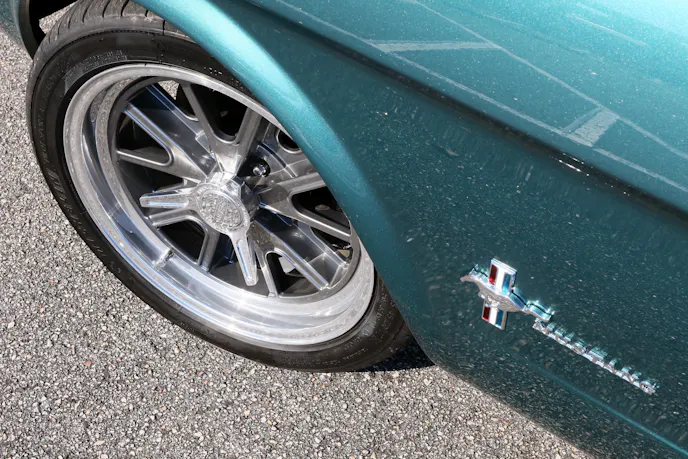
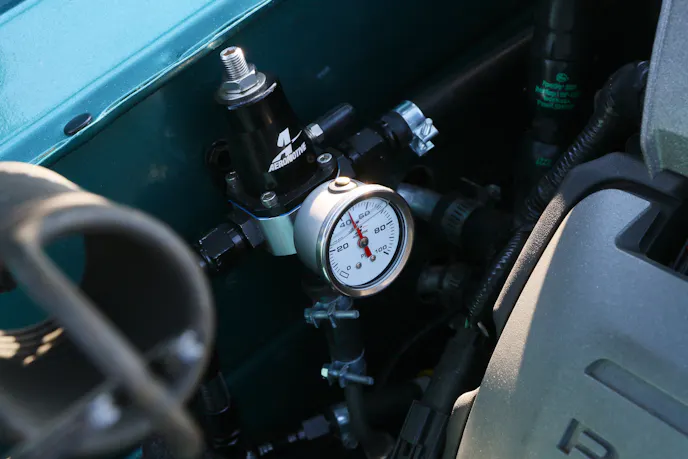
Supporting systems were also upgraded across the board. A Tanks, Inc. fuel system feeds the EFI engine with consistent pressure, while a 2012 Shelby GT500-based cooling system manages heat from the high-revving Coyote. Exhaust flows through Sanderson Headers into a custom 3-inch V-band system with MagnaFlow mufflers, balancing flow and tone without excessive drone. Out back, a Quick Performance 9-inch with 3.70 gears and 31-spline axles puts power to the pavement through 315mm Michelin rubber.
Unique Upholstery
Inside, Boykin pushed for something that broke away from the typical restomod formula, opting for a custom design that delivers both visual impact and functionality.
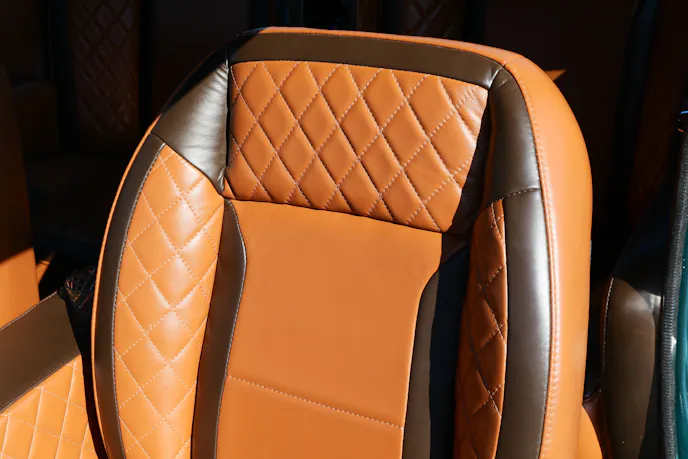
“When it came to the interior, I had all I ever saw people do was white, blue, red, and black. I wanted something that popped,” Boykin declared. “So when we took it over to the upholstery place, I designed what I wanted. Kenny Stevens and Lamar Stevens upholstery looked at me like, ‘Are you sure?’ I said, ‘I’m positive. I don’t want the same thing that everybody else has.’”
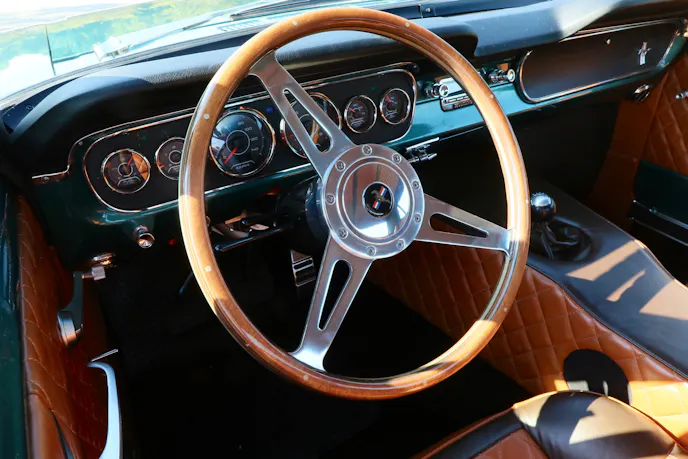
The finished interior draws attention not just for its design, but for its originality and execution. Rich, custom upholstery replaces the factory materials with a bold color palette that contrasts sharply against the Turquoise Capri Sea exterior, blending vibrant tones with darker accents to create depth throughout the cabin. The front retains a factory-inspired seat layout, while the rear is reworked into custom bucket seating, all wrapped in high-quality stitched materials that elevate the feel well beyond stock.
Matching custom door panels and carpeting tie the look together, while New Vintage gauges bring modern data into the classic dash. It’s a deliberate mix of show-quality finish and usable layout, and it consistently stops people mid-stride as they take a second look inside.
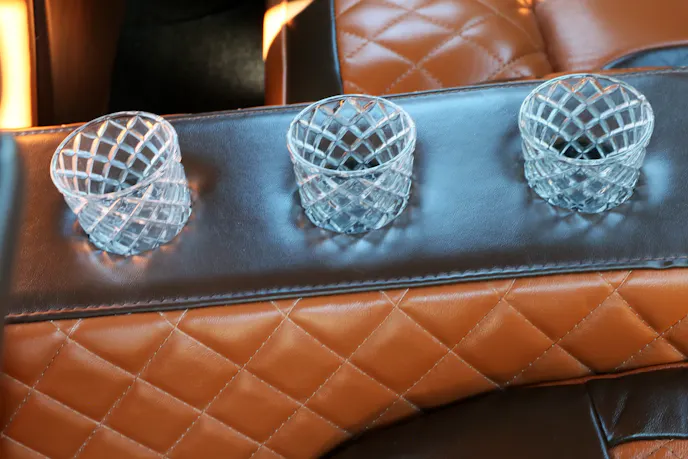
“He goes, ‘What do you think about doing it differently?’” Boykin said. “How about if we put a place for a bottle of moonshine to go in the back, and you’ll have a few glasses back there? I said, ‘Go for it. If I don’t like it, we’ll change it.’”
That custom approach extends to the rear console, blending function and personality in a way that reinforces the one-off nature of the build.
“…Whenever they’re walking by from Mustang and Mustang, I’ve never seen anybody look into it that didn’t stop or come back. People walk by and glance in, and then they stop …You either like it, or you don’t like it.”
Throughout the process, Thompson’s willingness to rework anything that didn’t meet his standard ensured the final product wasn’t just assembled — it was refined.
Getting It Right
“Whenever I started seeing what he was doing, I knew he was the guy, because when we didn’t get something right, he tore it apart and did it again,” Boykin added. “Now it’s what I would call perfect.”
The goal was a car that starts and runs without drama, but the finished combination carries serious performance potential. With a lightweight early Mustang chassis, modern suspension geometry, and a 435-horsepower Coyote backed by a six-speed and 3.70 gears, the power-to-weight ratio delivers immediate, aggressive acceleration.
“I wanted a car that you go out and turn the switch on, and it cranks, and it runs,” Thompson said. “But this car, you have to be careful. You’ve got to respect the car. It will hurt you real quick.”
That assessment lines up with real-world seat time. “The guy who tuned it said it was ‘like putting an M80 on the back of a Hot Wheels,’” Boykin said of the completed car’s performance. “It’s the fastest vehicle I have ever been in on the street.”
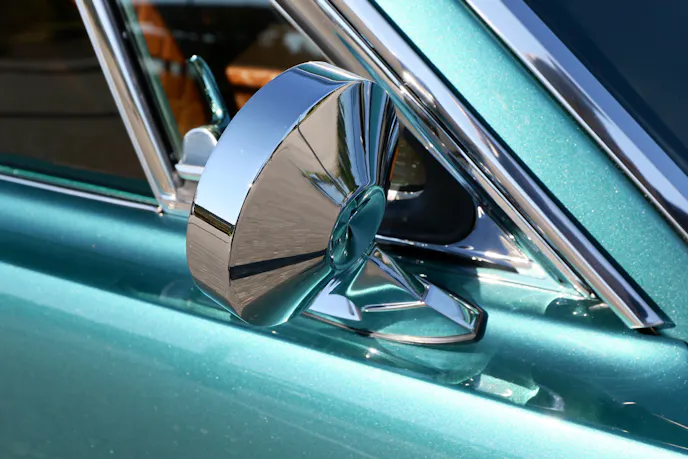
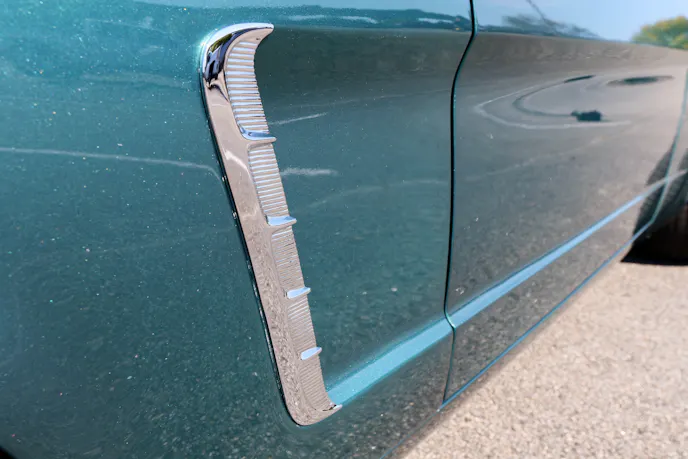
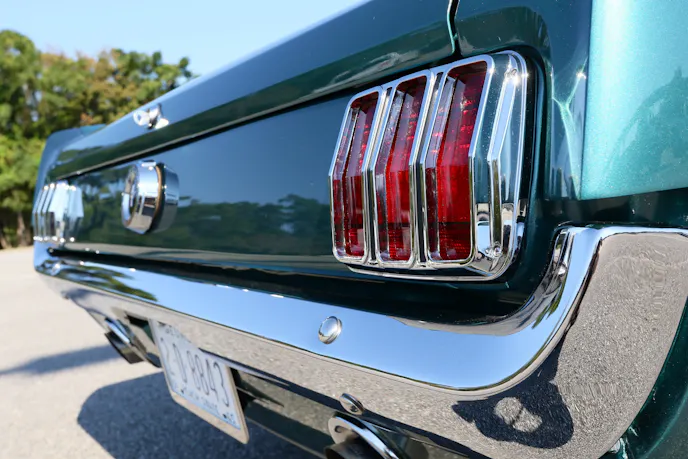
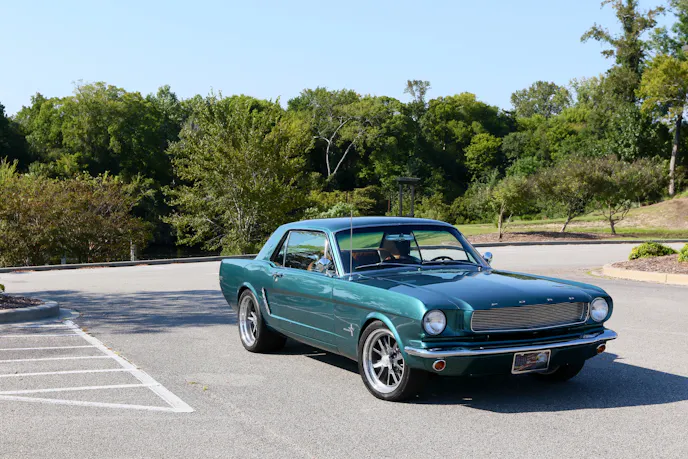
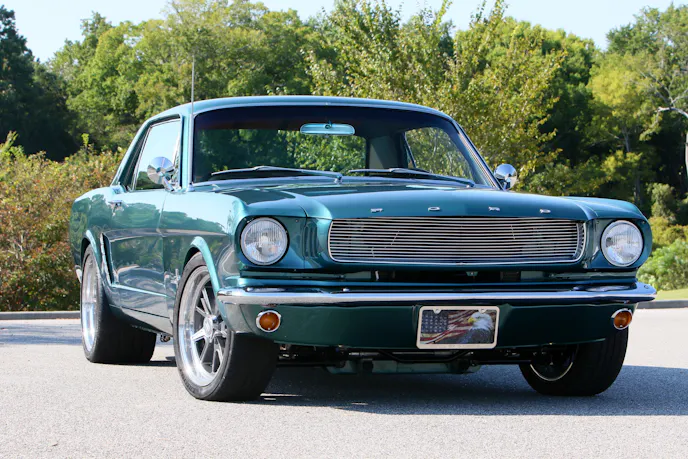
Finished in Turquoise Capri Sea, the car retains its factory sheetmetal, but the stance and tire package tell the real story. With a wide rear footprint, modern suspension, and a responsive powertrain, it behaves like a contemporary performance car until you stand on the loud pedal. Then it comes alive in a way that reminds you just how raw a lightweight early Mustang can be.
That’s the balance this build delivers. It starts, idles, and cruises with modern manners, but when you get into it, it will absolutely push you back in the seat with a grin on your face.
You might also like
Haltech’s Latest Nexus ECUs Control Cable-Throttle Engine Swaps
Haltech's Nexus T1 and T2 deliver cable-throttle engine management with high-speed wireless diagnostics and more.