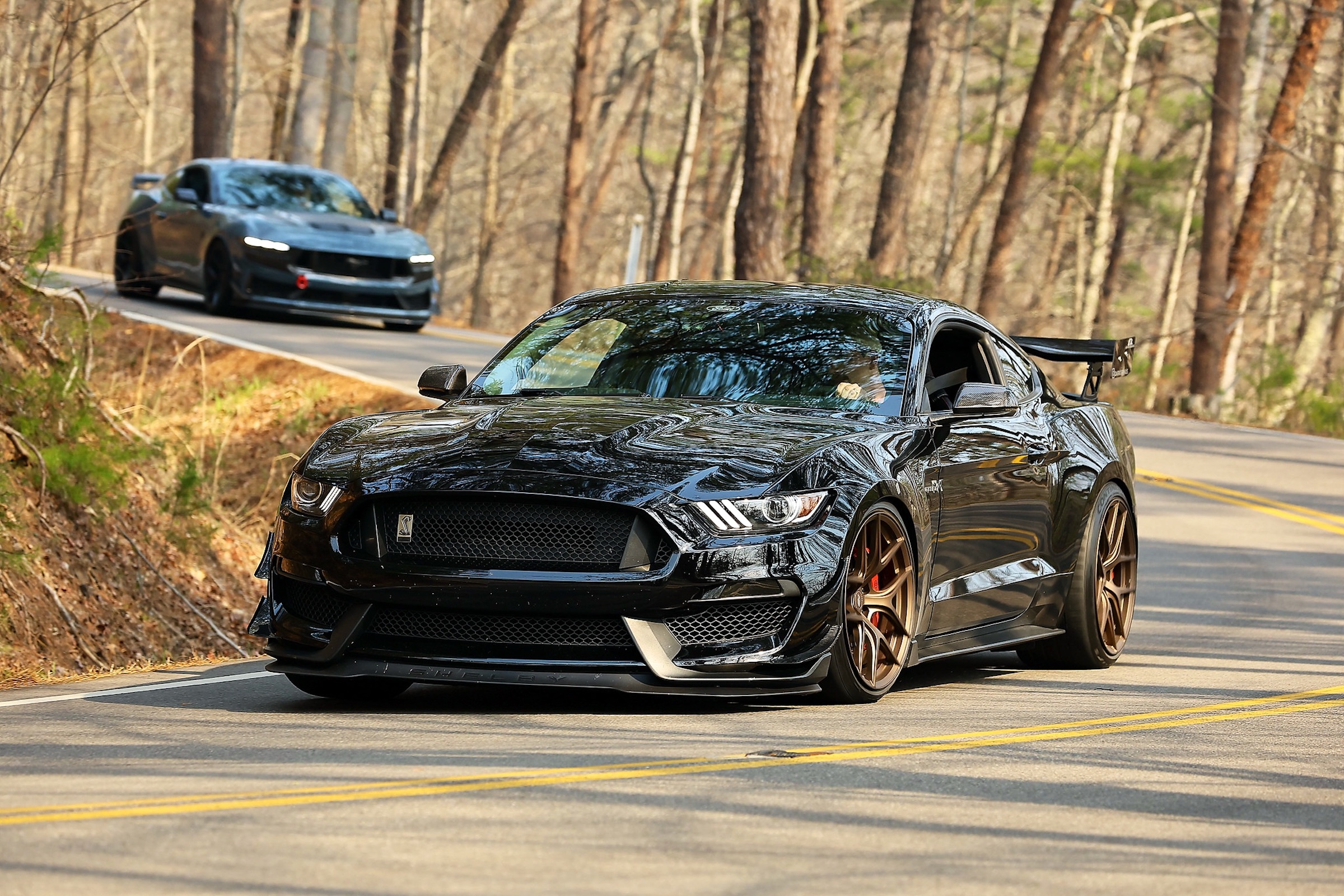
The road tightens as the parkway coils into the hills. Shift into third gear, light brake pressure, turn-in, then back to the throttle as the chassis takes a set and feeds information through the wheel. It’s in that moment, balanced on the edge of grip, where the differences Ford’s naturally aspirated corner carvers reveal their true personalities on the Tail of the Dragon.
That’s the exact environment Chris Cervenka, of Modified Muscle Marketplace, and automotive influencer Dario Girnus dropped two of Ford’s noted corner carvers — the Mustang Dark Horse and Shelby GT350 — into, trading keys en route to Ponies in the Smokies and answering a question that is brewing in the late-model Mustang used-car marketplace. Including the Mach 1 virtually in the mix, all three now overlap in the $50,000–$65,000 range, used, so the decision comes down to how each car compares.
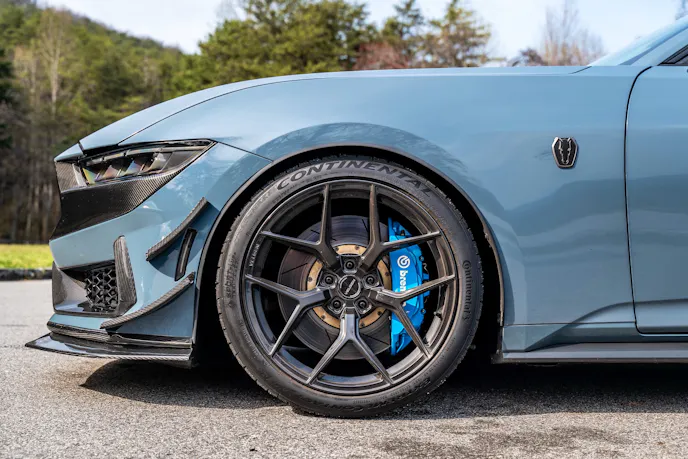
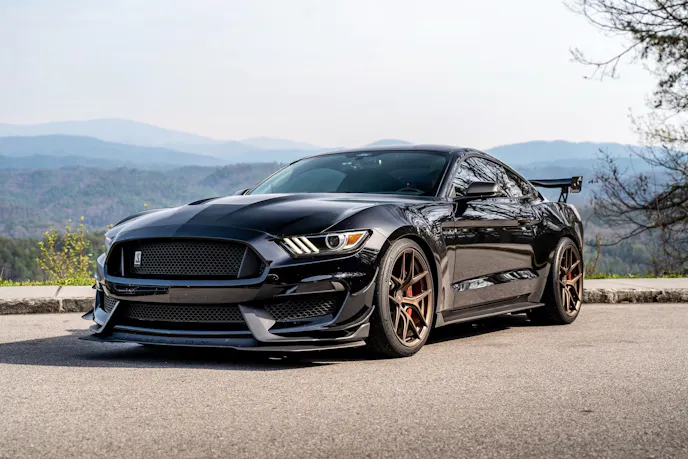
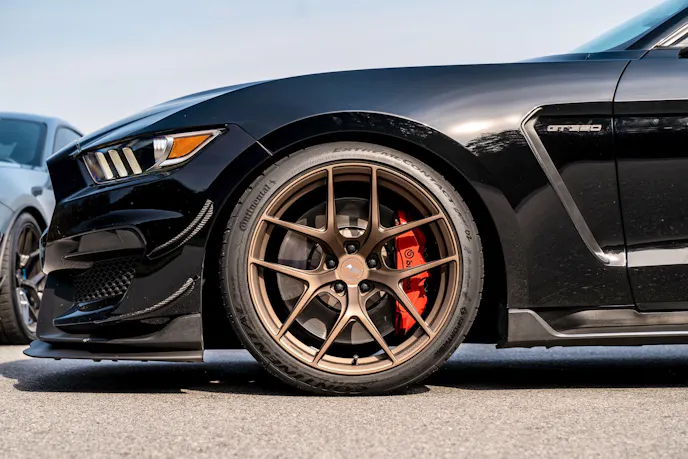
“In my work with Modified Muscle Marketplace, I frequently monitor the used car market for performance Mustangs. In doing so, I found that a used GT350, Mach 1, and Dark Horse are all within about $10,000 to $15,000 of each other. I put up a few feeler posts asking which car people would buy,” Cervenka said. “Seeing the back-and-forth in the comments warranted a deeper dive. What better way than to connect up with my good friend, Dario, at the Tail of the Dragon and Foothills Parkway since we were both going to be at Ponies In The Smokies?! I’ve known Dario for a few years as we are both leaders within the Friends of Ford community.”
Dark Horse: Refined Ripper
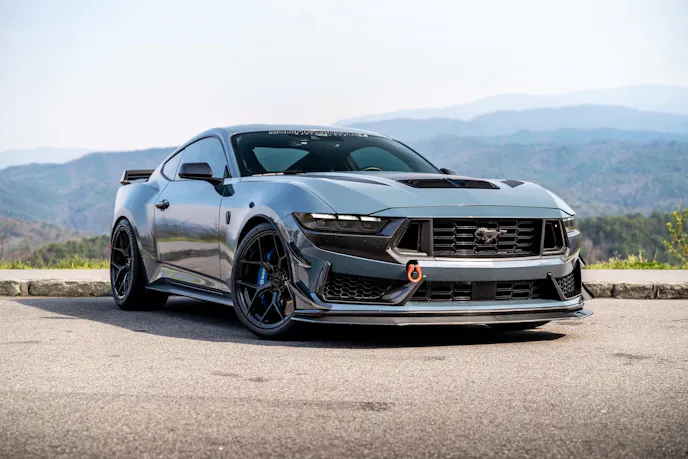
The 2024-and-newer Mustang Dark Horse, which Cervenka currently owns, immediately establishes itself as the most complete tool in the box. Its Gen 4 Coyote delivers 500 horsepower and 418 lb-ft of torque, but more importantly, it makes the car feel more responsive in real-world driving.
Where it really separates itself is with a firmer chassis and a more responsive suspension. The S650’s revised front geometry, aluminum control arms, and updated rear tuning work with a next-gen MagneRide system that reacts significantly faster than the S550 calibration. The result is a car that stays flatter in transitions and recovers more quickly when you ask for a bit more than the tires want to give.
“The Dark Horse bridges that gap with significantly improved chassis control and technology, making it the easiest of the three to drive fast right out of the box. That difference in approachability is what really separates them when you start pushing beyond normal street driving,” Cervenka said.
That assessment aligns with this author’s first-drive impressions, where the Dark Horse didn’t just feel quicker. It felt easier to exploit. The car’s composure lets you focus on placement and throttle application instead of managing weight transfer or worrying about heel-toe downshifts, making it the latest manifestation of Ford engineers’ ongoing mission to “flatter the novice and reward the expert.”
Braking reinforces that confidence. With 15.4-inch front rotors clamped by six-piston Brembos and four-piston rears, combined with increased system pressure and a more rearward bias, the Dark Horse stays flatter and more stable under heavy deceleration than its predecessors. On a road like this, that translates directly into confidence when you’re deep into the throttle approaching a tightening corner.
Girnus, who owns the GT350, picked up on those same traits from a driver’s seat perspective.
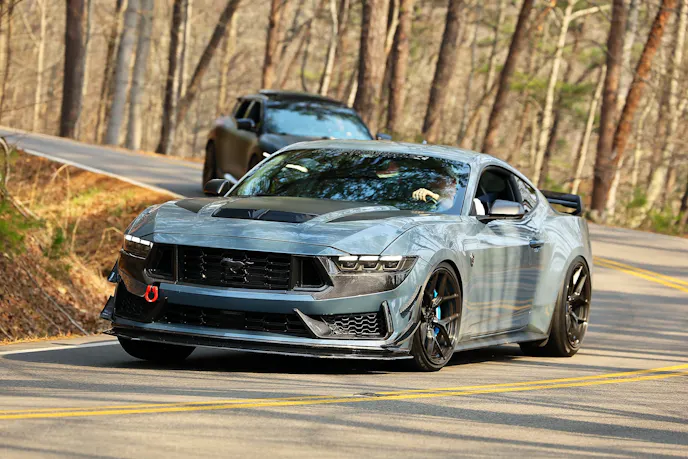
“The Dark Horse has been very interesting to me since the launch in 2023, as it is a direct competitor to my GT350,” Girnus said. “I have driven multiple S650s, but the video shows my first experience with a Dark Horse. I was impressed with the technological advantages and the overall more refined driving experience of the Dark Horse over my GT350.”
That refinement extends to the controls. Rev-matched downshifts, flat-foot upshifts, and more refined drive modes reduce the mental workload, making it easier to string together clean, repeatable runs.
“The Dark Horse is for the modern performance-focused enthusiast,” Cervenka said. “This is the driver who cares about lap times, consistency, and getting the most out of the car. The tech, friendliness at the limit, and overall capability make it the easiest of the three to drive fast and improve with.”
Shelby GT350: Flat-Plane Feels
The 2015-2020 Shelby GT350 takes a different approach. Its 5.2-liter Voodoo V8 produces 526 horsepower and 429 lb-ft of torque, but the numbers only tell part of the story. The flat-plane crank architecture completely changes how the engine delivers power, with a strong midrange and scintillating top-end pull that encourages you to keep your foot in it longer than you probably should. Plus, it sounds amazing — like no other Mustang you’ve ever driven.
“The GT350 is for the emotional purist. This is the person who cares more about sound, feel, and the overall experience than outright performance. The Voodoo engine is the reason to own the car,” Cervenka, who previously owned a GT350, said. “It feels special every time you drive it, even if it is not the fastest or most refined option.”
That characterization lines up with this scribe’s reaction to driving the Shelby GT350 before it hit the dealer lots more than a decade ago. The steering, balance, and high-revving nature of the Voodoo created a driving experience that stood apart from every Mustang before it. The MagneRide calibration gave it real on-track composure, but compared to the Dark Horse, the system reacts more slowly and allows more movement before settling.
Girnus’ ownership experience reinforces why that trade-off still appeals to enthusiasts who prefer a more visceral feel behind the wheel.
“In 2021, I moved from Germany to the US and was in the market for my first Mustang. I was between buying a new Mach 1 or a used Shelby GT350. I decided to go with the GT350 for the more unique engine, sound, performance, and overall character. The Shelby GT350 in the video has been my personal vehicle for about 4.5 years. Through social media, I have been able to build a community around this car and have connected with 100s of Shelby and Mustang owners across the world,” Girnus shared. “The GT350 demands more from the driver. Without rev-matching or electronic assists smoothing inputs, you’re responsible for every downshift and weight transfer. That’s part of the appeal, but it also makes the car less forgiving at the limit.”
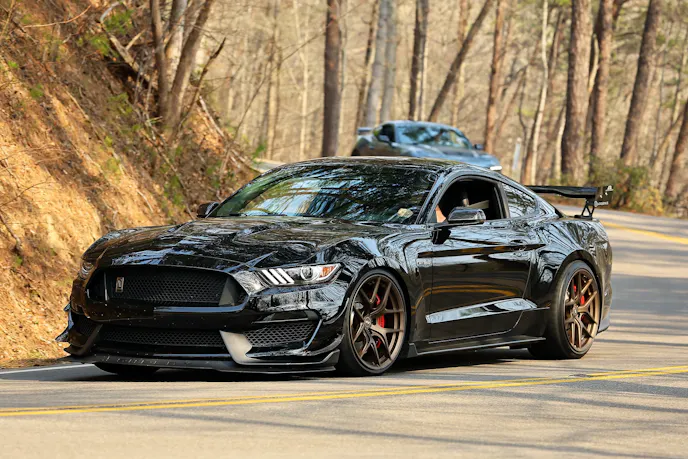
There’s also the ownership reality. The Voodoo engine’s infamous durability issues, including oil consumption and potential failure, factor into the buying decision in a way the Coyote-powered cars largely avoid.
“For someone who wants the most raw experience in a manual-only Mustang with the Shelby heritage to its name, the GT350 is the choice. The engine is very unique and will stand out from the ‘regular’ 5.0 crowd,” Girnus said. “This car is built for the track and mountain roads, but it’s not really ideal for a daily driver. With no auto-rev-match, no no-lift shifting, and no unnecessary screens, it is just a true enthusiast car with amazing character.”
Mach 1: Middle Ground
While it wasn’t driven by the duo in the video, the 2021-2023 Mustang Mach 1 sits squarely between those two ends of this spectrum and, for many buyers, makes the most sense. Its Gen 3 Coyote produces 480 horsepower and 420 lb-ft of torque, but the real story is how it leverages GT350 hardware, including the intake manifold, oil cooling, and chassis tuning, to create a cohesive, durable package.
“The Mach 1 is for the balanced driver. This is someone who wants a car that can do everything well — all at a great bang for the buck,” Cervenka, who has experience behind the wheel, offered. “It is capable on track, comfortable enough for daily use, and predictable in how it behaves. It is not the most exciting, but it is easily the most well-rounded.”
That matches this author’s reaction to driving the Mustang Mach 1, where the car consistently delivered repeatable performance without the sharper edges of the GT350. With the Handling Package (which includes wider wheels, Michelin Pilot Sport Cup 2 tires, and stiffer MagneRide tuning), it closes much of the gap to the Shelby in terms of outright capability.
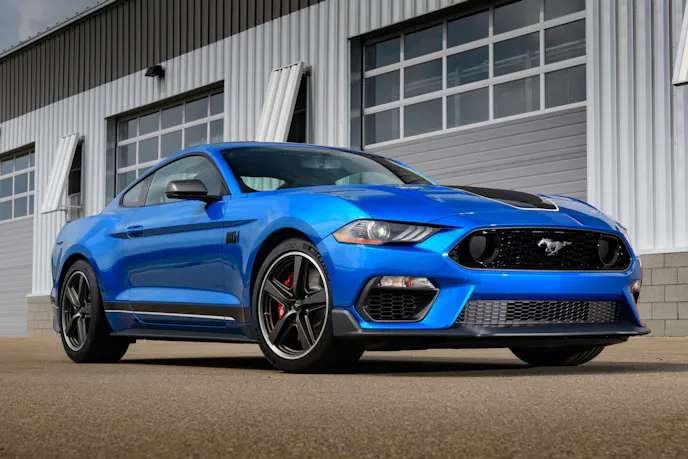
From a buyer’s perspective, Girnus expanded on that by stepping back from pure driving feel and focusing on how the Mach 1 fits into real-world ownership, with cost, reliability, and flexibility all playing a role.
“It’s for someone who wants a very reliable, fun, budget-friendly (probably still the lowest price point out of the three vehicles), and relatively raw Mustang. The match of the 5.0 with the TREMEC or 10R80 is great for a track beast, but also for a reliable daily,” he said. “You also have an option on whether you like the digital dashboard or you like the more classic analog gauges. For those reasons, the Mach 1 gives you the most versatile options when choosing your new vehicle.”
That versatility defines the Mach 1. It doesn’t deliver the same passionate response as the GT350 or the same level of refinement as the Dark Horse, but it consistently lands in the sweet spot between the two.
Tough Decision
All three of these Mustangs bring legitimate track capability to the production Mustang table, but they go about it in fundamentally different ways. The GT350 leans into character and driver engagement, the Mach 1 balances performance with usability, and the Dark Horse pushes the platform forward with refinement and accessible speed.
There isn’t a wrong choice, but one might be more right for your driving style or personality. It comes down to what you value most behind the wheel. For buyers who haven’t had the chance to drive them back-to-back, the real-world insight from Cervenka and Girnus in their collab video clarifies making that call.
“The biggest difference between these cars is not how fast they are, it’s how they deliver that performance and confidence to the driver,” Cervenka added.
You might also like
Building A Potent Gen 3 Coyote Powerplant to Outmuscle Exotics
RPG Racing Engines builds a potent Coyote for the Fox v Ferrari Mustang. This turbocharged engine targets 900 horsepower and beyond.