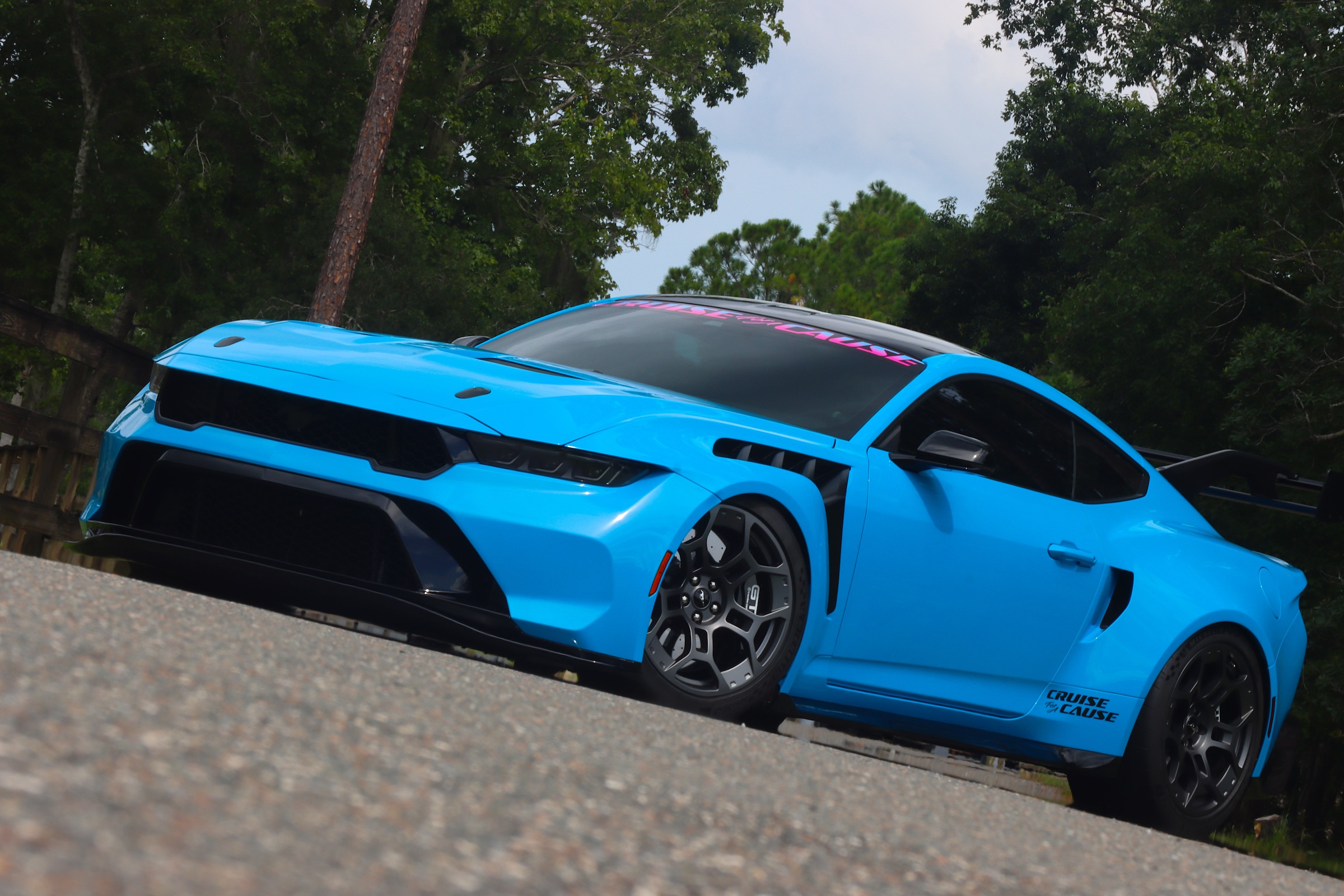
Slipping into the form-fitting Recaros and wrapping my hands around the thick steering wheel, the Mustang GTD felt immediately familiar. The view across the dash is unmistakably Mustang, but the aggressively ducted hood, massive fenders, and low-slung stance make it clear this is something far more serious.
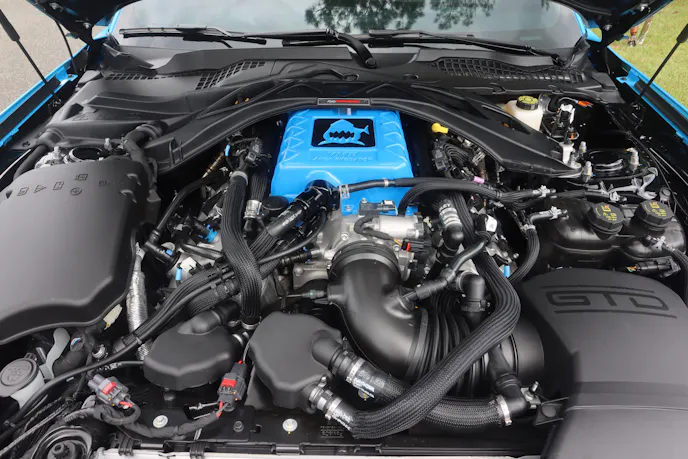
Press the start button and the supercharged 5.2-liter Predator V8 rumbles to life. Select Drive, roll away, and the S650-based supercar sheds some of its mystique. Despite 815 horsepower, 664 lb-ft of torque, massive tires, carbon-ceramic brakes, and an exotic inboard rear suspension, this $350,000-plus machine is remarkably easy to drive.
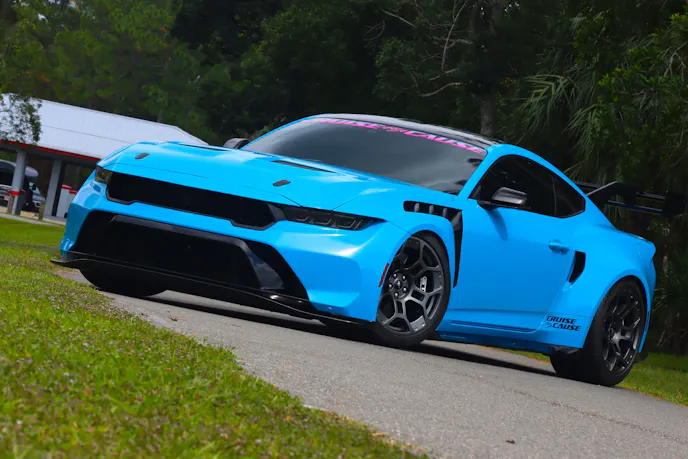
Immediately, as I blast away from the VMP Performance compound, the Mustang GTD feels special but still drives like a Mustang, just wider, lower, meaner, and turned up several notches. The controls are familiar, the visibility is good, and the seats are supportive. Then you lean into the throttle, and the Predator reminds you exactly what you’re sitting in.
Having driven the Blue Oval’s previous supercars (the first- and second-generation Ford GT), this one is immediately an easier car to drive. The first-gen GT was the more daily drivable of that breed, but this one is flat-out familiar and far less intimidating. That wasn’t the case with the second-gen GT. It was so low, wide, and expensive that I was terrified a truck would dart over in traffic and trample the corner of the front end during my oh-so-short drive down Woodward Avenue. I should have been scared to drive this six-figure machine too, but the Mustang GTD reassured me with just enough pony-car personality to keep my mind off that big number at the bottom of the window sticker.
Dynamic Development
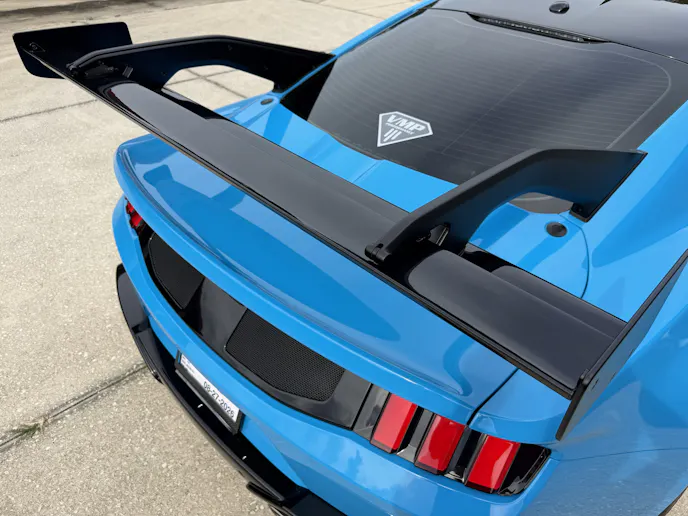
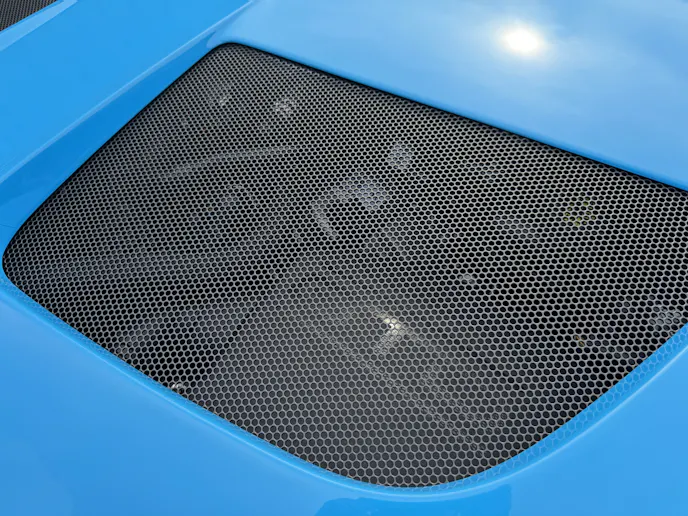
The VMP Performance teamed up with cancer charity Cruise For A Cause on the GTD I drove. It serves as an R&D platform for the VMP, and it already wore VMP’s Apex Predator supercharger lid and intercooler cores for factory-supercharged 5.2-liter V8 engines. While its off-the-shelf Grabber Blue coating was not a direct match for the Mexico Blue of this GTD, it did deliver a performance improvement.
“…We picked up about 30 to 40 rear-wheel horsepower with our better-flowing brick, better-flowing lid, and everything,” Justin Starkey, VMP Performance founder, said. “And as a bonus, it’s not sound-dampened, so you can hear the freaking supercharger.”
The additional blower whine travels to the cabin when you get into the throttle (which you want to do as often as possible), adding another layer to the GTD’s already glorious soundtrack. This example already produced 770 rear-wheel horsepower at Mustang Week, with the heat and poor correction factor leaving plenty of room for more power in better conditions.
From a roll, the punch is smooth, and the power swells as the speedometer swings toward triple digits. The engineering effort is apparent, and the result is addictive. Even on a quick street drive, the GTD gives you a sense of how much hardware is working underneath you. The steering is immediate, the chassis feels planted, and the brakes feel like you are throwing out a battleship anchor while piloting a sailboat.
Balanced Attack
From behind the wheel, it never feels like the GTD chassis is playing catch-up with its impressive underhood output. That balance is apparent almost immediately. You can feel the width and the grip, but the car remains composed when you drop the hammer to let the Predator eat or stab the brake pedal, and the six-piston front calipers join forces with the four-piston rears to clamp the massive carbon ceramic rotors.
Clearly, the foundation is sturdy, and the race-inspired suspension keeps you connected to the road in a way that you can feel the road but not be assaulted by its imperfections. It reacts quickly to every input, with race-worthy power and speed on board that is more of a necessity than a nicety.
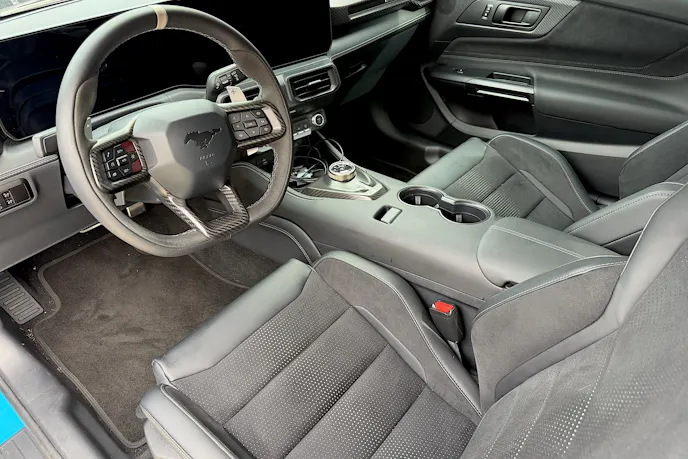
For performance enthusiasts, mechanical noises are part of the appeal. The VMP lid lets more supercharger whine into the cabin. At the same time, the rear of the car communicates its mechanical business as the inboard rear suspension articulates under deceleration, as the proprietary Multimatic Adaptive Spool Valve dampers tame the sudden movement.
This brief blast down the highway wasn’t exactly a lap around the Nürburgring to truly work that advanced suspension. Moving from the street to the road course would reveal far more about the GTD’s limits and this author’s fortitude. However, even this short drive makes the car’s capabilities obvious. It has the grip, braking, and chassis hardware to put its prodigious power to work with the balance you’d expect from a street-legal race car.
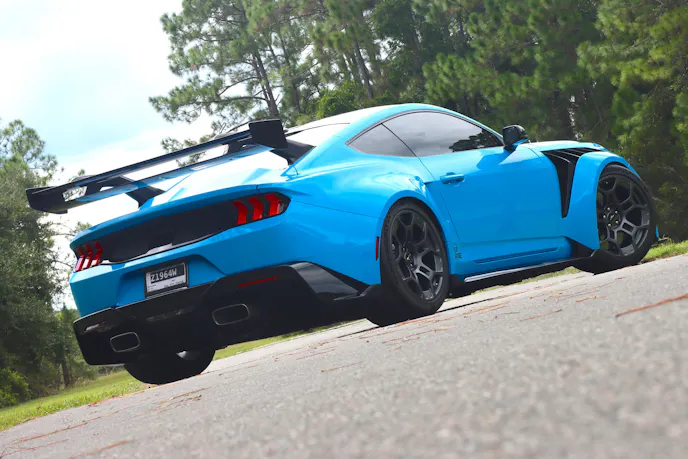
Next Level
Of course, VMP Performance is working to shift the balance in favor of higher engine output. The GTD is being used as a development platform for new hardware and calibrations, with Starkey using HP Tuners and VMP’s existing upgrades as the foundation for future testing. That work also ties into Ford’s forthcoming Dark Horse SC development, as the SC shares key powertrain control architecture with the GTD.
Even in mildy modified form, this car makes a strong impression as it sits, but it should be insane when VMP turns up the wick. The Mustang GTD already has outrageous numbers, exotic hardware, and a supercar price tag, but you could still drive this car every day — if you don’t mind attracting lots of attention — and Starkey does just that. And, frankly, this scribe is pretty jealous.
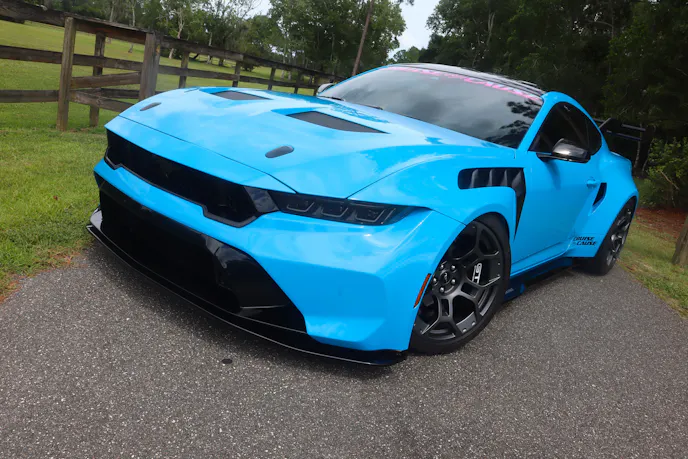
Obviously, I had to drive the car in the name of science, as it will present a suitable baseline when it’s time to drive the GTD’s more accessible cousin, the Mustang Dark Horse SC. That is happening imminently, but for now your author is coming to grips with the memories of driving a car far beyond the bounds of my budget, yet still well within the realm of my high-performance desires.
So, be warned. If you get the chance to drive the fastest, most powerful production Mustang thus far, you might want to pass, because if you get a taste, as I did, your next stop is likely to be buying some lottery tickets and hoping for the best. (Spoiler Alert: I didn’t win.)

You might also like
Lyn St. James’ Widebody Fox Capri IMSA Racer Sells For Nearly Six Figures
Lyn St. James’ IMSA Capri is powered by a 338-cube Ford V8. Carrying lots of racing history, this Fox Capri recently sold at auction online.