Massive dyno numbers from a small-block Ford on a low-boost setup always grab attention, but doing it with a carbureted setup makes it even more intriguing. Tuning this combination takes patience and a sharp eye for hidden mechanical gremlins. During heavy dyno sessions, project vehicles usually expose every weak link hiding under the hood.
The trip to AMP Engine Management for a hub dyno session started with several frustrating mechanical hurdles. After sitting for two months with E85, the carburetor internals completely gummed up. Rain also ruined the remote TFI module mounted on the fender. With a Holley carb in control, Steve handled the tuning duties.
Initial pulls revealed underwhelming output. Nakea Hester of BREW2L recalls, “So, to start with, the car made about 650 to the wheels, and they knew that was wrong, right? The car should make way more than that. Come to find out, they were only getting half throttle.”
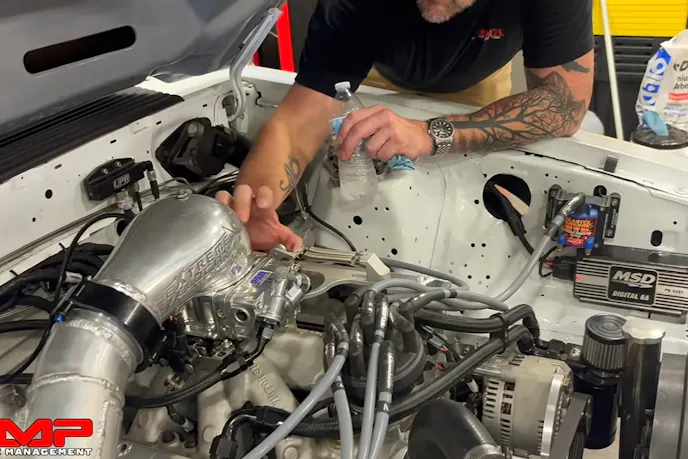
A quick phone call revealed that the linkage severely restricted the butterfly valves. Technicians also corrected a fuel-pressure reference line pulling inaccurate readings from the hat. With the physical restrictions cleared out completely, this small-block Ford setting immediately laid down better numbers.
“So, they fixed that, and the car immediately made 850 right on like nine and a half pounds,” Hester said.
For better grip at higher RPM, the crew swapped over to a cog-belt configuration. Rolling onto the throttle with 12 pounds of pressure netted an incredible 950 rear-wheel horsepower before the engine slung the belt off the pulleys.
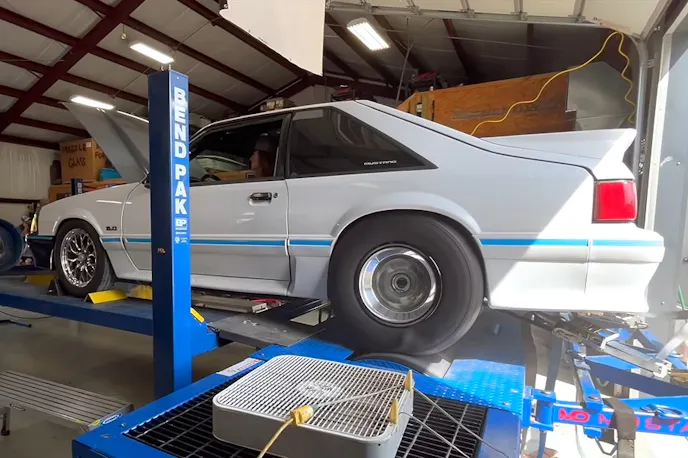
While overhead-cam engines garner a lot of headlines these days, those final numbers prove exactly what a properly tuned small-block Ford can do without much boost.
You might also like
Livernois Tuning Adds Big Torque Muscle To The Maverick Pickup
Livernois Motorsports tuning for 2.0-liter 2025 Maverick models delivers big gains. The 93-octane calibration added 100 lb-ft of torque.