Ford changed the high-performance truck industry forever when it released the second-generation Special Vehicle Team Lightning. While the factory supercharged 5.4-liter V8 produced plenty of thrust for the era, modern horsepower standards constantly push builders to extreme limits.
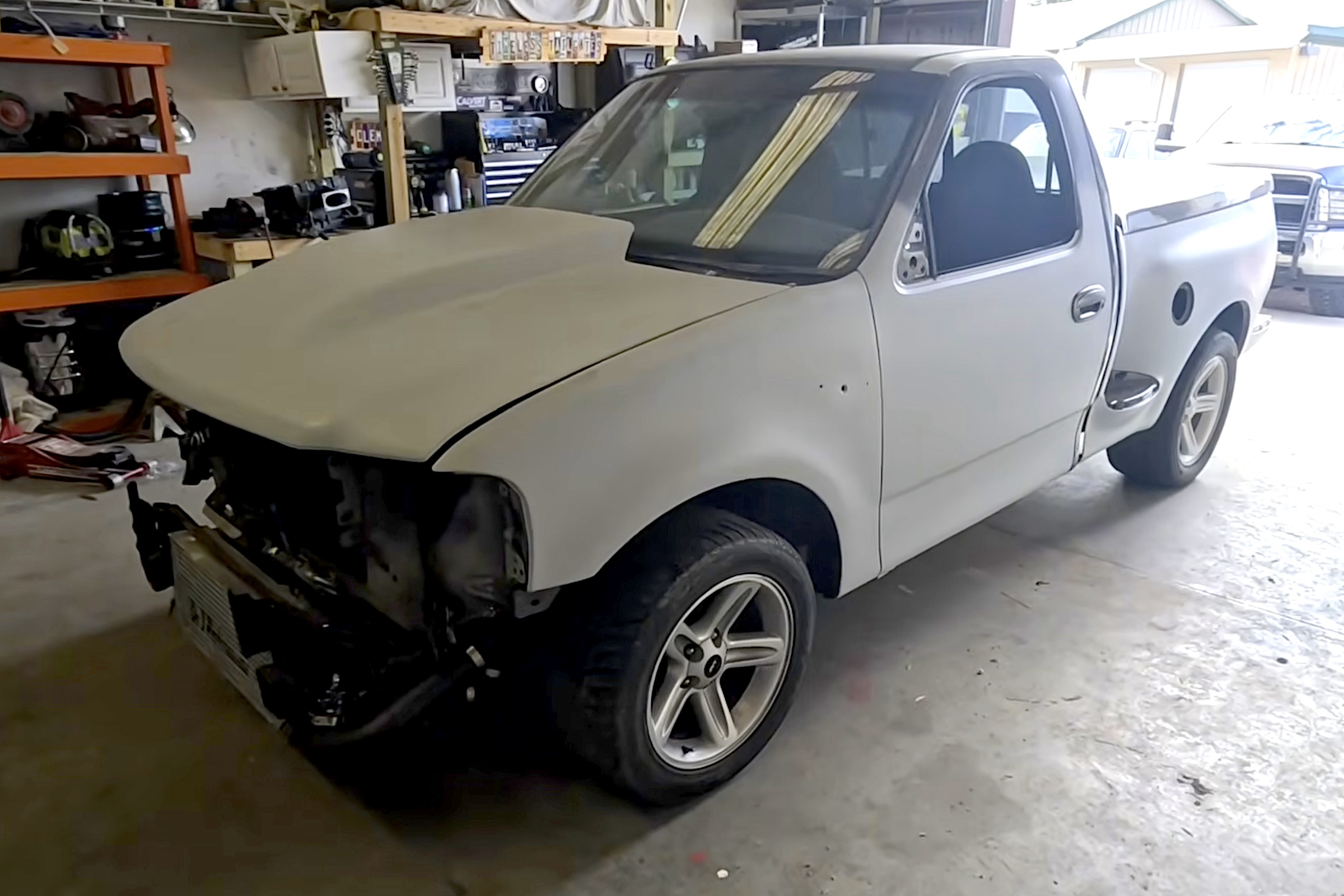
One enthusiast decided to ditch the modular V8 altogether, opting to stuff a massive 10-cylinder engine between the frame rails of his 2004 F-150. After months of fabrication, the twin-turbo V10 Ford Lightning built by the Timeless Tailgates YouTube channel is finally running and ready to prove itself on the street.
Before the truck could leave the shop, the builder spent hours rerouting tedious engine bay wiring and shortening vacuum hoses. With the cosmetics sorted, the wild forced-induction setup hit the rollers to see what the custom engine could actually produce on standard pump gas. To keep the engine reliable, the tune was safely scaled back to 642 horsepower and 609 lb-ft of torque on 17 pounds of boost.


Taking a 700-horsepower project out for a shakedown run always reveals a few quirks. The massive turbos require significant patience from a dead stop, but the top-end acceleration easily overpowers the rear tires. The test drive almost ended in disaster when the hot exhaust piping melted directly through a plastic inner fender liner, forcing a quick return to the garage before a fire could ignite.

Despite the impressive dyno numbers, the project is currently fighting a severe electronic bottleneck. The factory engine control unit cannot process the fueling and ignition demands of the twin-turbo V10 Ford Lightning once engine speeds exceed 5,300 rpm. Upgrading to a standalone aftermarket management system will eventually allow the builder to unlock the full potential of the combination across the entire rpm range.
The factory computer is not the only piece of original hardware causing headaches. Because the 10-cylinder engine runs aggressive aftermarket camshafts, the original idle air control valve cannot flow enough air to keep the truck running smoothly when cold. The engine requires several minutes of warming up before the idle stabilizes.
That said, this unusual project shows a lot of promise. With the mechanical testing deemed a success, the stripped chassis is now prepped and ready to visit the body shop for a completely fresh exterior.
You might also like
This Barn-Find 1977 Ford F-100 Became An 860HP AWD Monster
An active all-wheel-drive system allows this 1977 Ford F-100 to launch smoothly with 860 supercharged horsepower on tap.