Some cars become icons because they were quick. Others make their marks because they completely alter expectations. Ford’s 1964 Fairlane Thunderbolt managed to do both, arriving at a moment when the Motor City horsepower wars escalated and promptly rewriting the rules for Super Stock competition.
By stuffing a specially prepared dual-quad 427 FE into a lightweight Fairlane body and stripping away anything that didn’t contribute to acceleration, Ford created one of the most formidable drag racing weapons of the decade. The Thunderbolt was capable of high-11-second quarter-mile times at a point when many so-called high-performance street cars were still working to break into the 14s. In 1964, that kind of performance bordered on unbelievable.
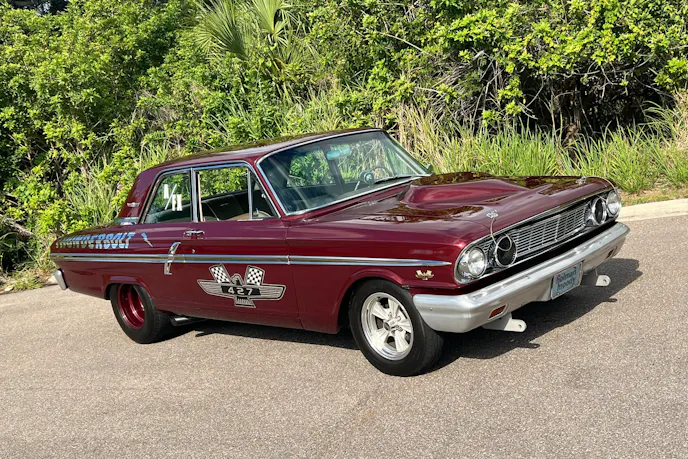
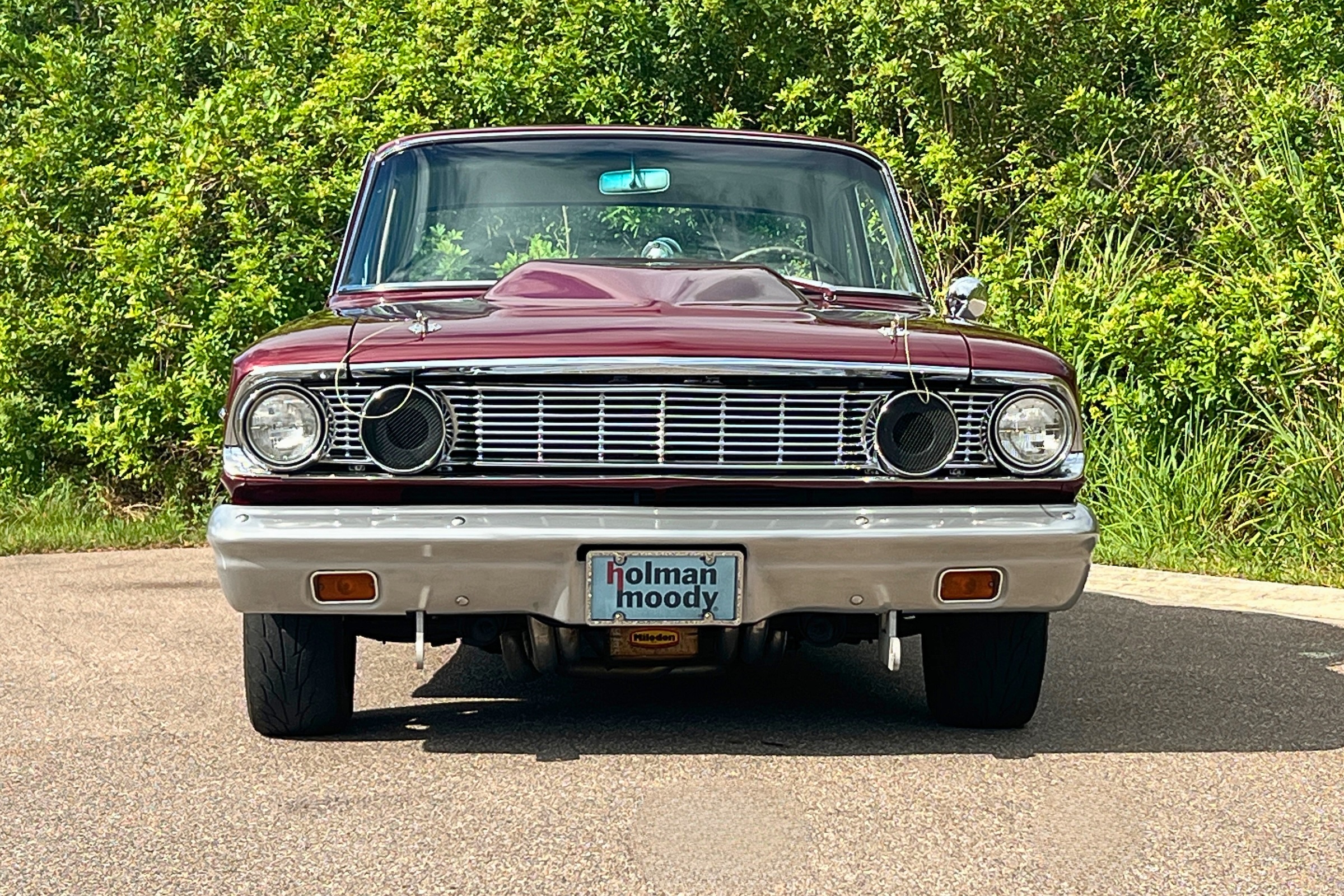
That combination of raw capability and factory-backed ingenuity still resonates with enthusiasts today, which helps explain the appeal of Andy Carrano’s meticulously assembled 1964 Fairlane Thunderbolt tribute. While it isn’t one of the original factory-built cars, it captures much of the attitude, sound, and visual intimidation that made the Thunderbolt one of the most revered Blue Oval competition machines ever produced.
Unlike the original one-of-100 factory race cars, however, Carrano’s Fairlane was built with street use firmly in mind. The goal was never to create a museum piece or an exact concours recreation. Instead, the mission was to preserve the personality of Ford’s drag racing icon while building something that could be driven and enjoyed regularly.
Performance Philosophy
That philosophy extends throughout Carrano’s collection. Sharing garage space with the Fairlane are a 1968 Hemi Dart clone and a 1967 Mercury Comet Cyclone powered by a non-original 427 FE. All of them wear license plates, and all of them spend time on public roads rather than sitting under covers waiting for the next show season.
The original Thunderbolt program represented the exact opposite approach. Street comfort and convenience played no role in Ford’s calculations as engineers and fabricators focused entirely on reducing elapsed times and dominating NHRA Super Stock competition. Anything that added weight without improving performance quickly found its way onto the deletion list.
The cars received a single windshield wiper and a lone sun visor. Armrests disappeared entirely, and rear window cranks vanished because the rear windows no longer rolled down. Fiberglass front fenders replaced heavier steel components, while the famous teardrop hood provided clearance for the towering induction system underneath. Weight savings became such an obsession that Ford initially fitted the cars with fiberglass front bumpers before complaints from competitors led to the adoption of aluminum pieces instead.
Additional pounds disappeared thanks to the use of lightweight Econoline van seats and the replacement of carpeting with a simple rubber floor mat. Some cars also utilized Plexiglas side and rear windows in the name of performance. Every change served a singular purpose, and the result was a roughly 3,200-pound intermediate carrying enough power to embarrass virtually anything sharing the staging lanes.
The heart of the original Thunderbolt package remains one of the most fascinating FE combinations Ford ever produced. The actual Thunderbolt got a unique powerplant. It was a modified 427 high-rise, center-oiler engine (not a side-oiler). It came with a high-rise intake manifold with dual Holleys. Engineers raised the ports 0.5-inch on the cylinder heads to get more flow area, and the new manifold positioned the carbs a full 3 inches higher than other 427s.
Lasting Legacy
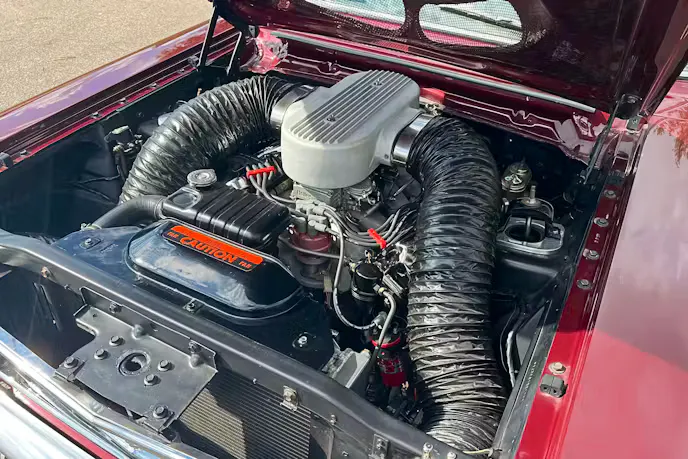
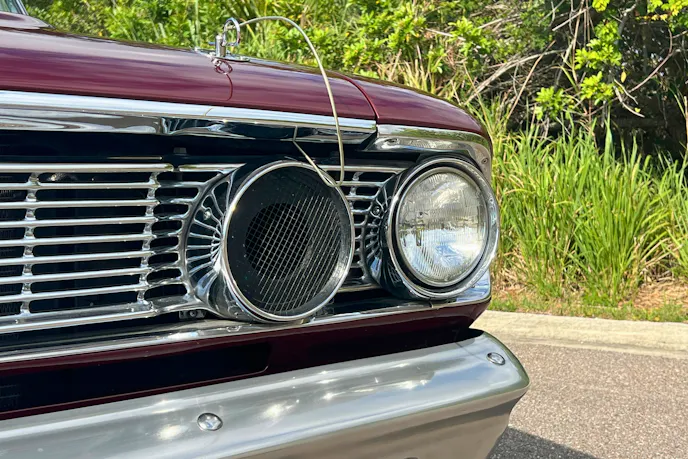
The elevated carburetor placement required the now-famous teardrop hood and also created another Thunderbolt hallmark. The high-beam headlights were removed and replaced with ducting that fed cool outside air directly into a sealed airbox for the dual Holley carburetors. Equal-length headers snaked through the engine bay in a layout that looked more race car than production vehicle, reinforcing the fact that the Thunderbolt was little more than a legal NHRA race car wearing a VIN tag.
The combination proved devastating on the track. Drivers such as Gas Ronda, Hubert Platt, Dick Brannan, Al Joniec, and Butch Leal quickly established the Thunderbolt as the car to beat in Super Stock competition during the 1964 season. Ronda captured victories at both the Winternationals and U.S. Nationals en route to the NHRA Super Stock championship and lowered the elapsed-time benchmark to an astonishing 11.52 seconds in the process.
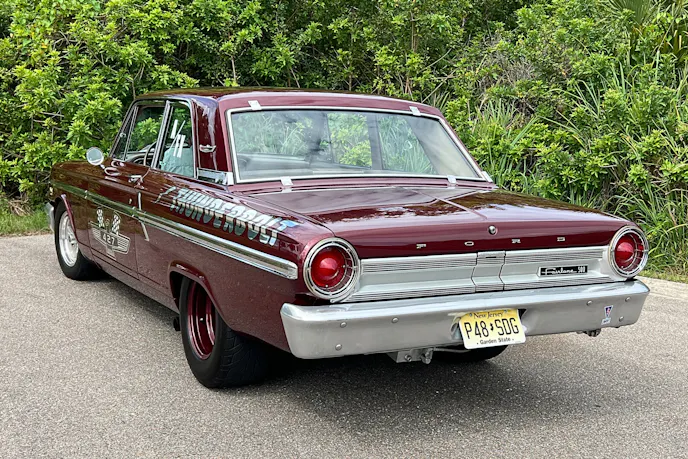
Building a tribute that captures that spirit while surviving modern pump fuel and highway cruising requires a different approach, and Carrano carefully selected components that respected the original formula while improving drivability.
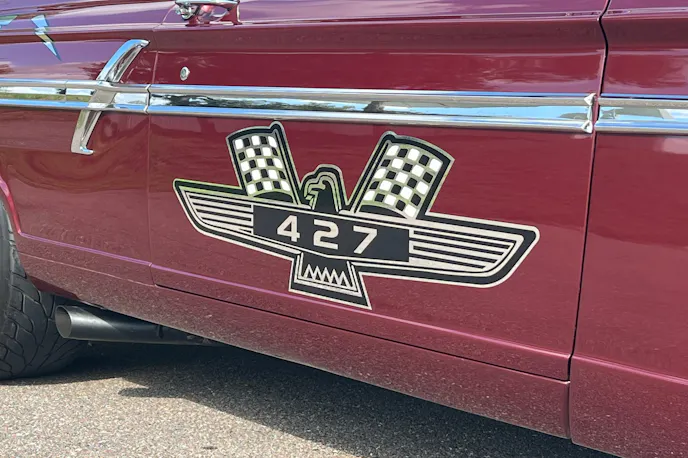
Under the fiberglass hood sits a 1965 G-code 427 side-oiler FE carrying a compression ratio slightly above 11:1 rather than the original Thunderbolt’s race-fuel-only 13.5:1 specification. Feeding the big-block is an aluminum intake manifold topped by a pair of 600-cfm Holley carburetors, while the headers and exhaust routing closely mimic the arrangement used on the factory race cars.
The driveline receives perhaps the largest departure from the original Thunderbolt specification. Factory cars utilized steep 4.56 gears in a 9-inch rear axle and relied on either a four-speed manual transmission or a modified Lincoln automatic, depending on the customer and intended use. Carrano instead opted for a TREMEC TKO five-speed backed by a 3.50-geared 9-inch rear carrying Moser axles. The setup retains plenty of acceleration while dramatically improving highway manners and reducing engine speed during long drives.
Thoughtful Tweaks
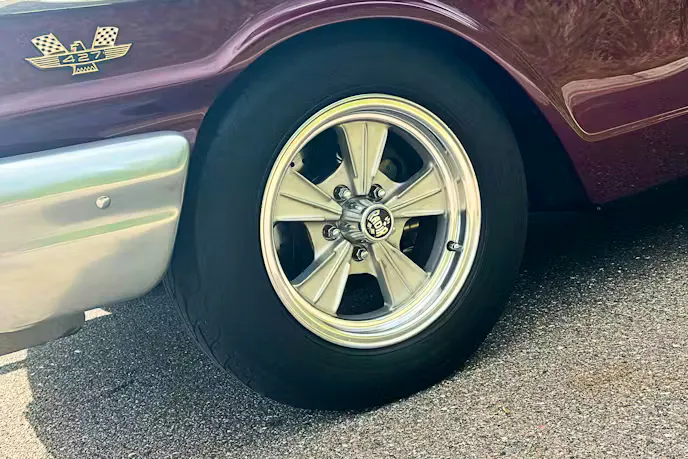
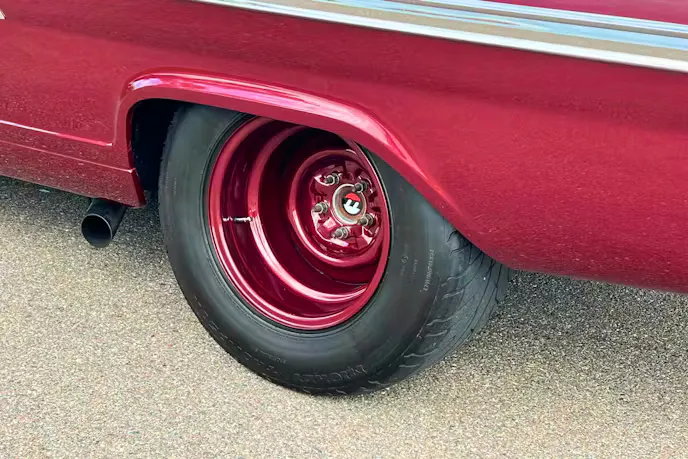
Additional upgrades continue that philosophy throughout the rest of the car. The Fairlane has been tubbed to accommodate 10-inch-wide rear wheels wrapped in Mickey Thompson radial rubber, while four-wheel disc brakes add confidence that simply didn’t exist in the original package. Classic Radir mags wearing skinny Mickey Thompson front tires preserve the unmistakable Super Stock stance, while steel wheels remain in place at the rear to maintain the proper look.
The details extend even further. The bumpers are powder-coated to resemble the aluminum units found on the original Thunderbolts, and tow bars are welded directly to the frame rails just as they would have been on the factory race cars preparing for another trip down the quarter mile.
“It is a five-speed car with four-wheel disc brakes, so it is fairly easy to drive if you want to take it out on a cruise,” Carrano says. “But it doesn’t have any creature comforts, though, as the Thunderbolts didn’t have heat, air, defrost, everything was deleted. The armrests were deleted from the car, as well as the armrests and window cranks in the back.”
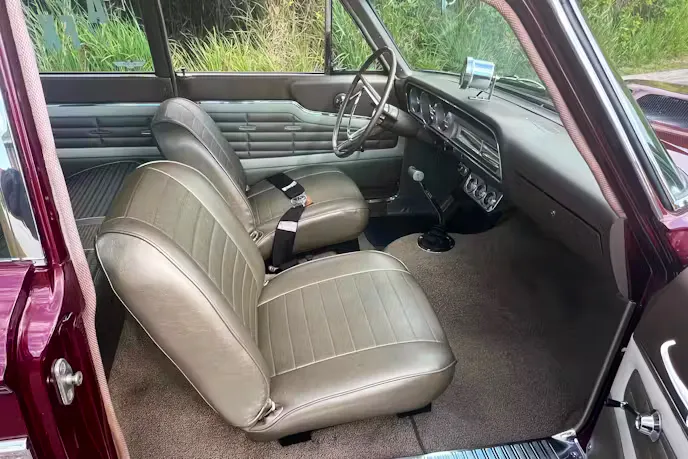
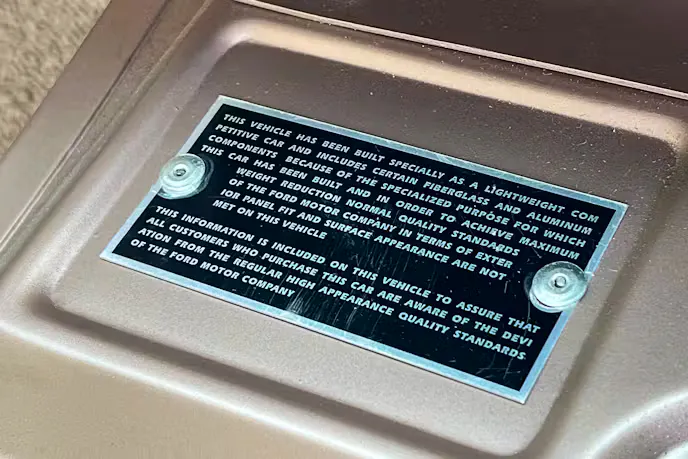
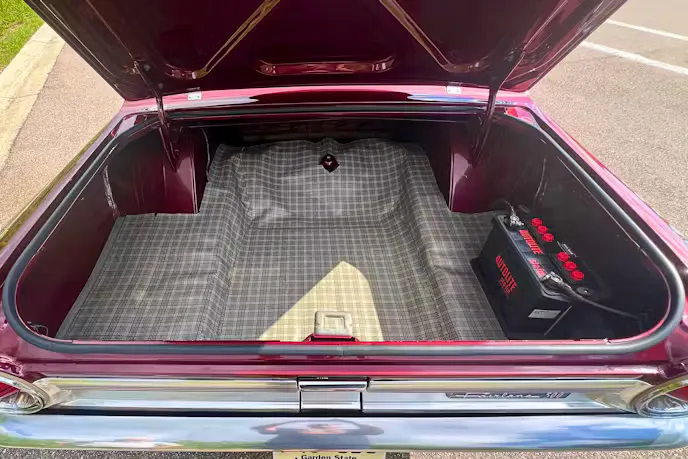
That commitment to authenticity continues inside the cabin. Carrano retained the correct Econoline van seats and gauges while relocating the battery to the trunk in keeping with Thunderbolt tradition. There are no armrests, no rear window cranks, a single windshield wiper, and only one sun visor. Rear window clips remain in place to keep the glass from departing the vehicle during spirited use, another detail borrowed directly from Ford’s drag racing program.
Carpeting replaces the original rubber floor covering, representing one of the few concessions to comfort found anywhere in the car. Combined with the five-speed transmission and highway-friendly gearing, it transforms what was once a brutally focused race machine into something that can realistically cover miles between cruise nights and local events.
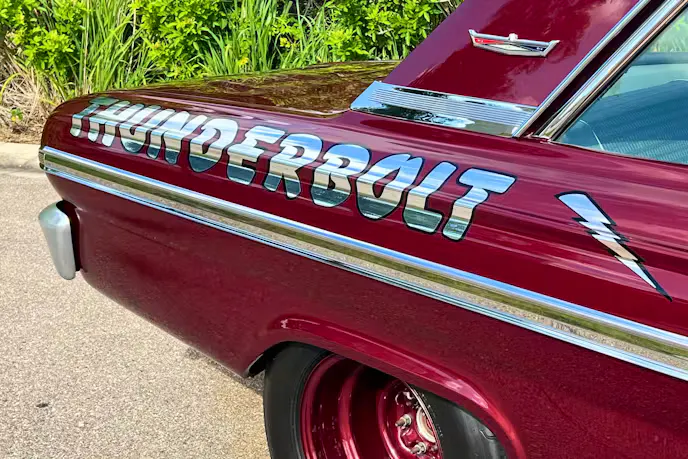
That balance is ultimately what makes Carrano’s Fairlane so appealing. A genuine Thunderbolt remains one of Ford’s most significant competition vehicles and one of its least practical street cars, built with a singular focus on winning races and little concern for owner comfort. This tribute preserves the look, mechanical personality, and unmistakable soundtrack that made the originals legendary while adding enough drivability to encourage regular use. It delivers much of the Thunderbolt experience without requiring a race trailer or a barrel of high-octane fuel.
You might also like
Love At First Drive Behind The Wheel Of A Mustang GTD Supercar
We went for a quick spin in the Cruise For A Cause/VMP Performance Mustang GTD. It blends high-level performance with everyday driveability.