By any count, 57 years is a lot of history for an automotive nameplate to survive. Yet, Ford Motor Company has achieved just that with its Mustang despite stock market crashes, gas shortages, recessions, and changes in public perception.
During that time span, Ford’s Mustang made it through all that to rightly claim the title as the world’s best-selling sports coupe. Even with its different incarnations along the way, it’s become nothing short of a legendary automobile.
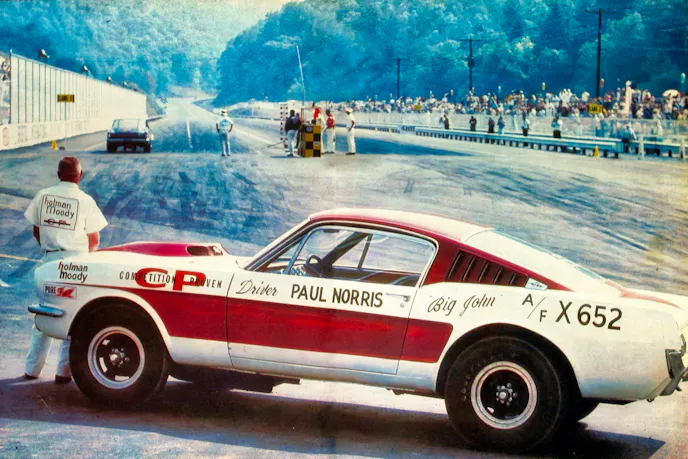
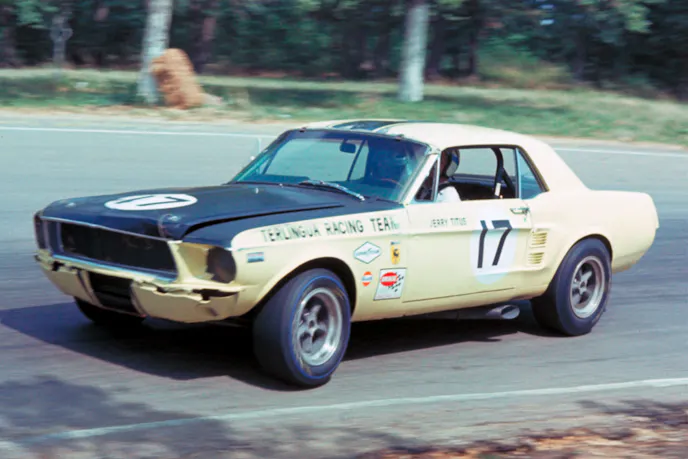
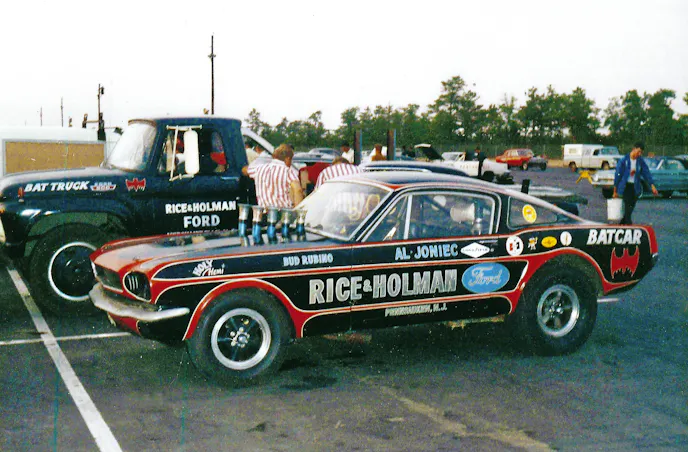
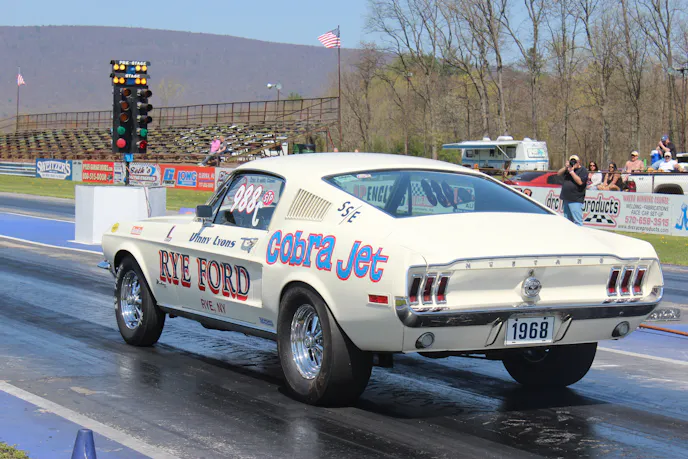
It all began on April 17, 1964. Newspaper and magazine advertising supplemented by prime-time TV spots had the public looking forward to the introduction of what Ford called “a wild pony.” A PR blitz that included prominent exposure at the 1964 World’s Fair and as the Official Pace Car for the Indianapolis 500 reportedly led to 100,000 sales in just the first 90 days following its introduction.
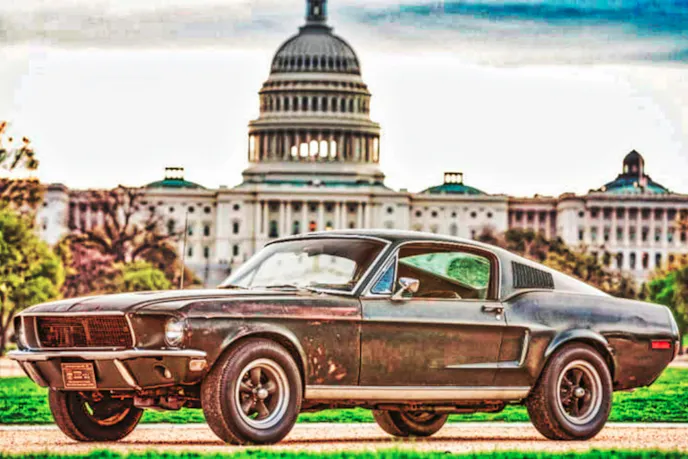
When the Mustang GT was unveiled in mid-summer 1964, the word “performance” found a place on the bandwagon of Mustang admirers. News of its exploits on the road courses and drag strips around the country filled the imaginations of buyers and buyers-to-be.
Over 2.4 million first-generation Mustangs were sold between 1964 and 1973. While that number included a collection of largely forgotten inline six-banger engines, these first-gen Mustangs made automotive history with some of the most formidable pushrod V8 engines ever made. With the K-code 289 small-block V-8 as a starting point, the FE family of 390, 427, 427 SOHC, and 428 cubic-inch engines gave Stang owners get-up-and-go while the 385-series Boss 429 became the top of the food chain for the Mustang.
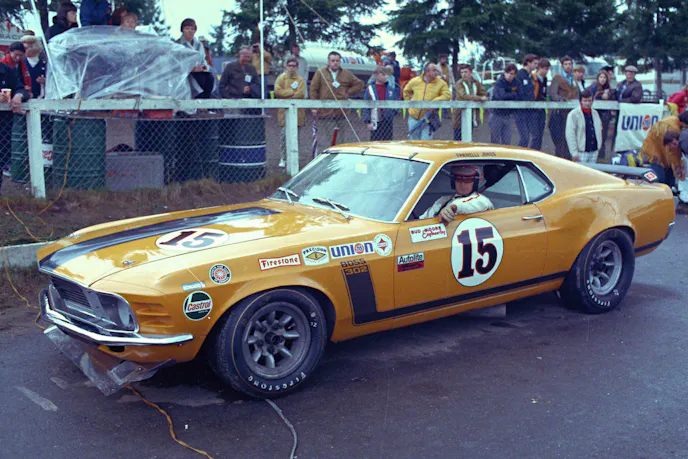
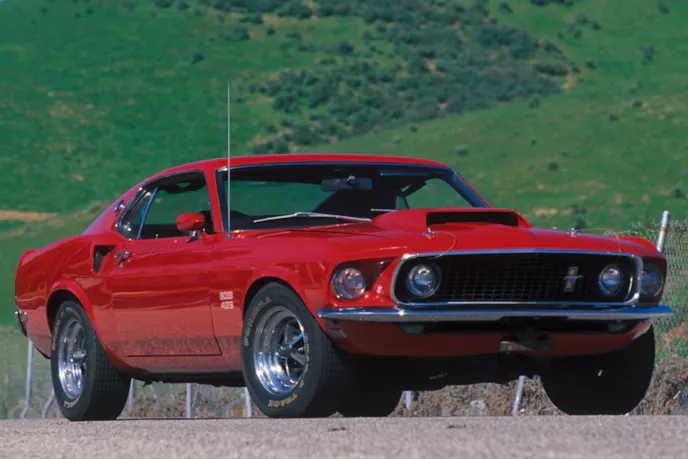
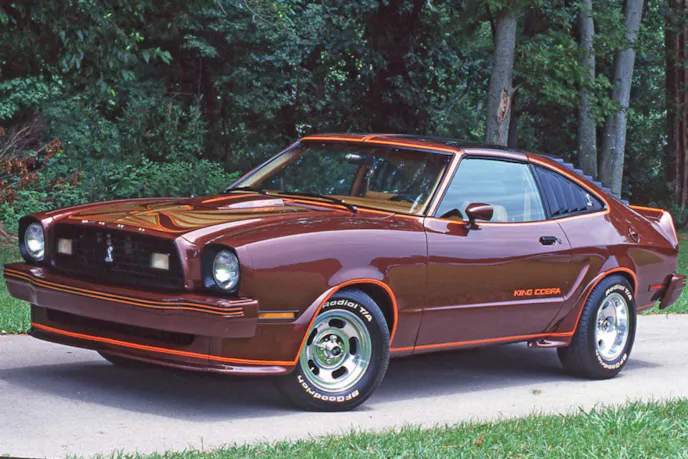
Things changed dramatically in the early seventies as insurance regulations, gas shortages, a resulting recession, and declining sales forced Ford to re-think what the Mustang should be. The result was the 1974-78 Mustang II. Based upon the Pinto platform, Mustang II’s remain the least collectible of all the Mustangs made, but people forget that it was acclaimed as Motor Trend’s Car of The Year in 1974. It was also a financial success with over 1.1 million sold.
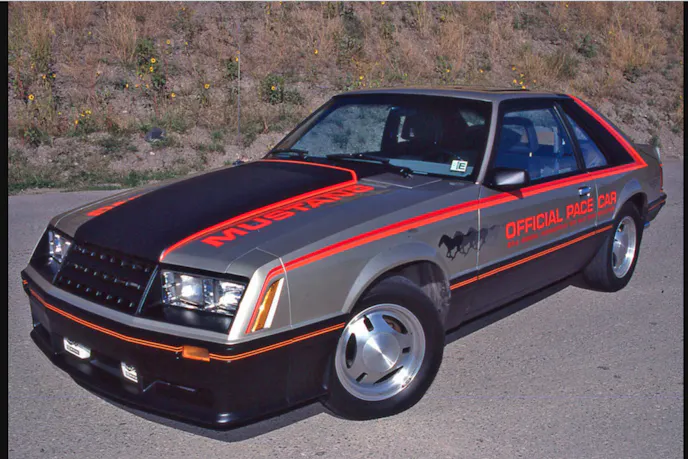
During another energy crisis in 1979, Ford introduced the third and best-selling generation of the Mustang. Positioned as a “new breed” with technical innovations and European-based looks, these remained in production until the 1993 model year. Sales were once again strong with sales of nearly 650,000 units in just the first two years of production.
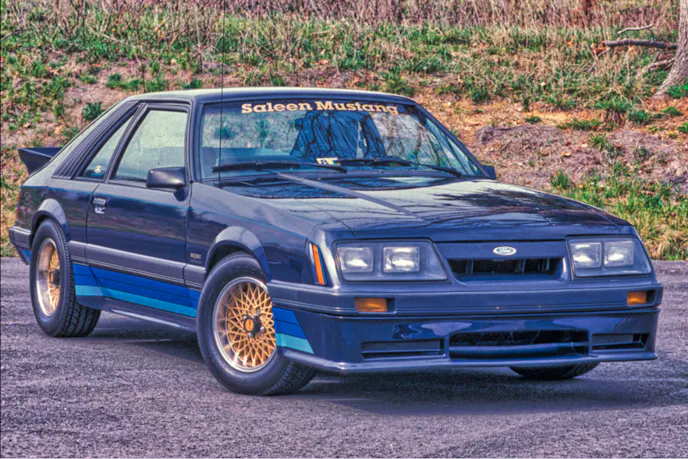
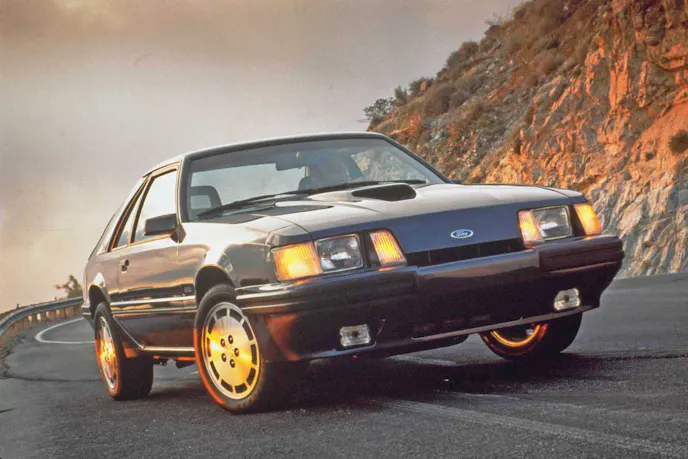
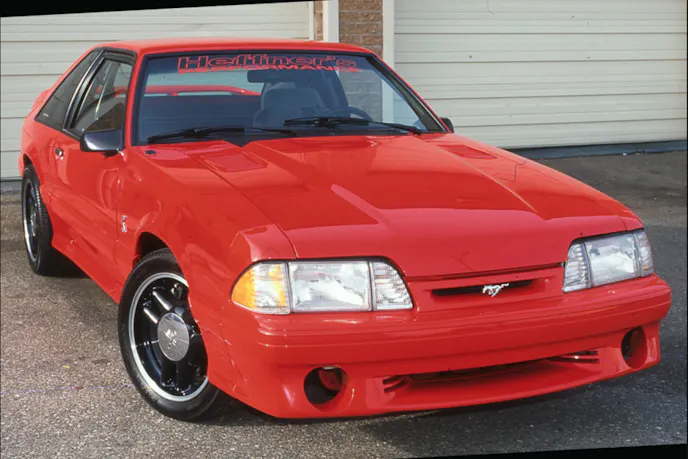
Originally available with a 5.0-liter V8 in 1979, this engine was dropped in favor of a weaker 4.2-liter V8 for the next several years. Ford corrected that mistake in 1982 by re-introducing the Mustang GT with a 5.0-liter engine. Rated at 157-hp, the 5.0 which got progressively more powerful the next year and again in 1985. In 1987, the Mustang GT and LX were available with a 5.0-liter rated at 220-hp, thanks in part not only to freer-flowing cylinder heads but also to fuel injection.
During this era, Saleen, Steeda, Kenny Brown, Roush began building aftermarket “tuner” versions of the Fox-body Mustang, among others. In the middle of this, Ford made a tuner car of its own with the Mustang SVO, which made a short-lived appearance during the 1984-86 production years. With this car came a number of firsts. The 1984 SVO had not only fuel injection, but also turbocharging, 5-lug wheels, aerodynamic refinements, and more.
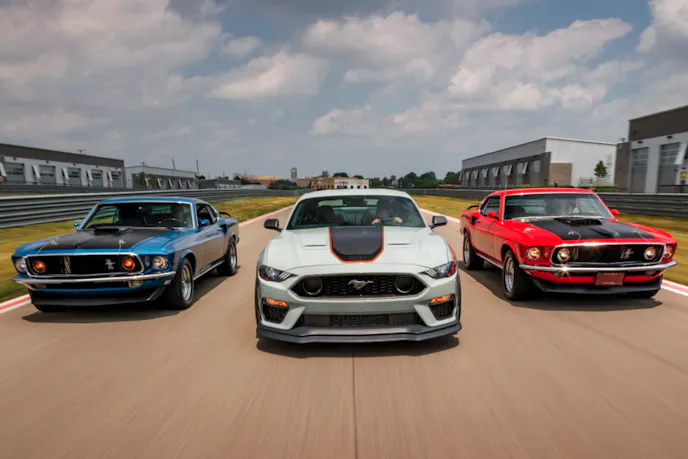
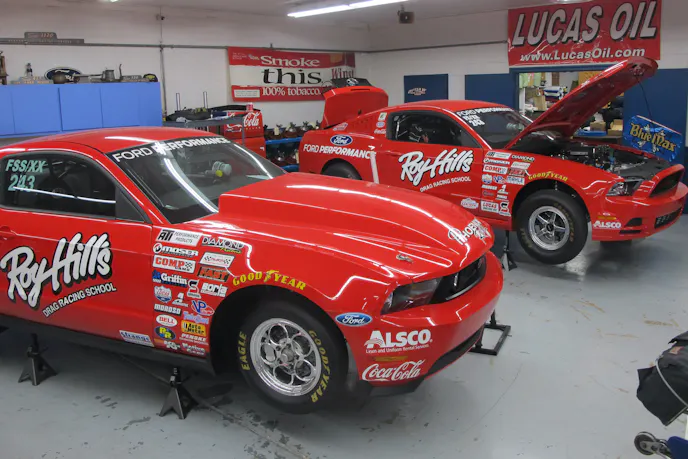
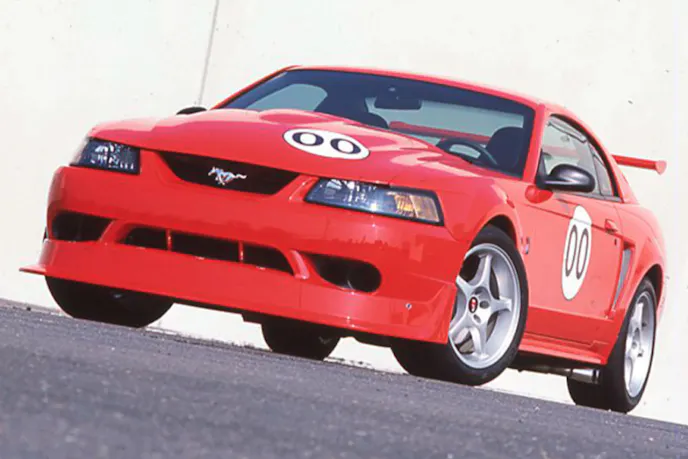
Despite the popularity among enthusiasts, the aging Fox-body Mustang needed replacement. That change happened in late 1993 with the announcement of the SN-95 platform Mustang. The launch of this new Mustang was widely hailed as the car demonstrated a better ride and handling along with new looks that unmistakably marked it like a Mustang. For the third (and last) time, the Mustang was the official pace car of the Indy 500.
During its life span, the fourth-gen Mustang said “goodbye” to the 5.0-liter engine and “hello” to the 4.6-liter DOHC engine in 1996. The Mustang was re-skinned completely in 1999 with a new look before production ended with the 2004 model year.
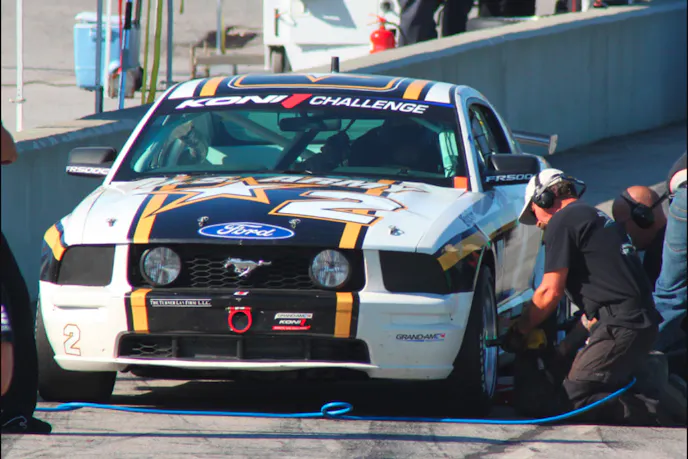
In 2005, the new S-197 was introduced. Styling cues that harkened back to the first-gen Mustang 2+2 gave it an attractive look that was popular with buyers. Until 2010, an all-aluminum 3-valve modular V8 rated at 315-hp was found in the Mustang GT.
Performance was back in a big way the following year with the “Coyote” 32-valve 5.0-liter V8 which produced over 400-hp and nearly the number in torque. Even the base six-cylinder, which now displaced 3.7L came with an aluminum block and produced over 300 horsepower.
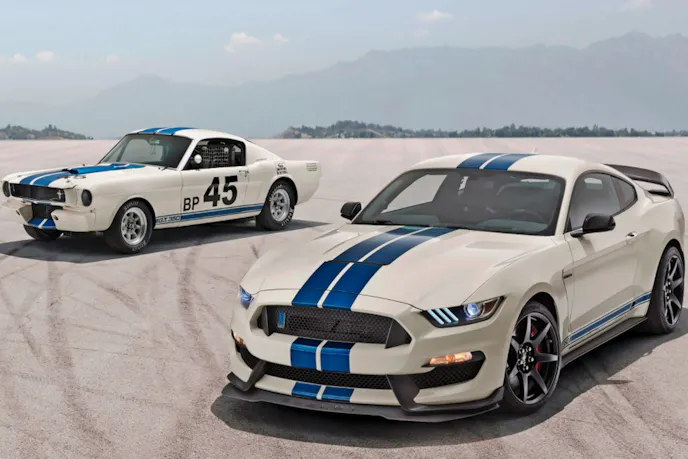
The S-550 or fifth-generation Mustang, which is still being made, is the most powerful – and perhaps the best looking – of any made to date. Lower, wider, and definitely meaner looking, these cars came with three different engine choices as a turbocharged four returned to the line-up for the first time since 1986.
During the 2018 model year, the exterior received minor updates while the V6 was dropped from the engine line-up. The direct-injected 2.3-liter turbo-four, rated at 310 hp, was the base engine while the 5.0-liter V8 made 460 hp with 420 lb-ft of torque – which is more than twice what most Fox body 5.0-liters made in its heyday.
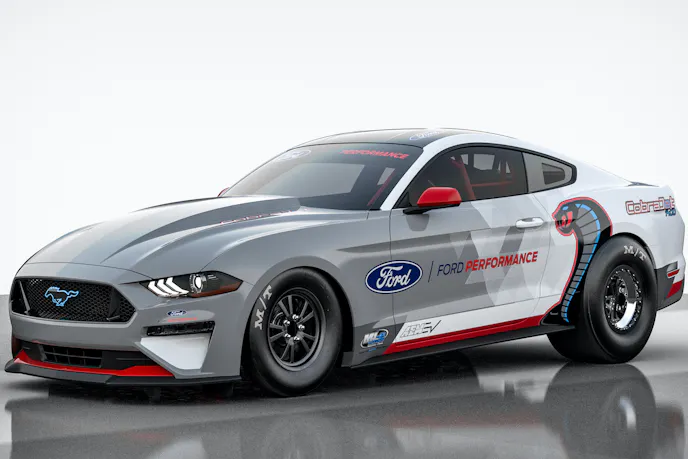
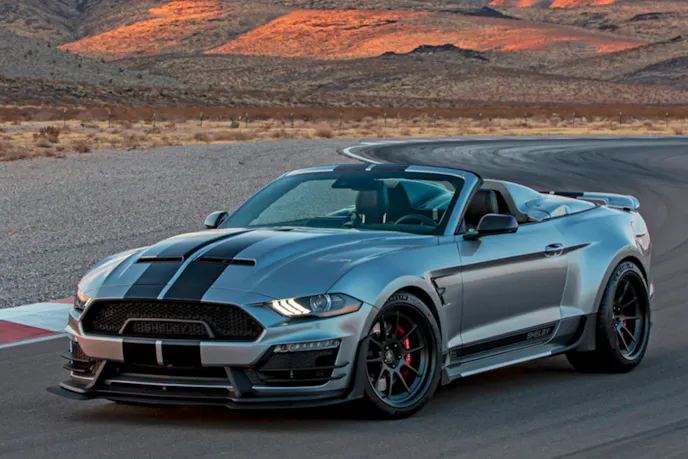
Breaking through the conception of what a Mustang is (or was) however, is the Mach-E, which is a five-door all-electric crossover. Headlining that series are the Mach E-GT and GT Performance Editions. Priced at just over $60,000, it’s equipped with an electric 480 hp motor capable of a whopping 634 lb-ft of torque with a range approaching 250 miles.
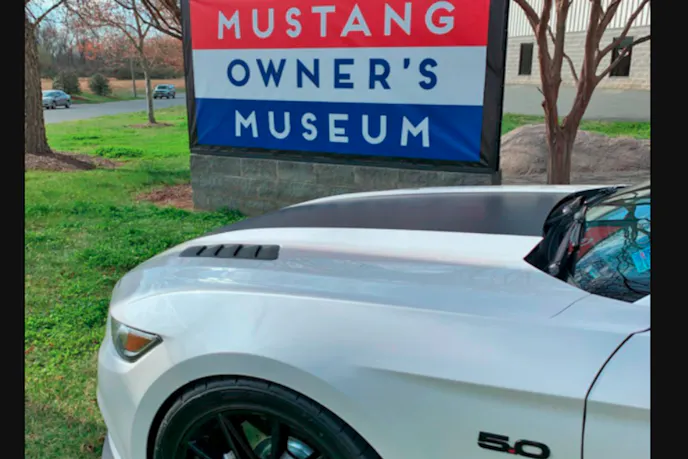
Looking back, Ford’s venerable Mustang was an iconic car that captured the appeal of car enthusiasts worldwide. It looks to continue that appeal going forward.
You might also like
Prepped Project Clubsport Sets Its Track Baseline Before The Mods Begin
To set the stage for its evolution, we took Project Club Sport to the track. Before doing so, however, we made some sensible upgrades.