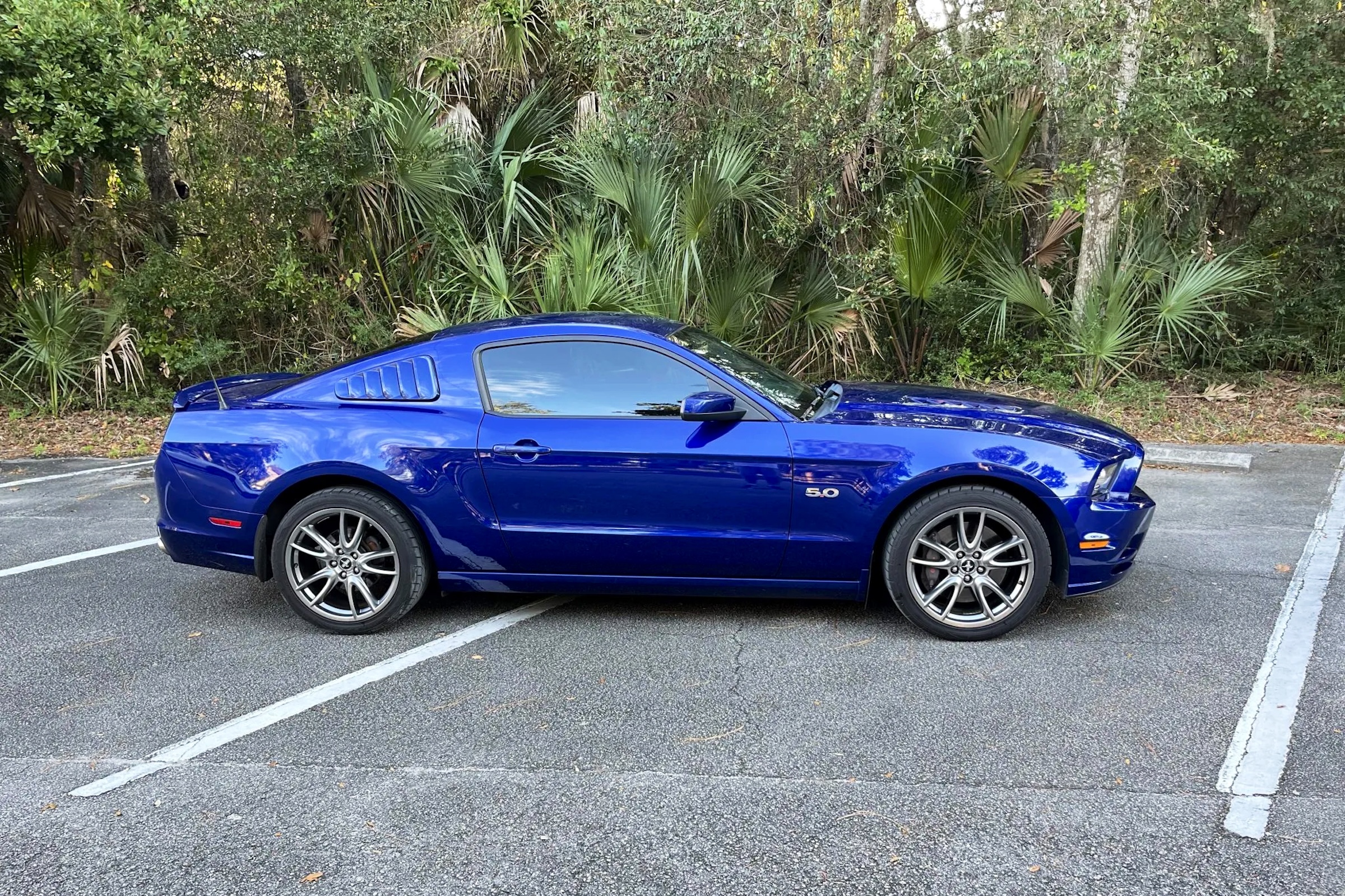
Fox Mustangs are popular, in part, because Ford built them for 14 years, and many of the aftermarket parts available for them cross over between model years. However, there is another Mustang era that fits those criteria and is ripe for a renaissance as the foundation for potent project-car builds. A case in point is our latest project vehicle, a 2014 Mustang GT owned by Ivan Korda, Director of Business Development at POWER, FordMuscle’s parent company.
A new dad, Korda wanted a project that delivered serious performance potential without the financial commitment required by today’s latest pony cars.
In a market where new performance Mustangs can easily crest the $60,000 mark before modifications even enter the equation, it is easy to overlook what might be the sweet spot in the used-performance landscape. The 2011-2014 Mustang GT combines first-generation Coyote power with one of the deepest aftermarket ecosystems in the Mustang world, making the S197 Mustang platform a compelling foundation for a modern performance build.
That value proposition is exactly what sparked Project Clubsport. Rather than starting with an S550 Shelby GT350 or an S650 Dark Horse, Korda decided to begin with a platform that many enthusiasts have quietly overlooked in recent years. The mission is straightforward: build a 2014 Mustang GT capable of chasing the track performance benchmarks established by Ford’s more recent performance models while keeping the total investment around the cost of buying one newer car outright.
Value Proposition
After all, a clean 2011-2014 Mustang GT can often be found in the $15,000-$20,000 range, depending on mileage and condition, leaving substantial room in a $35,000-$40,000 overall budget for carefully selected performance upgrades.
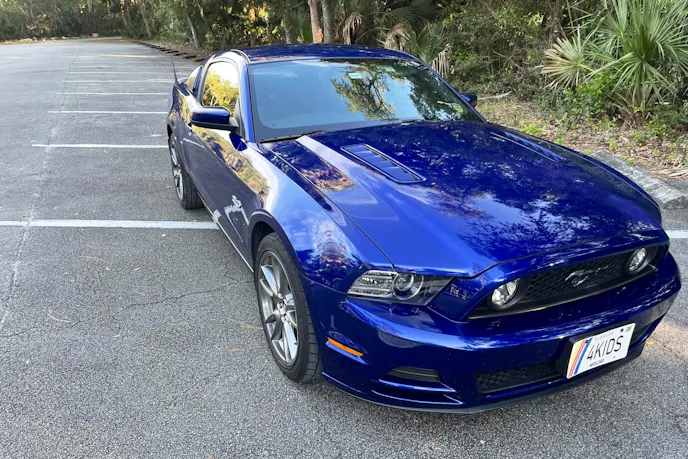
That market reality led him to this Deep Impact Blue 2014 Mustang GT equipped with a six-speed manual transmission, the factory GT Track Package, Recaro seats, Brembo brakes, and a collection of thoughtful upgrades already in place. Purchased new in Massachusetts and later relocated to Florida, the car, which didn’t meet its reserve on Bring a Trailer, showed just over 51,000 miles when it crossed Korda’s path.
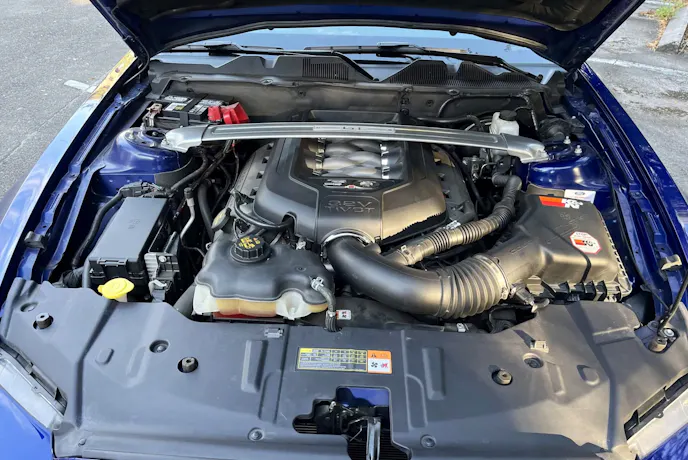
Power comes from Ford’s 5.0-liter Coyote V8, which was factory rated at 420 horsepower and 390 lb-ft of torque. The Track Package adds valuable hardware for road-course duty, including a Boss 302 radiator, engine oil cooler, Brembo front brakes, and 3.73 gears paired with a Torsen diff. The car also features a Ford Racing calibration, Barton shifter, Driveshaft Shop aluminum driveshaft, Roush Performance third link, and lowering springs.
For a project intended to spend time on both the street and the racetrack, it was a compelling starting point.
“After finishing four to five project cars back-to-back over the last six years, I convinced myself it was time to take a break. I also rationalized it the way most new parents do: with a baby on the way, I wouldn’t have time to work on or enjoy my toys anyway. So I did what no enthusiast should ever do…I sold all my toys,” Korda said. “…But I’ve also concluded that most enthusiasts eventually find again: Toy time is therapy. Just like my 5:30 a.m. workouts keep me mentally sharp for the day ahead, turning wrenches and building something is what feeds that persistent urge to create. And there’s nothing like the excitement and joy of being behind the wheel of a project that you brought to life yourself.”
Back In Action
Like many enthusiasts balancing family responsibilities with automotive ambitions, he discovered that stepping away from project cars entirely was easier said than done.
“For the last six months, I’ve been itching to get another toy. First, it was a dirt bike — don’t ask — but I quickly realized I don’t need to break any more bones, so I decided I would stick to four wheels. So the hunt began,” Korda explained. “But with a new baby, finances change. Daycare, formula, and all the new baby gadgets add up fast, and I found myself with less to spend on a toy than I normally would have years ago.”
The search eventually brought him back to familiar territory.
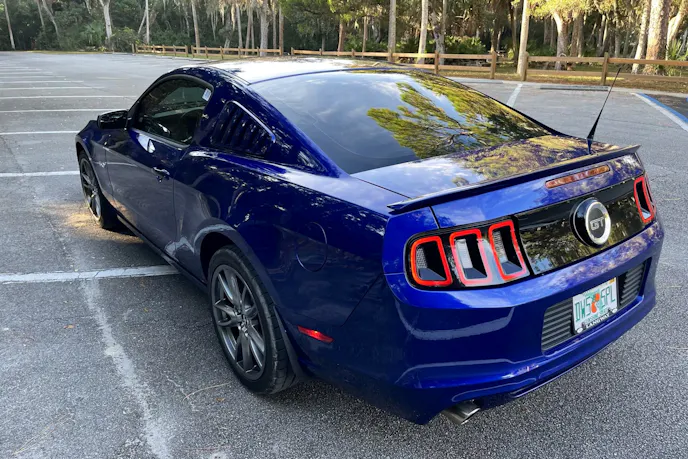
“My heart wanted an S550 GT350, but my wallet and brain were screaming that I stop at or around a $35,000 total, all-in, with mods included,” Korda said. “I decided I would spend $15,000 to 20,000 on the car, then use the remaining budget to personalize it and build it into what I want. After looking at everything — even imports — I found myself right back where I always end up: The Mustang platform. More specifically… the 2011-14 S197.”
That decision reflects something many enthusiasts have started realizing. While attention often shifts to the latest generation, the final years of the S197 offer a combination of affordability, durability, and performance potential that remains difficult to match.
“With the release of the S550 and now the S650, these cars are almost forgotten by anyone who has the wallet or credit to buy a newer option. But the 2011-2014 S197 is still one of the best performance bargains out there,” Korda said. “It brings a more refined chassis and drivetrain compared to most cars you can buy in this budget range, it’s incredibly mod-friendly, and there are thousands of manufacturers making serious parts to build one into something special.”
All-Around Enjoyment
Of course, Project Clubsport isn’t about chasing peak dyno numbers or ultimate track performance. The goal is to create a balanced performance car capable of handling street driving, road-course duty, and weekend fun without sacrificing reliability. And, of course, have some fun along the way.
“My last project was a 2001 Cobra that I purpose-built for road racing and spirited weekend drives on back roads — a car that could be driven anywhere,” Korda said. “With this S197 project, I have a similar plan. The goal is simple: Build a lightweight, powerful S197 to try and compete with the track performance of an S550 GT350 or S650 Dark Horse — but with a lower all-in investment.”
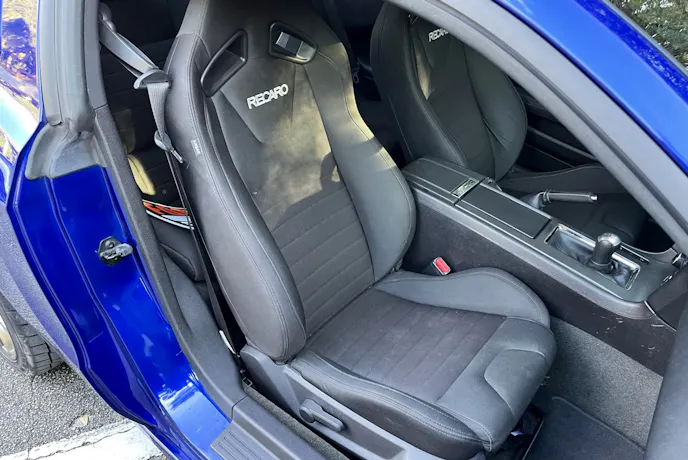
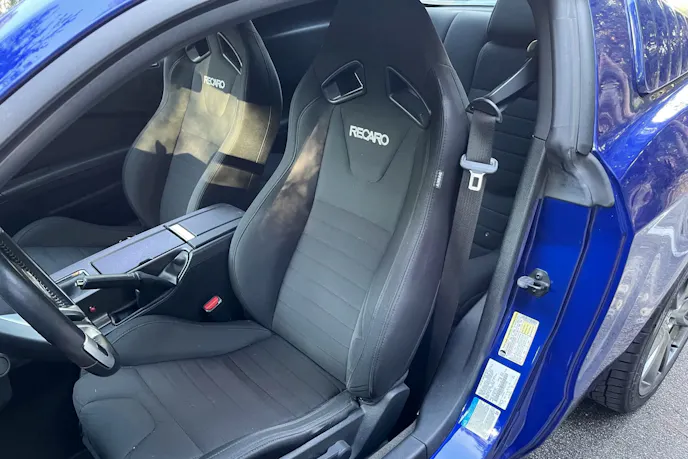
Except for some minor appearance upgrades down the road, that means the emphasis of the modifications is on delivering performance. That means honing in on the upgrades that deliver the biggest bang for the buck.
“We’re going to hand-pick parts that actually matter. Not stuff that just looks good bolted on. The focus is performance, balance, reliability, and seat-time,” Korda added. “At the end of this series, the goal isn’t just to build another Mustang. It’s to prove that the S197 still has a place and that smart parts, smart setup, and real seat time can deliver modern performance without modern prices. And if I’m being honest… It’s also a reminder to myself that ‘toy time’ isn’t a luxury. It’s part of what keeps me me.”
Carefully Curated
The project won’t be built all at once. Instead, we’ll document each step as the car evolves from a solid S197 Mustang GT into a more capable road-course performer. First up is establishing a baseline and preparing the car for track duty with upgrades from LIQUI MOLY, Carbotech, Motul, Continental, and Radium Engineering. From there, attention shifts to improving the chassis with suspension upgrades from BMR Suspension and a new wheel package from LMR’s SVE line before returning to the track to measure the gains.
Once the handling package is sorted, attention turns to extracting more naturally aspirated performance from the Coyote combination with help from VMP Performance. Brake upgrades, interior and exterior refinements, and a manual transmission upgrade will follow as the project progresses. Throughout the series, every modification will be evaluated against the same core mission of building a balanced, reliable Mustang that delivers exceptional performance for the money.
The best part is that this project mirrors the reality many enthusiasts face today. Rather than starting with an expensive new platform, Project Clubsport will explore how far careful planning, proven components, and thoughtful tuning can stretch a realistic enthusiast budget. If the results come anywhere close to the targets we’ve set, this often-overlooked generation may deserve a fresh look from Mustang enthusiasts searching for maximum performance per dollar.
Whether the final result can truly run with a GT350 or Dark Horse remains to be seen, but that sort of lofty goal is exactly what makes Project Clubsport worth following. We’ll start by preparing the car for track duty and establishing a baseline before the first major upgrades are installed. Stay tuned as we make a few sensible upgrades and head to the track to find out what this 2014 Mustang GT Track Package can do before the full transformation begins.
You might also like
This Wild, Purpose-Built SN-95 Road Racer Should Rip Around The Track Again
This 1994 SN-95 Mustang road racer was freed from static museum display. Powered by a 358ci Ford C3 NASCAR V8, it sold for just $12,500.