After many years of overhead-cam engines, Ford did the unexpected and created a new pushrod engine for its Super Duty pickups. It was simple, rugged, and efficient, so logic won out. It just so happened that the man who led its development has a storied history as an enthusiast and racer, and that background influenced the Godzilla DNA.
These days, Willis Performance Enterprises founder Brian Wolfe is dedicated to developing Ford’s later pushrod V8 platform. One of his latest 7.3-liter test engines leverages common upgrades and centrifugal boost to deliver streetable four-digit output.
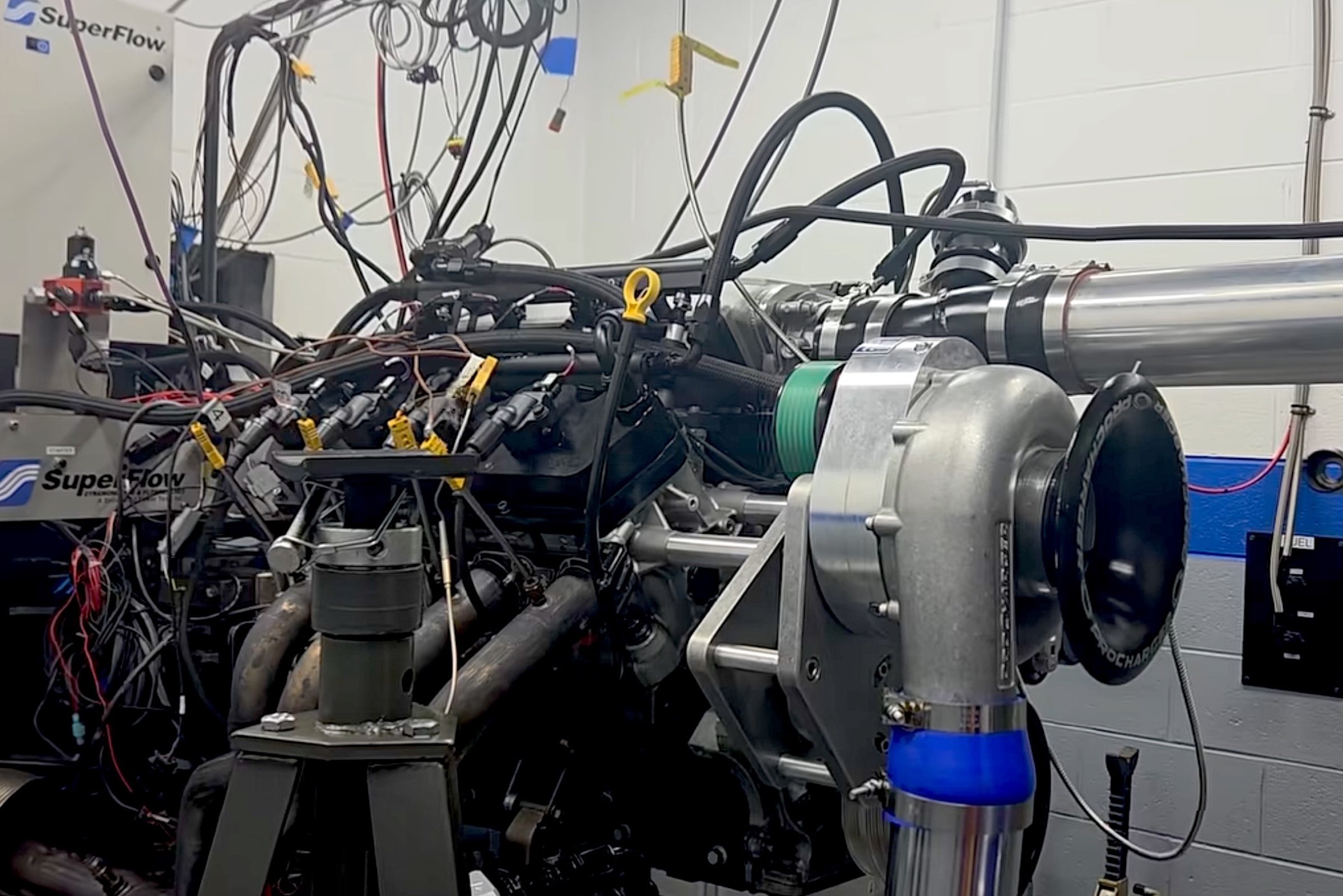
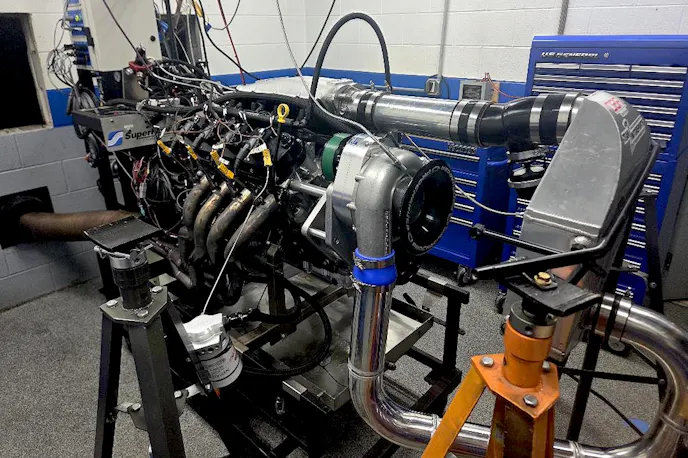
The latest chapter in that development effort centers on a built Godzilla mule engine topped by a ProCharger F-1A-94 supercharger. The combination ultimately churned out an impressive 1,540 horsepower and 1,190 lb-ft of torque on pump E85 while retaining a surprising amount of factory hardware.
For those who have followed Wolfe’s work since his days racing Pro 5.0 to running Ford Racing and to eventually leading Ford’s engine development program, which included the birth of the Godzilla, the results are not surprising. He has already demonstrated what the platform could do with salvage-yard engines and carefully engineered upgrades. That same development mindset continues to drive the testing program at Willis Performance Enterprises.
“I do not like having customers do my development,” Wolfe said of his dedication to testing and development. “I like having data so I can tell the customers what results they can expect.”
That philosophy is evident in the amount of dyno time behind this latest combination. Wolfe reports that this first round of testing generated more than 125 pulls, evaluating naturally aspirated, turbocharged, and supercharged combinations on the same dyno mule. The goal wasn’t simply to deliver a hero number, but to establish a proven roadmap for customers looking to push the Godzilla platform further.
Boost Built
For builders considering their own boosted Godzilla combinations, Wolfe says there are some straightforward guidelines when it comes to durability.
“You’ll want forged pistons and rods if you are going for bigger power,” he explained. “For low boost, around 6 to 8 psi, I think stock pistons and rods will work (with the ring end gaps opened up). I would also suggest Johnson short-travel lifters for the higher boost applications.”
At the heart of this boosted combination is a production Godzilla block fitted with Wiseco forged pistons and Callies Ultra connecting rods. The stock crankshaft remains in place, as do the factory head castings, rocker arms, cam drive system, oil pump, and head gaskets. The cylinder heads were treated to port work and upgraded with 2.220-inch titanium intake valves, 1.700-inch stainless exhaust valves, and 10K Technology TK-560 valve springs delivering approximately 180 pounds of seat pressure and roughly 500 pounds open at .650-inch lift.
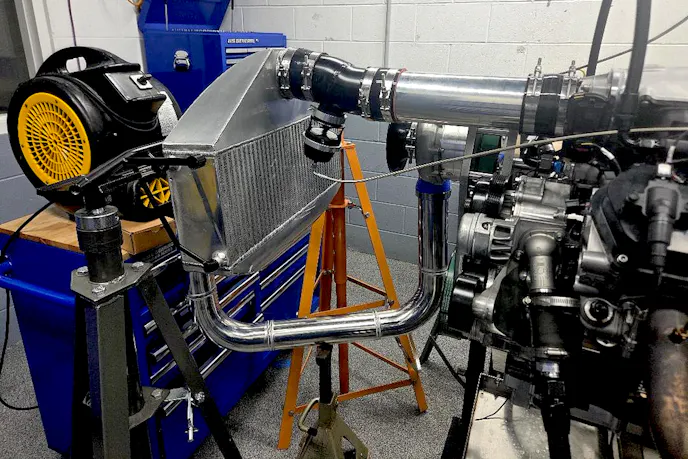
Supporting hardware includes Manton 3/8-inch pushrods, Johnson short-travel lifters, an Indy Power Products Eliminator oil pan, and a Brian Tooley Racing Trinity intake manifold with CNC-machined runners and a 95mm throttle body. Fuel delivery comes from Injector Dynamics 1,750cc injectors operating at 65 pounds of base pressure, while an OBR ECU manages the combination. The compression ratio checks in at a robust 10.3:1.
Meanwhile, the camshaft is a Brian Tooley Racing U231 shelf grind featuring 231 degrees of intake duration, 246 degrees of exhaust duration, and a 110-degree lobe separation angle. According to Wolfe, it performed particularly well under boost.
Pulley Power
Initial testing paired the F-1A=94 with a larger 5-inch blower pulley. That setup generated roughly 1,305 horsepower and 991 lb-ft of torque from 15.5 psi of boost, while spinning the supercharger at approximately 60,000 rpm at 7,000 engine rpm. Even at that relatively conservative speed, the combination showed significant promise before a fuel leak cut testing short.
Once repairs were completed, Wolfe swapped to a 4-inch ProCharger pulley while retaining the 8-inch crank pulley. Combined with the blower’s internal 5.4:1 step-up ratio, the setup created an overall drive ratio of 10.8:1. At 7,000 rpm engine speed, the F-1A-94 was turning approximately 75,600 rpm, essentially reaching the manufacturer’s recommended maximum speed.
“I do not think specifically for the Godzilla, but in general, centrifugals offer a very linear boost progression and can be ‘pullied’ for the specific boost you are targeting,” Wolfe said of how the ProCharger works well for this combination.
Running on pump E85 sourced from a local Speedway station, the 4-inch-pulley combination produced 1,540 horsepower and 1,190 lb-ft of torque under STP-corrected conditions. Data was collected with conservative spark timing, a Lambda target of .82, and a fixed 116-degree intake centerline.
Rugged Results
Even with the impressive dyno results, he believes there may still be room for additional power from further hardware refinement.
“We spun the blower to about 75,000 RPM at 7,000 engine rpm, which is the max blower speed recommended,” Wolfe offered. “So, more power may be available with a cam change, more compression, and more head work.”
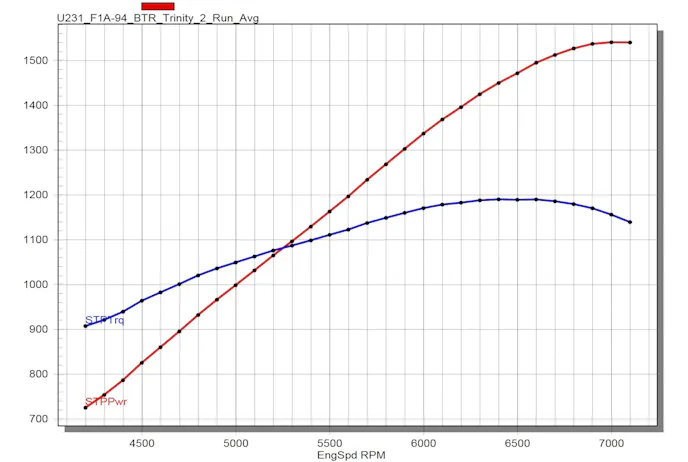
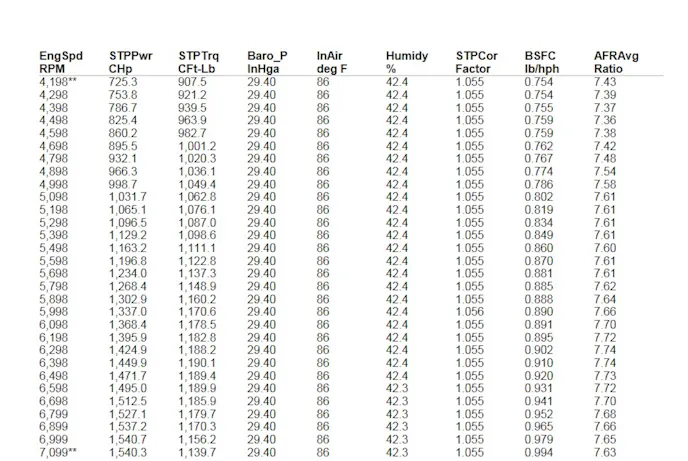
The most impressive part might not be the 1,540-horsepower peak. It’s that this engine reached that number with a stock block, stock crankshaft, stock head castings, stock rocker arms, stock head gaskets, and pump E85. After hundreds of dyno pulls across naturally aspirated, turbocharged, and supercharged testing, the engine never even required the valve cover removal after the initial spring swap. That’s a validation of both the development work behind this combination and the durability engineered into Ford’s 7.3-liter V8 pushrod platform.
You might also like
Prepped Project Clubsport Sets Its Track Baseline Before The Mods Begin
To set the stage for its evolution, we took Project Club Sport to the track. Before doing so, however, we made some sensible upgrades.