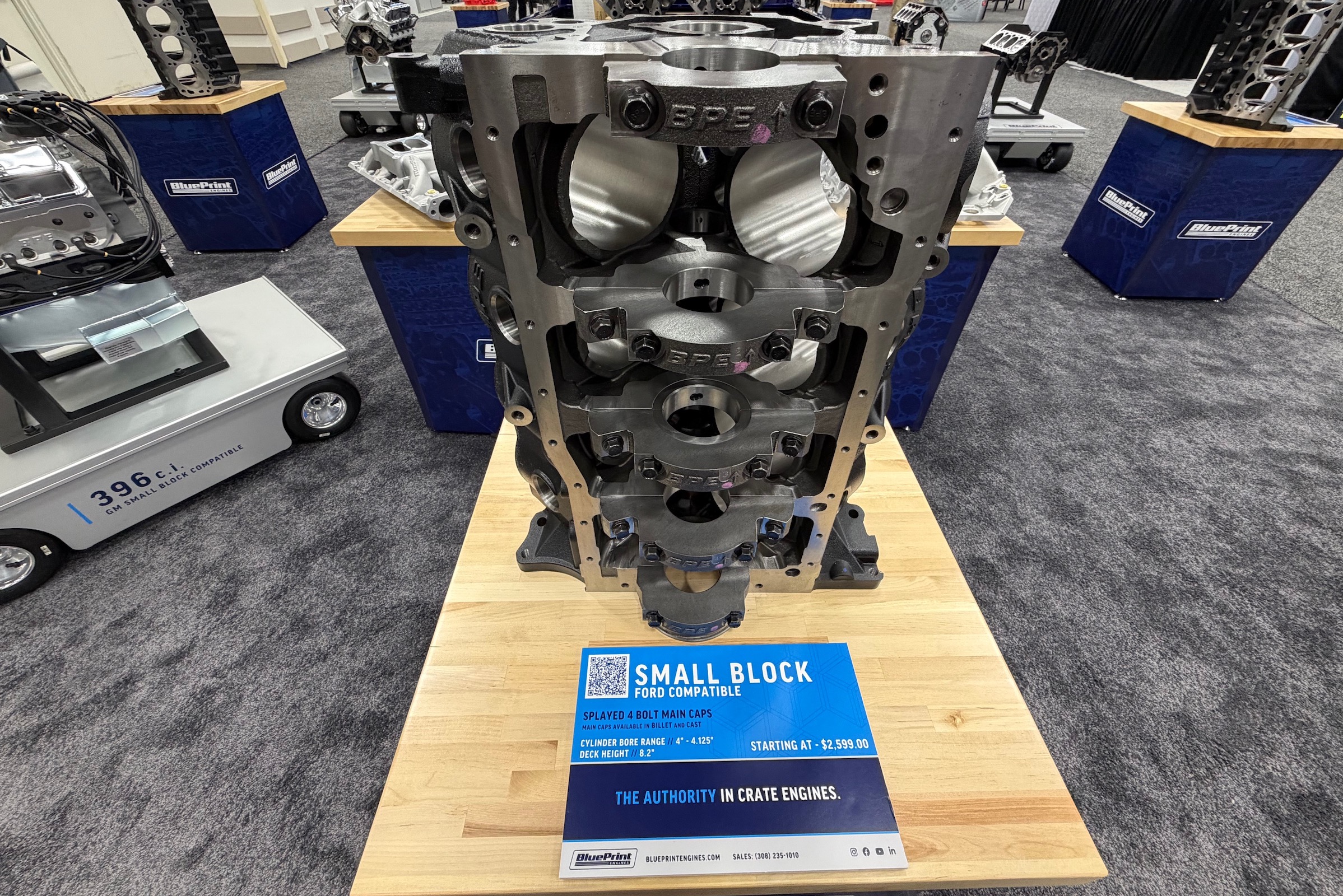
For those who want to build pushrod Ford power beyond the limit of the factory block, starting with a heartier unit is a smart move. That’s the idea behind the new Ford-compatible small-block bare blocks — with both 8.2- and 9.5-inch decks — from Blueprint Engines, which are now available to the aftermarket after years of proving themselves in the company’s own engine builds.
We’ve done a few engines, so we try to implement all the things we’ve learned over the 40 years of business and fix them while we can… — Frank Hromadka, Blueprint Engines
“We designed these several years ago because we were running out of core blocks to rebuild into engines. They’re getting harder to find, so we designed these, and we started using them in our crate engines,” Frank Hromadka, Product Design Engineer at Blueprint Engines, told us. “Once those cores dried up, we needed something to replace them, so we made our own block.”
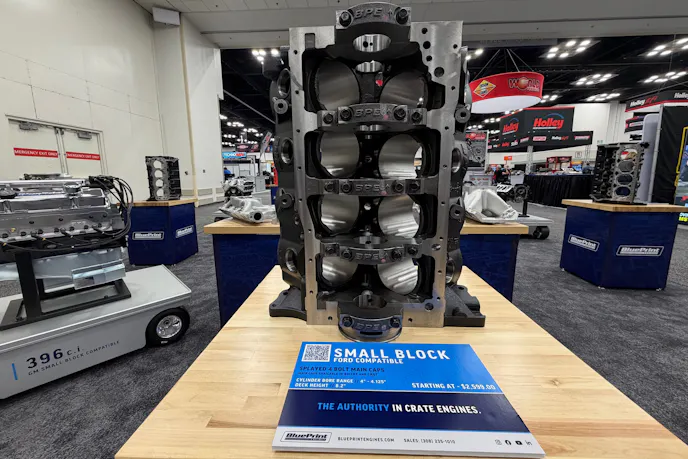
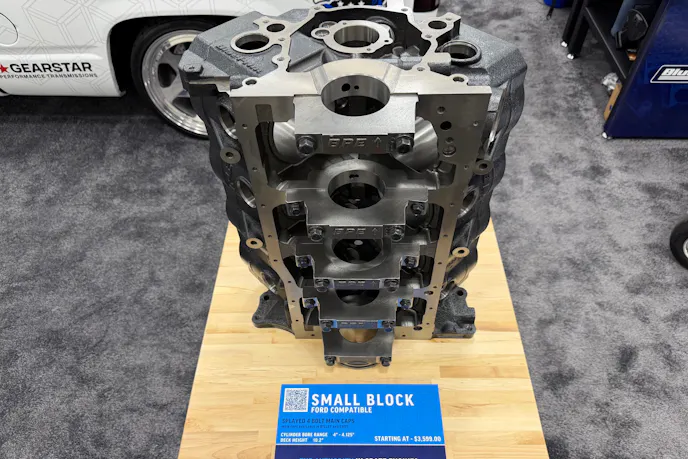
Blueprint designed its all-new castings from the ground up, then quietly put them to work in thousands of engines before offering them to builders seeking a more reliable foundation.
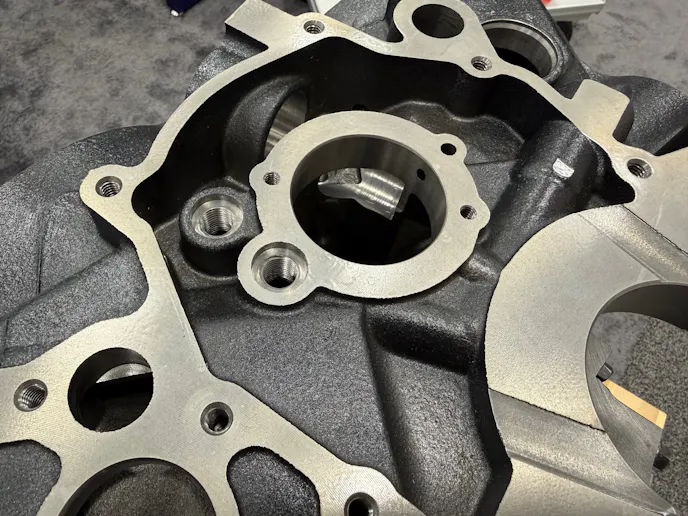
“A lot of people know that with a stock 302, if you get around 500 horsepower, it will just break in half right down the middle. Ours won’t do that. I guarantee it,” Hromadka enthused. “There is a lot more material in there than on the stock Ford block; the webbing in some places is only .140-inch thick. Ours is around .900-inch thick in those areas.”
Fortified Foundation
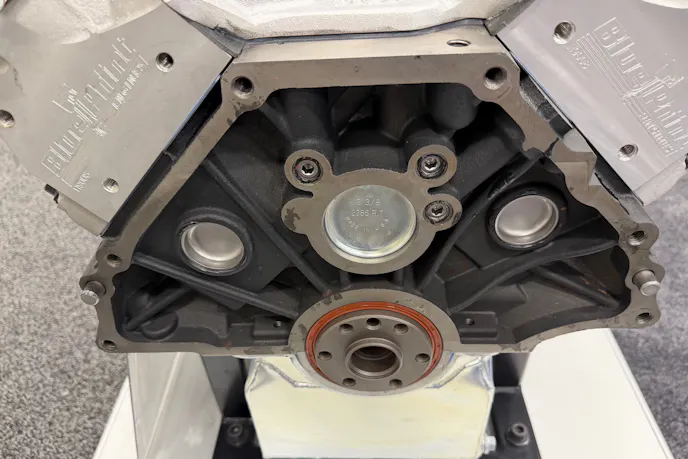
That effort shows up everywhere a stock Windsor block reveals a weakness. There’s substantially more material in the main webbing, thicker decks for better head gasket sealing, and a reinforced bellhousing area to address common failure points. The blocks are high-strength cast iron, which is fully machined in-house, and uses a Siamese bore design with thick cylinder walls to support larger bores and serious cylinder pressure.
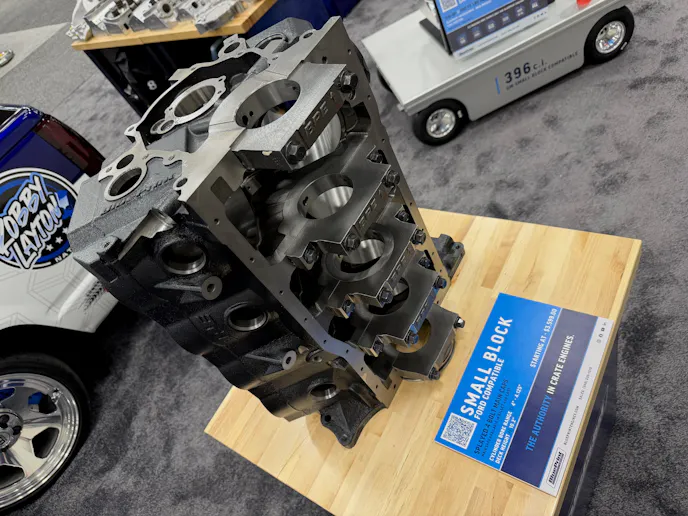
“We designed them in-house, and then we have a foundry in Germany that casts these for us. They’re a Tier 1 automotive supplier, and they really know what they’re doing,” Hromadka said. “They do BMW, VW, GM, and Ford, so these guys know what they’re doing. They cast them for us and then send them to us, and we machine them in-house. Then we sell them to everybody else and use them for our engines.”
Improved Architecture
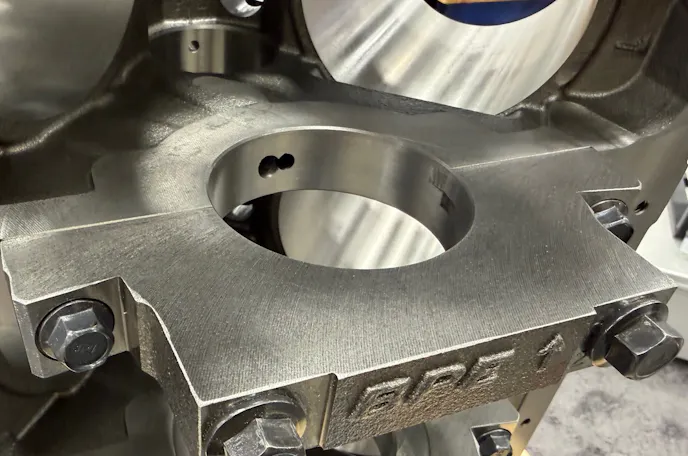
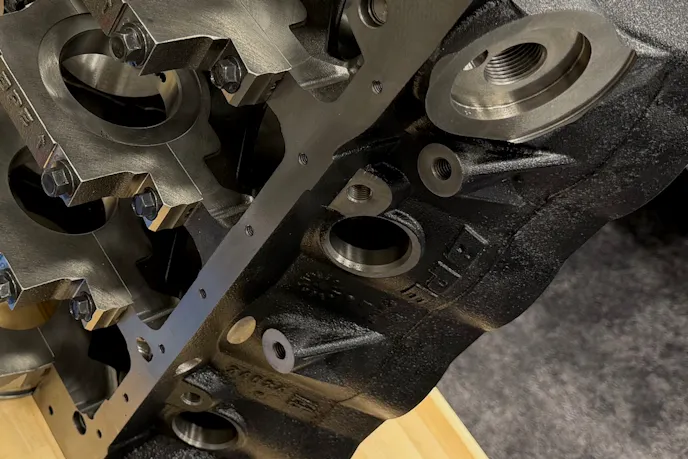
Priority-main oiling feeds the crank first, splayed center main caps improve bottom-end stability, and the overall architecture is based on later roller-cam-friendly small-block Ford designs. Even the external details matter, so installation doesn’t lead to frustration.
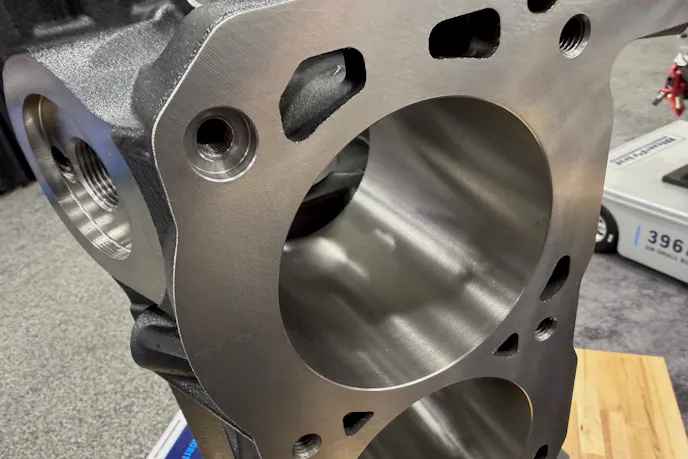
“There are some clearance cuts on the side that will fit with aftermarket motor mounts. I know some of the other blocks have problems with that. You’ve got to grind on the block or the motor mount to get it to work. You don’t have to do that with this one,” Hromadka said. “We’ve done a few engines, so we try to implement all the things we’ve learned over the 40 years of business and fix them while we can.”
Proven Quantity
By designing its own casting and running it in crate engines for years, Blueprint effectively stress-tested the platform before releasing it to the broader aftermarket. That experience shows in the execution, from consistent machining to the small design choices that make a block easier to live with in a real build.
If you’re planning a fresh pushrod Ford build and want to go past what a stock block will tolerate, these Blueprint bare blocks give you solid new options. The 302-based blocks feature an 8.200-inch deck height, high-strength cast-iron construction, 7/16-inch head fasteners, and standard 4-inch or larger 4.165-inch bore sizes. The larger version with larger 4.165-inch bores is optimized for strokers of 363 cubes, but the math says you could go as high as 370 if you wanted to push the envelope. Cast-main versions are priced around $2,599, with billet-main versions closer to $2,899.
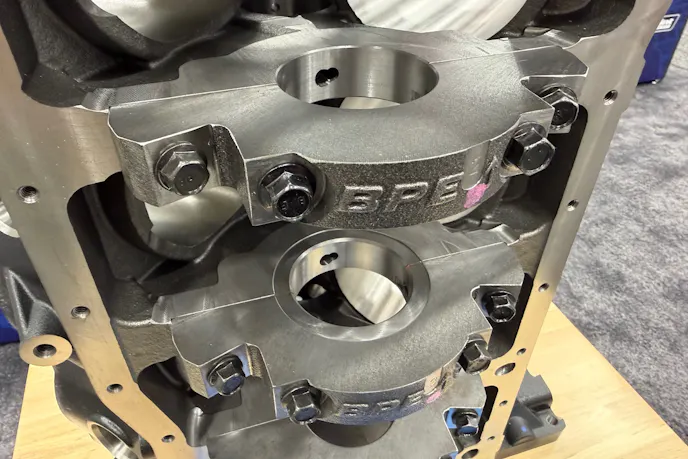
For builders hunting for more displacement, the 351-based tall-deck blocks use a 9.500-inch deck height and can support displacements, and the large-bore version supports up to 460 cubic inches, again in high-strength cast iron with Siamese bores with 1/2-inch head-bolt fasteners. Those start around $3,599 with cast mains and climb to roughly $4,399 with billet caps.
For anyone building modern pushrod Ford power who doesn’t want to rely on worn-out factory cores, these blocks offer a strong, reliable foundation that’s ready for the kind of power you want under the hood.
You might also like
Hennessey’s Super Venom S650 Is An 850HP Anniversary Party On Wheels
Hennessey is celebrating its 35th anniversary. To mark the occasion, the company is building 35 850-horsepower 2026 Super Venom Mustangs.