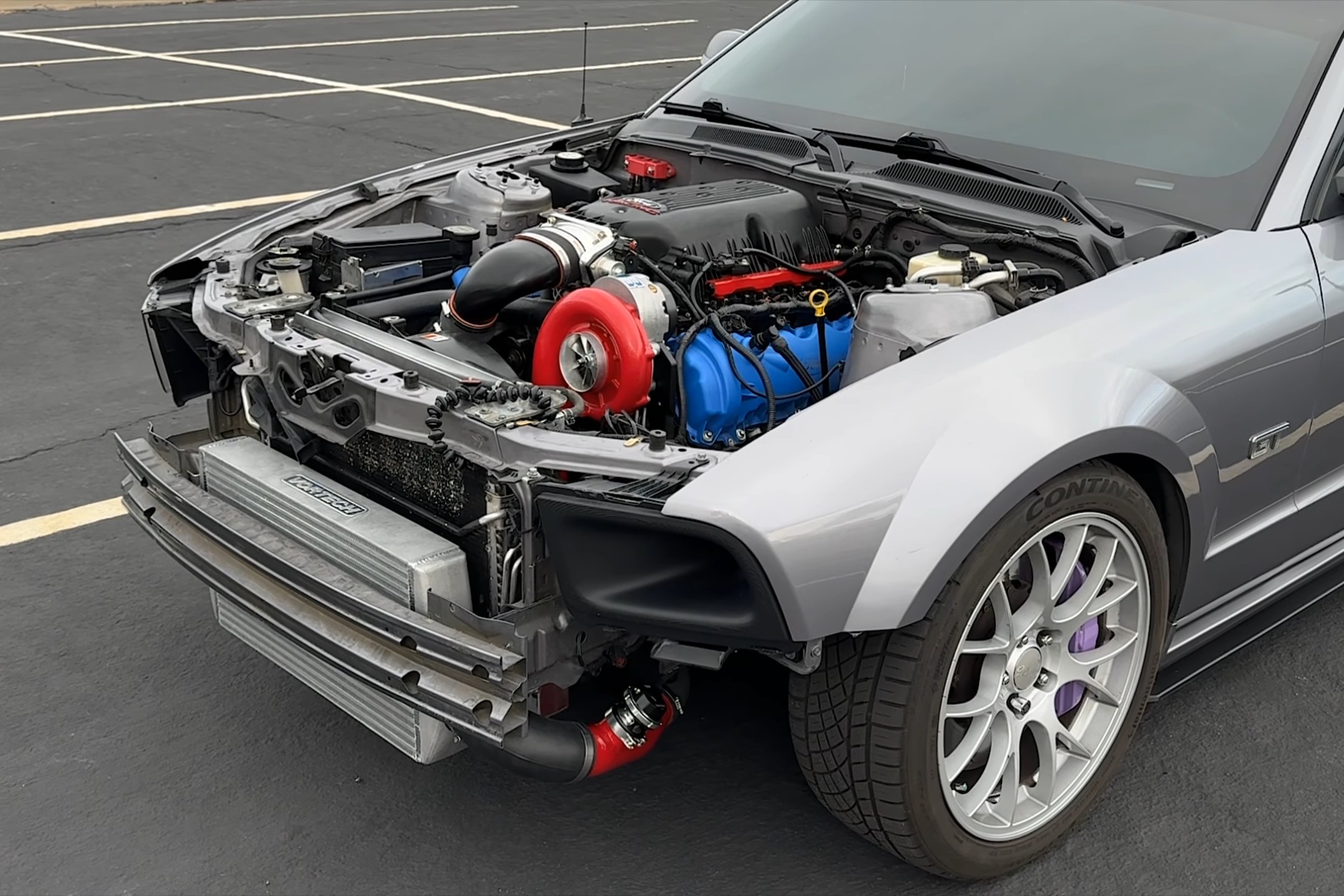
Running a supercharged V8 at full tilt without proper charge cooling is a recipe for compromised performance. YouTuber Four Eyes’ heavily modified 2007 Mustang GT pushed well past 600 horsepower when intake temperatures exceeded 180 degrees. To rein in those temps for improved performance and durability, he mounted a massive air-to-air intercooler right up front to cool the boost before it reached the intake.
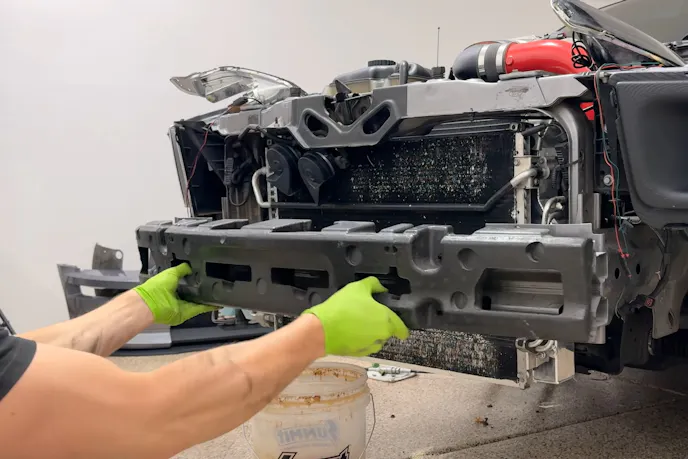
The installation process began with removing the hood and front bumper to expose the crash bar. After draining the coolant and removing the supercharger piping, the heat exchanger bolted directly to the chassis.
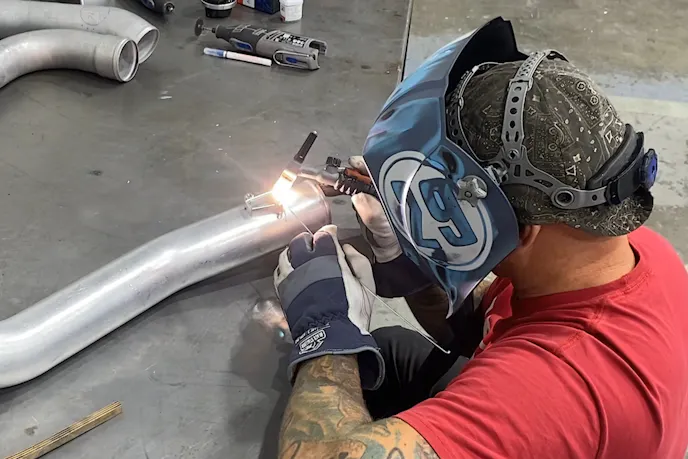
The standard plumbing kit typically relies on two recirculating bypass valves, but this build took a cleaner route. Four Eyes then asked a fabricator friend to weld a 50-millimeter blow-off valve flange to the hot side and a 3-inch mass airflow sensor flange to the straightest part of the cold side. This custom setup vents excess boost straight to the atmosphere.
Relocating the mass airflow sensor into a smaller 3-inch tube created an immediate tuning challenge. The tighter housing forces air to move faster over the sensor, tricking the computer into adding way too much fuel. Fixing this rich condition required calculating the exact cross-sectional area difference and reducing the air-mass values in the tune by 44 percent.
After dialing in the fuel maps on the street, the Mustang hit the rollers to see what the new air-to-air intercooler delivered. Intake temperatures plummeted into the low 80s on the dyno. However, the manifold boost pressure dropped significantly from 9.5 pounds down to just over 6 pounds. The car put down 590 wheel horsepower, a slight drop from its previous uncooled peak.
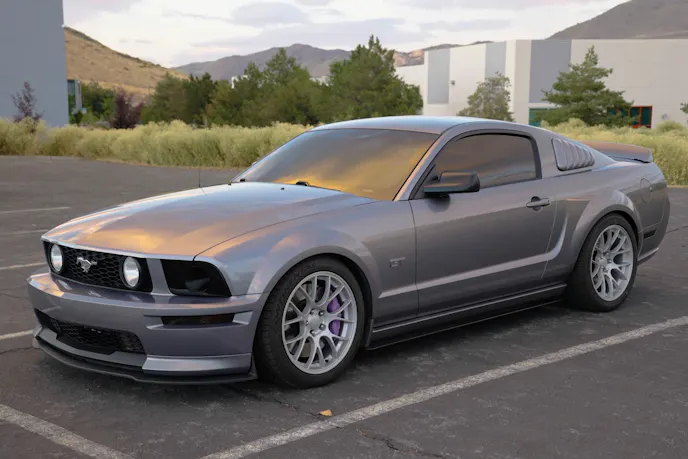
Even with that minor dip in peak numbers, the old Three-Valve stroker engine is now efficient and cranks out roughly 30 horsepower per pound of boost. Real-world street testing confirmed intake temperatures dropped by nearly 80 degrees during hard pulls. Bolting on that massive air-to-air intercooler completely transformed a risky setup into a reliable one.
You might also like
Steady Your Modern Bronco With BMR’s Adjustable Panhard Bar
Stop rearend wander on the trail with a new Panhard rod from BMR Suspension. This adjustable part keeps your modern Bronco tracking straight.