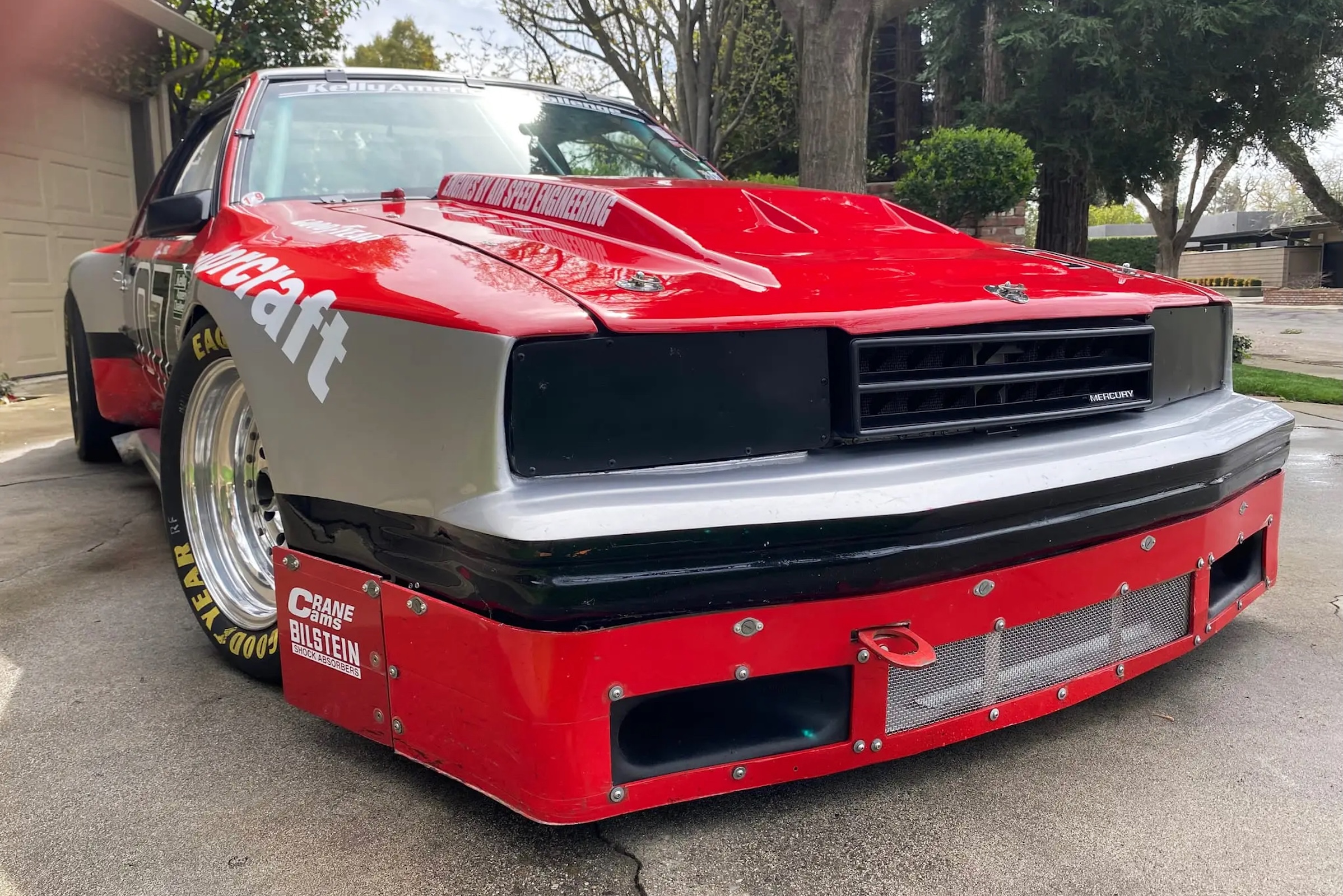
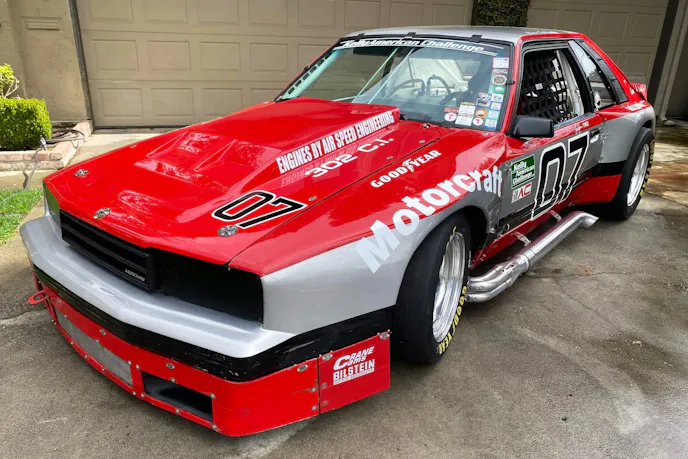
Long before women broke through in the mainstream racing world, Lyn St. James was making a name for herself on road courses around the globe. In the ’80s and ’90s, she drove a number of Blue Oval race cars. One example was the Mercury Capri seen here. Born on a Fox chassis but transferred to a tubular chassis for competition, this storied race car recently hit the digital auction block over at Bring a Trailer, where it sold.
Built by Bill Scott Racing and Cars & Concepts in Michigan for the IMSA GT championship, this Capri was one of the weapons St. James took into the Kelly American Challenge. She raced the car in its red-and-silver Motorcraft No. 7 colors in 1982 and scored a podium finish. After its competition career, the Capri was restored and later returned to the track for multiple Sonoma Historic Motorsports Festivals.
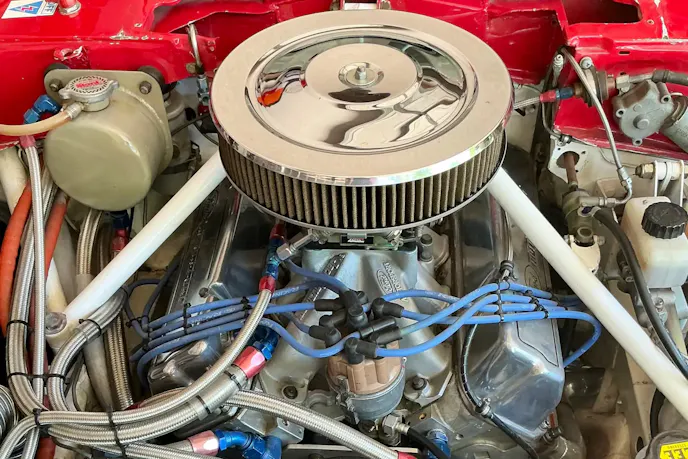
That history is cool enough, but the hardware underneath is what makes this car especially interesting. The fiberglass widebody is wrapped around a tubular chassis, while a dry-sump small-block Ford provides the motivation. Gary Meier at Torque Power Engines built the engine in 2019 to 338.42 cubic inches using a Bryant Racing crankshaft, solid-roller camshaft, Ross pistons with 11cc domes, and Carrillo connecting rods.
The valvetrain is equally serious, with chrome-moly pushrods, Del West titanium valves, and stainless-steel Crower rocker arms. A Ford Motorsport intake manifold and Holley carburetor handle induction, while MSD ignition lights the mixture. The oil and fluids were changed in early 2026, keeping the vintage racer ready for its next outing.
Built For Speed
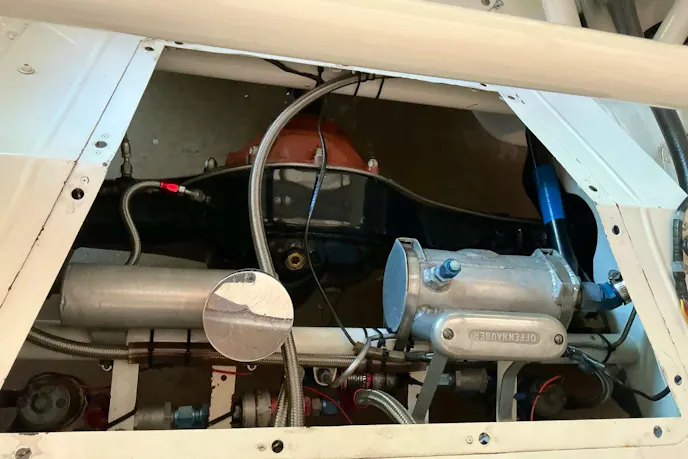
Power goes through a Jerico four-speed manual dog box to a Ford 9-inch rear end with a locking differential and 4.30 gears. The sale also includes a spare 3.90 pumpkin and another Jerico four-speed, giving the next owner some useful options when tailoring the car to a particular track.
Outside, the Capri looks every bit like an IMSA bruiser. Flared fiberglass fenders, a front air dam, cowl-induction hood, headlight blanks, tow hooks and dual side-exit exhausts give it the proper period race-car attitude. Sixteen-inch Real Racing wheels wear Goodyear Eagle slicks measuring 25.0×13.0 up front and 27.0×14.0 out back. QA1 front coilovers, adjustable Koni rear shocks and ventilated Wilwood brakes with cooling ducts complete the chassis package.
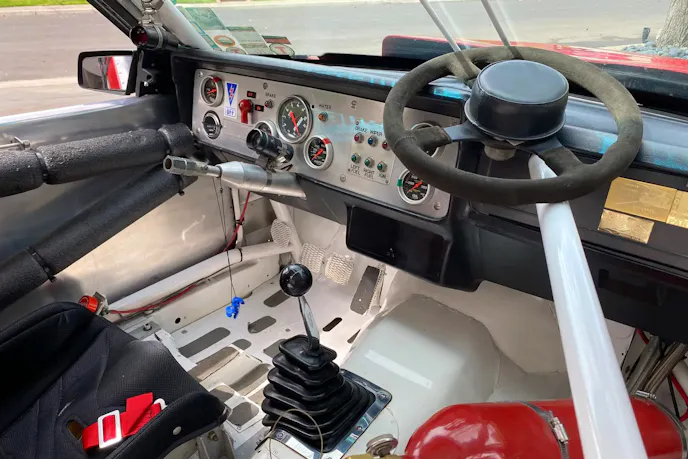
Inside, this is all business. A roll cage with side bars surrounds a single racing seat and Crow Enterprises multi-point harness, while a Hurst shifter, quick-release steering wheel, window net and fire-suppression system fill out the competition cockpit. AutoMeter and Moroso instruments include an 11,000-rpm tachometer, and the mechanical hour meter shows 78 hours of runtime.
The car sold for a respectable $96,000, given its history. However, we don’t know if it sold to a collector or a racer, but it would be great to see it get back in action out on the track. What would you do with this classic race car if you won the bid?
You might also like
Which ProCharger Stage Is Right For Your Coyote F-150?
Trying to decide on the right ProCharger system for your Coyote F-150? TC Customs compares the Stage 1, 2, and 3 supercharger packages.