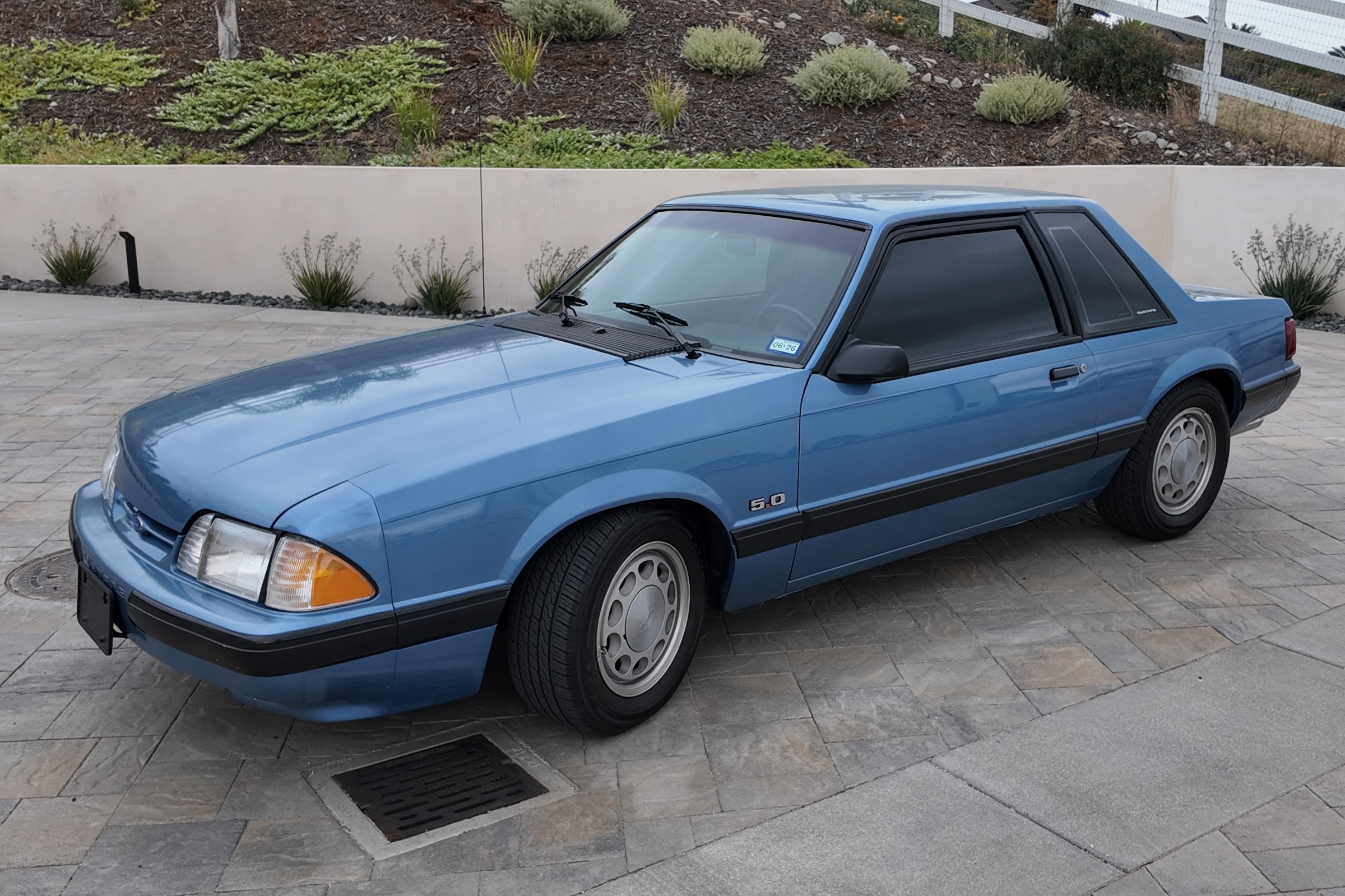
Flexibility defines the Fox Mustang. Over its 14-year run, the platform earned deep aftermarket support and a loyal following that pushed it in every direction. Enthusiasts turned these cars into dominant drag racers, high-output street machines, capable road racers, and even dedicated drift builds. That versatility explains the appeal, but it also raises a bigger question: Could a modified Fox Mustang outshine an exotic European sports car? Horsepower Wars aims to answer that with its next season, Fox v Ferrari, set to debut this fall.
The concept cuts straight to what enthusiasts care about. With a total budget capped at $125,000, the team will build a Fox Mustang to compete directly with a supercar priced the same. That number will cover the entire project, including the purchase of the car, parts, and labor.
On the other side, the same budget will put the Mustang up against serious machinery, including the Ferrari F430, Porsche 911 Turbo and GT3 models from the 997 generation, Cayman GT4s, Audi R8 V10s, and Lamborghini Gallardos. Those cars represent decades of engineering from places like Maranello and Stuttgart. The Fox will rely on a carefully planned build and execution at a performance shop.
Put To The Test
The rules keep the comparison grounded in real-world performance. The Fox Mustang must remain streetable and use off-the-shelf parts. Tire selection will be limited to 200-treadwear compounds, which removes the advantage of race rubber. The build will run on pump gas or E85, ensuring the combination stays accessible and repeatable. Most importantly, the total cost must remain below the market value of the competing exotic, which prevents any budget advantage from skewing the results.
Testing will focus on measurable performance and usable capability. The Speed-Stop Challenge will evaluate 0-100-0 performance, combining acceleration and braking into a single metric. A roll race will highlight power delivery and high-speed stability. The slalom will measure handling, chassis response, and transitional balance. Finally, streetability and drivability will factor into the results, ensuring the Mustang performs as a complete package rather than excelling in a single category.
Fox Foundation
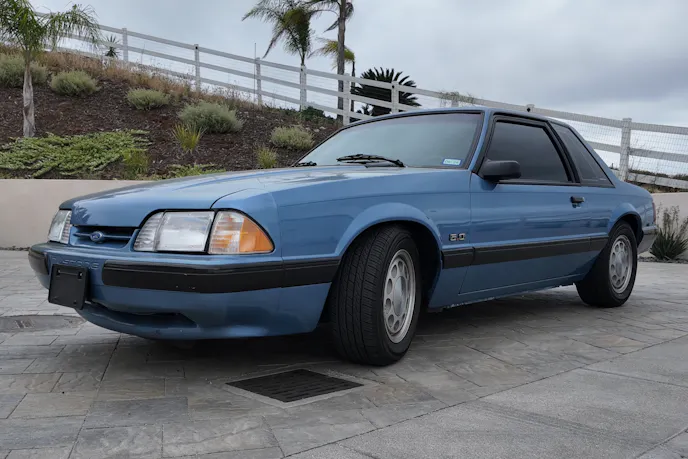
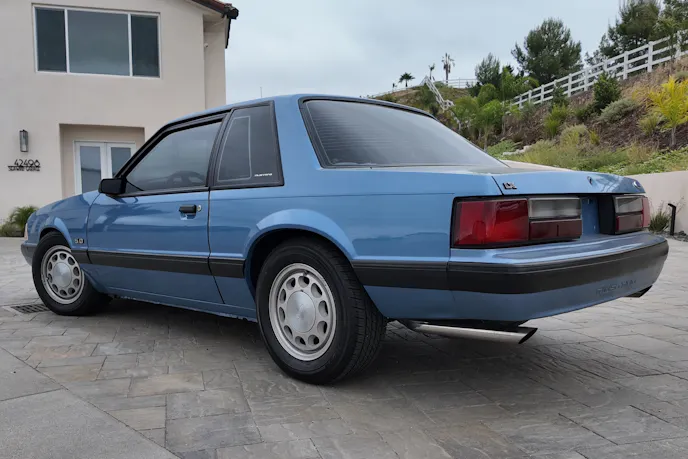
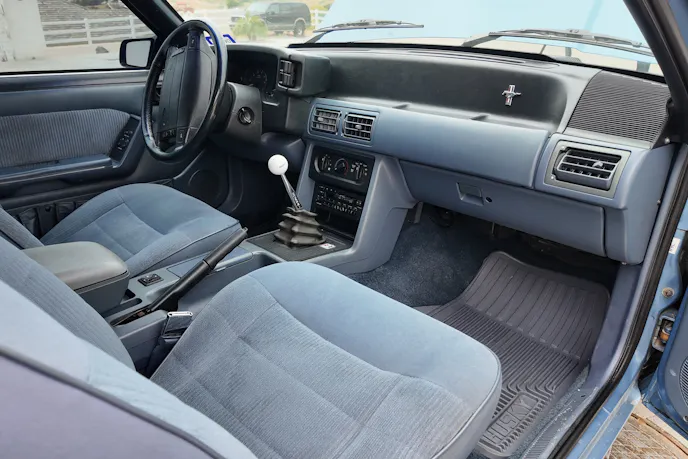
The foundation for the Fox build is a Bright Regatta Blue 1990 Mustang LX coupe. In factory form, it is optioned with a pushrod 5.0-liter V8 and a T-5 five-speed manual transmission, delivering a lightweight and straightforward performance package. While that combination defined affordable performance in its era, it falls far short of modern performance standards, so it has a steep hill to climb in this competition.
Papini’s Garage will handle the build, bringing a reputation for clean, functional work that prioritizes performance and reliability. Papini’s also has extensive experience in Trans Am road racing with a strict rule set adhering to factory designs. With the help of LP Racing for any fabrication work, like the roll bar, Papini will approach this project with a focus on maximizing available components rather than relying on a bunch of custom one-off solutions. That strategy lines up with the rules and ensures the build reflects what enthusiasts could realistically replicate.
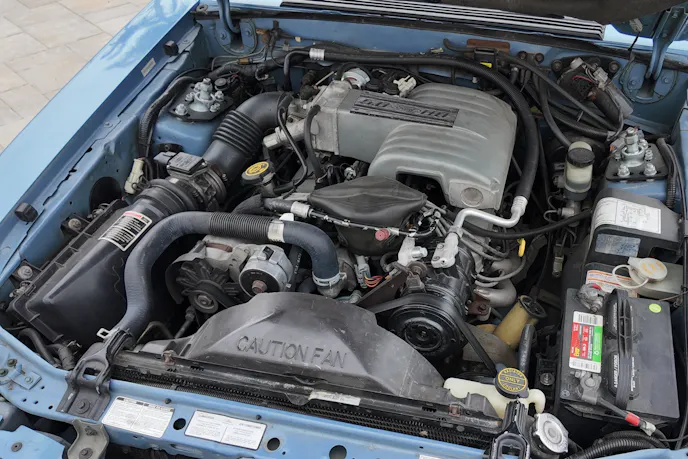
Handling the engine program is RPG Racing Engines, which brings extensive experience in Coyote and Modular Ford performance. The combination will be designed to deliver reliable, repeatable power across all phases of testing, ensuring the engine performs consistently under varied conditions.
Under the hood, the project will move to a modern modular foundation. The team will build the combination around a Predator block from Summit Racing paired with Gen 3 Coyote cylinder heads and other goodies from the Ford Racing catalogue. This setup will provide improved airflow, valvetrain stability, and strength compared to the original pushrod configuration. COMP cams and an SPE carbon intake manifold will support airflow at higher power levels. Meanwhile, an ECUMaster engine management system will orchestrate fuel and spark with the precision required for a boosted application. The engine will run on VP Racing E85 to take advantage of its octane and cooling benefits under load.
A single HPT F3 7675 turbocharger with a .96 A/R V-band housing is charged to feed the engine plenty of boost. This configuration targets a broad, usable powerband rather than a narrow peak, which is critical for a format that includes both acceleration and handling-focused tests. The goal is consistent, repeatable performance across multiple scenarios rather than dazzling for a single hero pull on the dyno.
Handling The Power
The drivetrain will receive a significant upgrade as well. An 8HP70 automatic transmission from Pure Drivetrain will supplant the factory T-5 manual trans, delivering fast, consistent shifts and improved durability under increased power. The trans will work in concert with the ECU Master EFI system to manage traction on street tires. A built 8.8-inch rearend will handle torque transfer while maintaining the familiar Fox architecture.
Suspension development will play a major role in closing the gap to modern performance cars. The build will use Maximum Motorsports components front and rear, including a torque arm and Panhard bar setup. This configuration will improve rear axle control, stability, and predictability, addressing one of the primary limitations of the stock Fox chassis.
The car will ride on 275mm tires at all four corners, limited to a 200-treadwear compound and fitted under the stock body without fender flares. This constraint will force precise suspension tuning and alignment to maximize grip and balance. It also ensures the car reflects a realistic street performance setup rather than a purpose-built race configuration. Truth be told, the Fox does have an ace up its sleeve with the Hoosier Track Attack Pros.
Braking performance will see a substantial upgrade with a big-brake package planned for the build. Whether the final setup includes power assist and ABS or a fully manual system, it will play a critical role in the Speed Stop Challenge and overall vehicle control.
The Fox Mustang will rely on modern upgrades, careful planning, and efficient execution, while the competing exotics will lean on decades of integrated engineering and refinement. The Mustang must accelerate, brake, handle, and remain streetable with the same financial constraints as the supercars it squares off against. That requirement will test every aspect of the build and highlight how far the Fox platform can evolve with the right combination of parts.
Now you know how it will play out, and we are excited to see how the Fox fares when Horsepower Wars: Fox v Ferrari rolls out this fall, so stay tuned.
Horsepower Wars would like to thank its sponsors for making this show happen, including (and in no particular order): Old World Industries/PEAK, VP Racing, COMP Cams, ARP, ATI Performance Products, JE Pistons, Boostline Connecting Rods, Total Seal, Cometic Gasket, Moroso, Hoosier Racing Tire, ECU Master USA, HP Turbo, Pure Drivetrain Solutions, SPE Motorsport, Moser Engineering, Delta ABS, Forgeline Motorsports, and Maximum Motorsports.
You might also like
Lyn St. James’ Widebody Fox Capri IMSA Racer Sells For Nearly Six Figures
Lyn St. James’ IMSA Capri is powered by a 338-cube Ford V8. Carrying lots of racing history, this Fox Capri recently sold at auction online.