So you’ve read the title and immediately thought “what the heck are they talking about?!” It seems that Ford Motor Company and H.J. Heinz company are exploring the idea of using discarded tomato fibers to create a bio-plastic material for use in future vehicles.
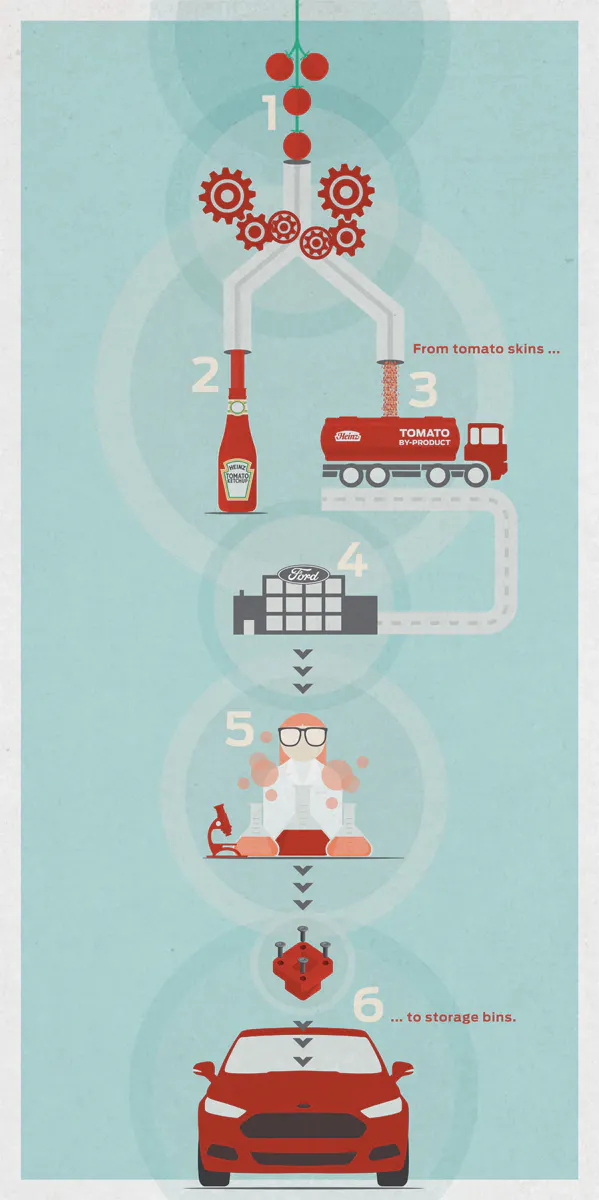
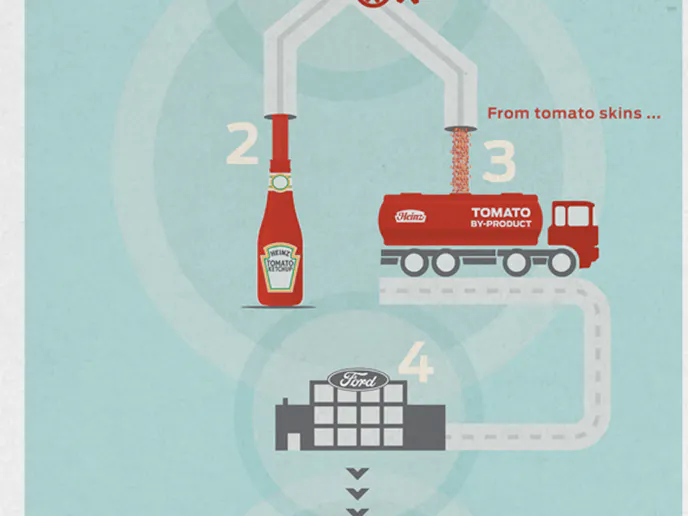
Ford’s engineers are currently testing the idea, which came about nearly two years ago when Ford began collaborating with Heinz, Coca-Cola, Nike Inc. and Procter & Gamble to develop a 100-percent plant-based plastic to make everything from fabric to packaging and reduce the use of petroleum-based packaging materials currently in use.
“We are exploring whether this food processing byproduct makes sense for an automotive application,” said Ellen Lee, plastics research technical specialist for Ford. “Our goal is to develop a strong, lightweight material that meets our vehicle requirements, while at the same time reducing our overall environmental impact.”
Heinz researchers were looking for ways to recycle the stems, seeds, and peels from the two-million-plus pounds of tomatoes the company uses annually to produce their Heinz Ketchup, and although they are still in the early phases of research on the product, the possibility of becoming even more environmentally-friendly is a good thing for all involved.
Ford’s sustainability strategy is to reduce its environmental impact while becoming more fuel-efficient, and over the last several years we’ve seen a number of technologies come down the pipeline to do just that.
The company has increased its use of recycled and bio-based materials substantially – in the last year alone they’ve introduced cellulose fiber-reinforced console components and rice hull-filled electrical cowl brackets, and the company currently has eight bio-based materials in production including soy foam-based seat cushions and head restraints.
Less is more, goes the saying, and Ford Motor Company aims to be at the forefront of technology development in these recycled materials.
You might also like
Roush’s 2026 Nitemare Coyote F-150 Haunts The Competition
Hopped-up Coyote-powered pickups are more popular than ever. The 2026 Roush Nitemare is a turnkey performance package with a warranty.