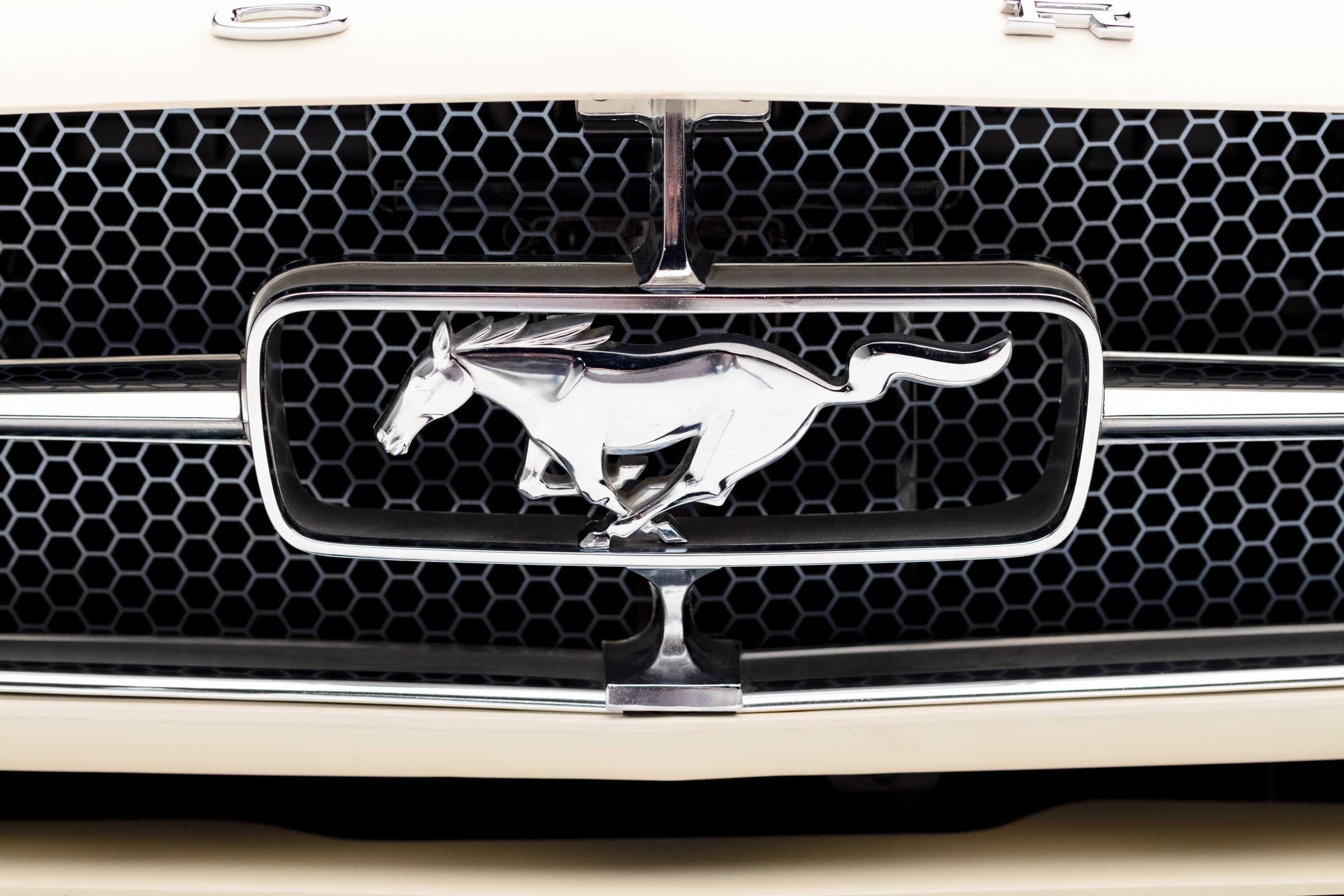
Few cars can claim that they changed automotive history before they ever drove off a dealer lot, but one of Ford’s original World’s Fair Mustangs just earned recognition that cements its place in American history. One of the surviving pony cars from the famed Magic Skyway attraction at the 1964-1965 New York World’s Fair was officially inducted into the National Historic Vehicle Register, an honor reserved for vehicles that played a significant role in shaping the nation’s culture and engineering legacy.
The recognition, announced by Ford Heritage, places the historic 1965 Mustang among an exceptionally small group of automobiles documented by the National Historic Vehicle Register, a partnership between the Hagerty Drivers Foundation and the U.S. Department of the Interior’s Historic American Engineering Record. Its documentation will now be permanently archived in the Library of Congress, preserving the pony car’s remarkable story for future generations.
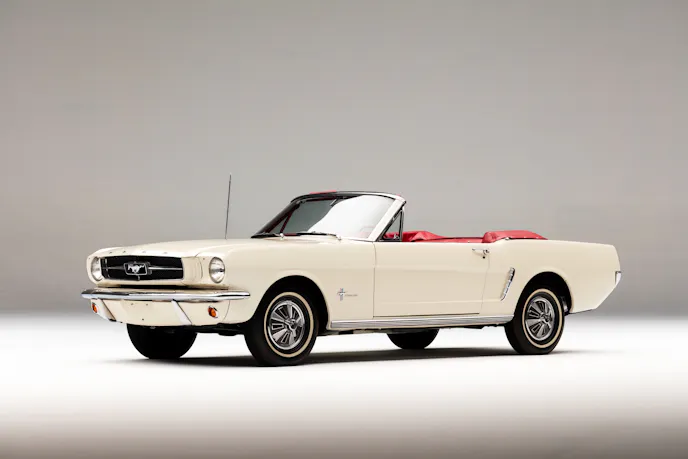
Visitors can see the Mustang in person through July 14 as part of the Driving America Forward: A Ford Experience at Union Station in Washington, D.C., where it joins nine other historically significant vehicles on public display.
The Mustang’s place in automotive lore began on April 17, 1964, when Ford unveiled America’s newest pony car spectacularly at the New York World’s Fair. Rather than simply displaying the car, Ford partnered with WED Enterprises, the Imagineering division of The Walt Disney Company, to make the Mustang the centerpiece of the futuristic Magic Skyway attraction.
Historic Ride
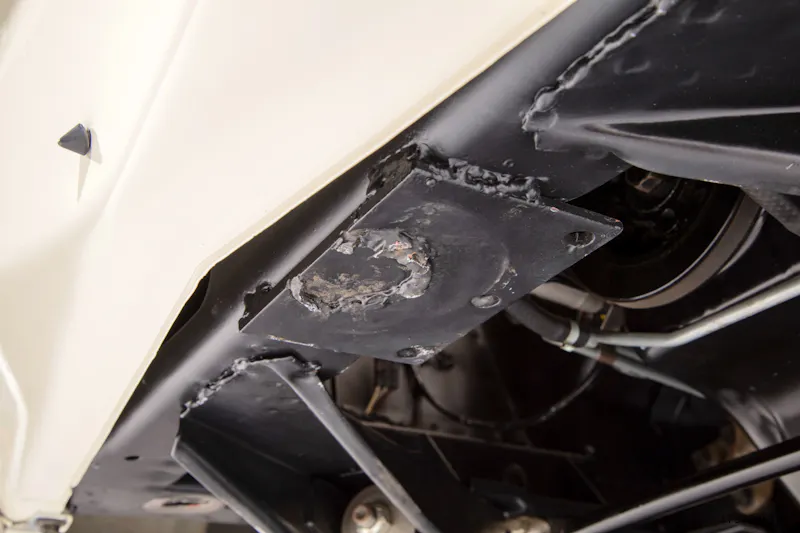
Guests climbed into real Ford vehicles, including a fleet of Mustangs, which were carried through a 12-minute ride aboard an early version of Disney’s revolutionary WEDway Transit System. Though the cars appeared to drive themselves, they were actually motorless ride vehicles equipped with metal plates and steering rods beneath the chassis. Tires mounted under the track propelled each vehicle through elaborate scenes depicting the evolution of life and mankind.
“It was the perfect coming-out party for the Mustang,” Ted Ryan, Heritage Brand Manager and Archivist, Ford Motor Company, said. “Ford worked hard to design a car that was stylish, sporty, and appealing to the forthcoming Baby Boomer generation. With its sleek and sporty look and a variety of engines to choose from, the Mustang was the perfect car for the under-30 set.”
The Blue Oval’s launch strategy matched the excitement surrounding the World’s Fair. The company simultaneously purchased television airtime across all three major networks to introduce the Mustang to America with a starting price of $2,368 FOB Detroit. The campaign ignited what quickly became known as “Mustang Mania,” with eager buyers camping outside dealerships to become among the first owners.
The formula worked. Ford sold more than one million Mustangs during its first two years on the market, with an impressive 43 percent of those sales going to women. The pony car’s combination of sporty styling, accessible pricing, and broad engine lineup also earned it the distinction of becoming the only automobile ever to receive Tiffany & Company’s Gold Medal Award for Excellence in American Design.
Rare Example
Meanwhile, the World’s Fair attraction became a phenomenon of its own. Roughly 15 million visitors experienced the Ford Pavilion, including future automotive icon Jay Leno, who famously waited in line until he could ride through the exhibit in a Mustang instead of another Ford model.
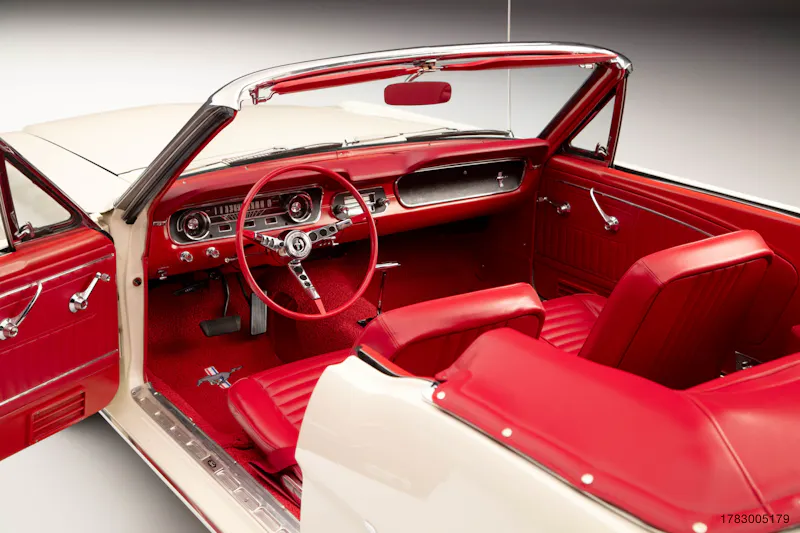
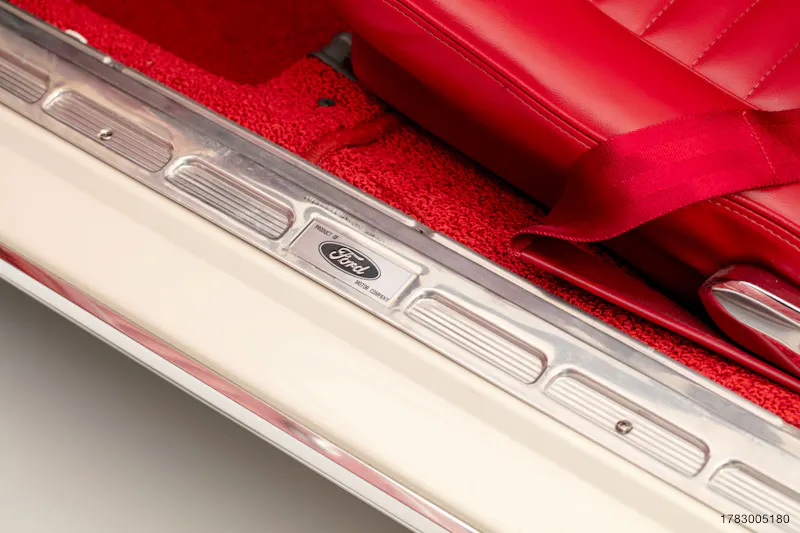
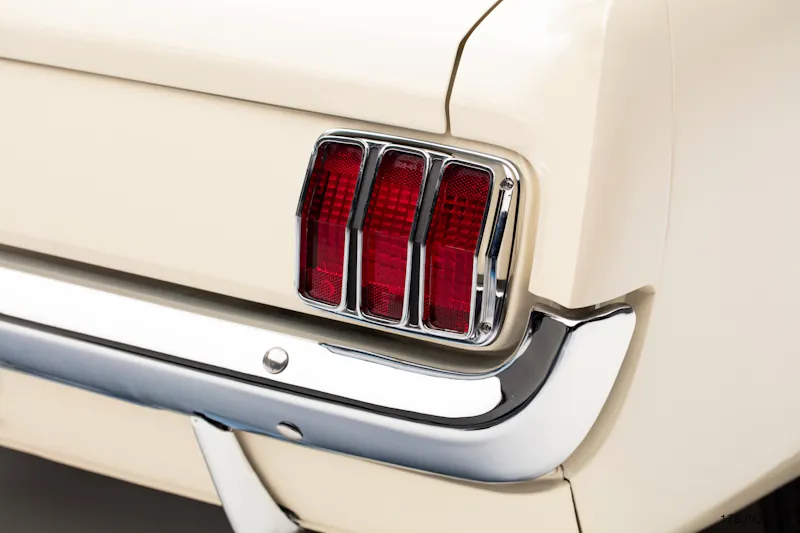
The newly inducted example carries its own remarkable story. It was part of the second group of Mustangs added for the 1965 World’s Fair season and is one of only four known survivors from the attraction.
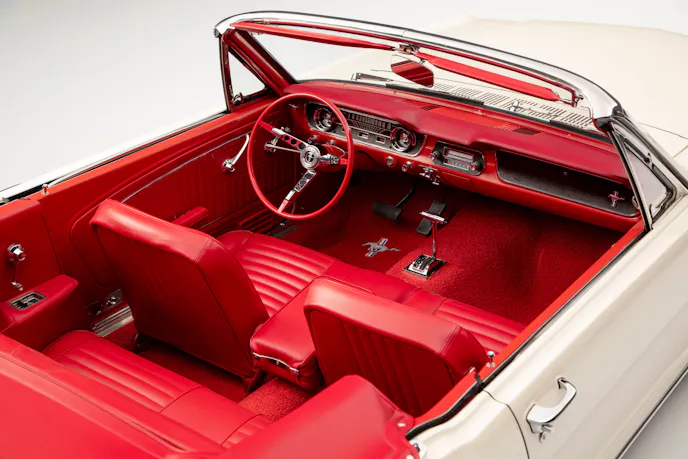
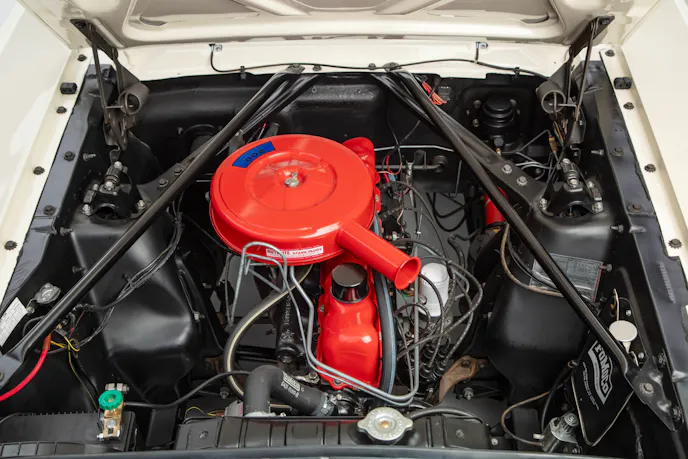
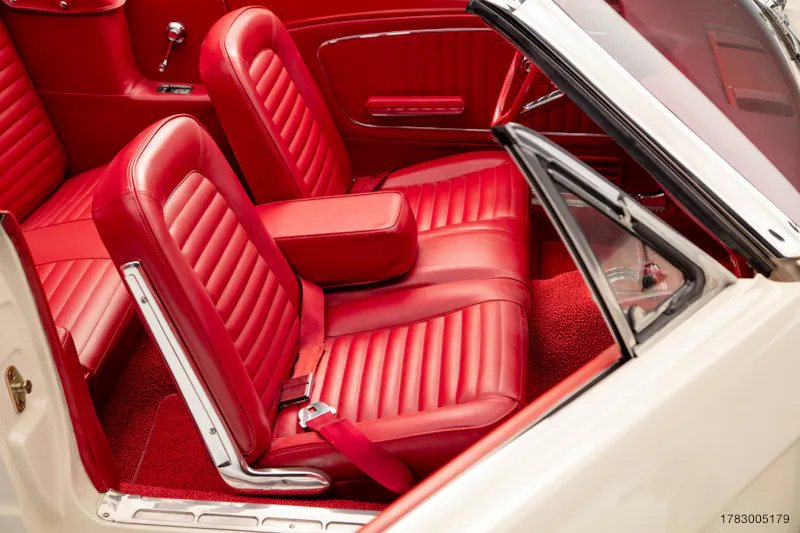
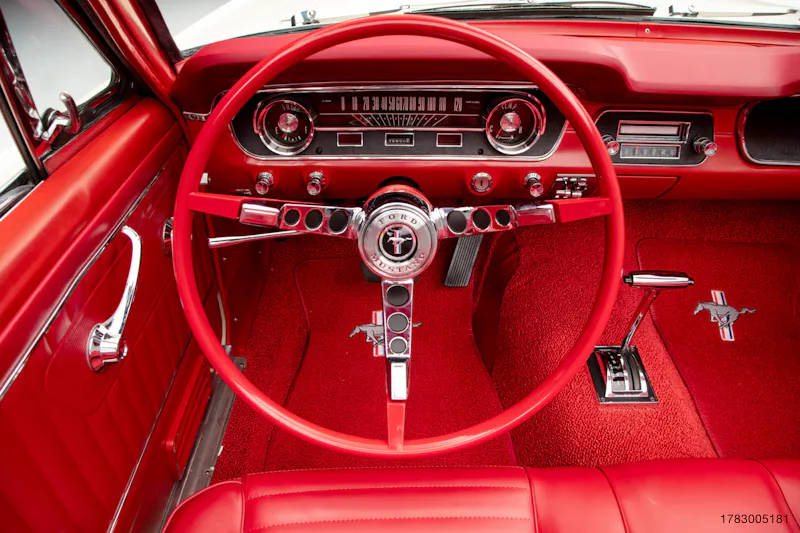
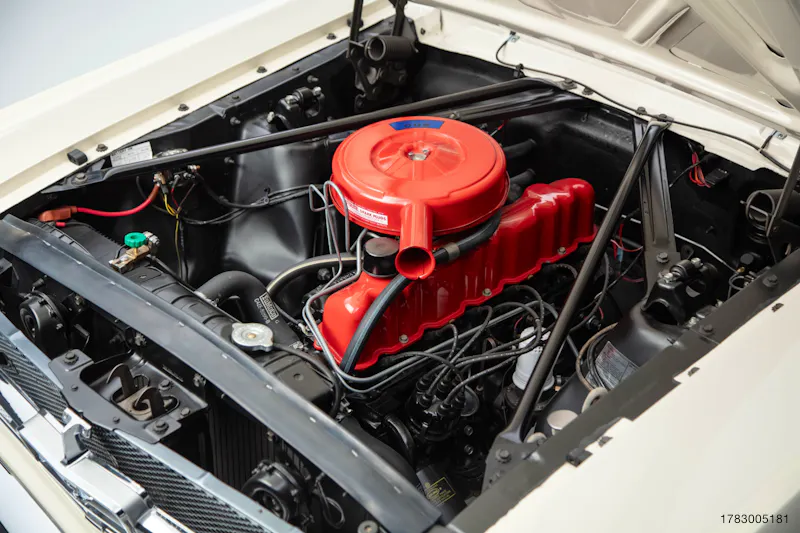
“After the Fair closed, all the cars used for the ride were sold to private individuals,” Ted Ryan, Heritage Brand Manager and Archivist, Ford Motor Company, said. “The specific Mustang featured in this exhibit was part of the second wave of Mustangs installed for the 1965 season and is one of only four still known to exist. It still has its original six-cylinder 120-horsepower engine and Cruise-O-Matic automatic transmission. A 1966 AM radio with an 8-track player and a bench seat were added before it was sold off the Ford Resale ‘B’ lot in December of 1965.”
Today, the odometer shows just over 35,000 miles, as its countless laps around the Magic Skyway undoubtedly don’t count. However, its induction into the National Historic Vehicle Register recognizes that lasting impact, preserving one of the cars that helped launch Mustang from an ambitious new model into one of the most recognizable nameplates in automotive history.
You might also like
BMR Suspension Expands With Hotchkis Sport Suspension Acquisition
BMR Suspension acquires Hotchkis Sport Suspension, combining decades of suspension expertise and American manufacturing under one umbrella.