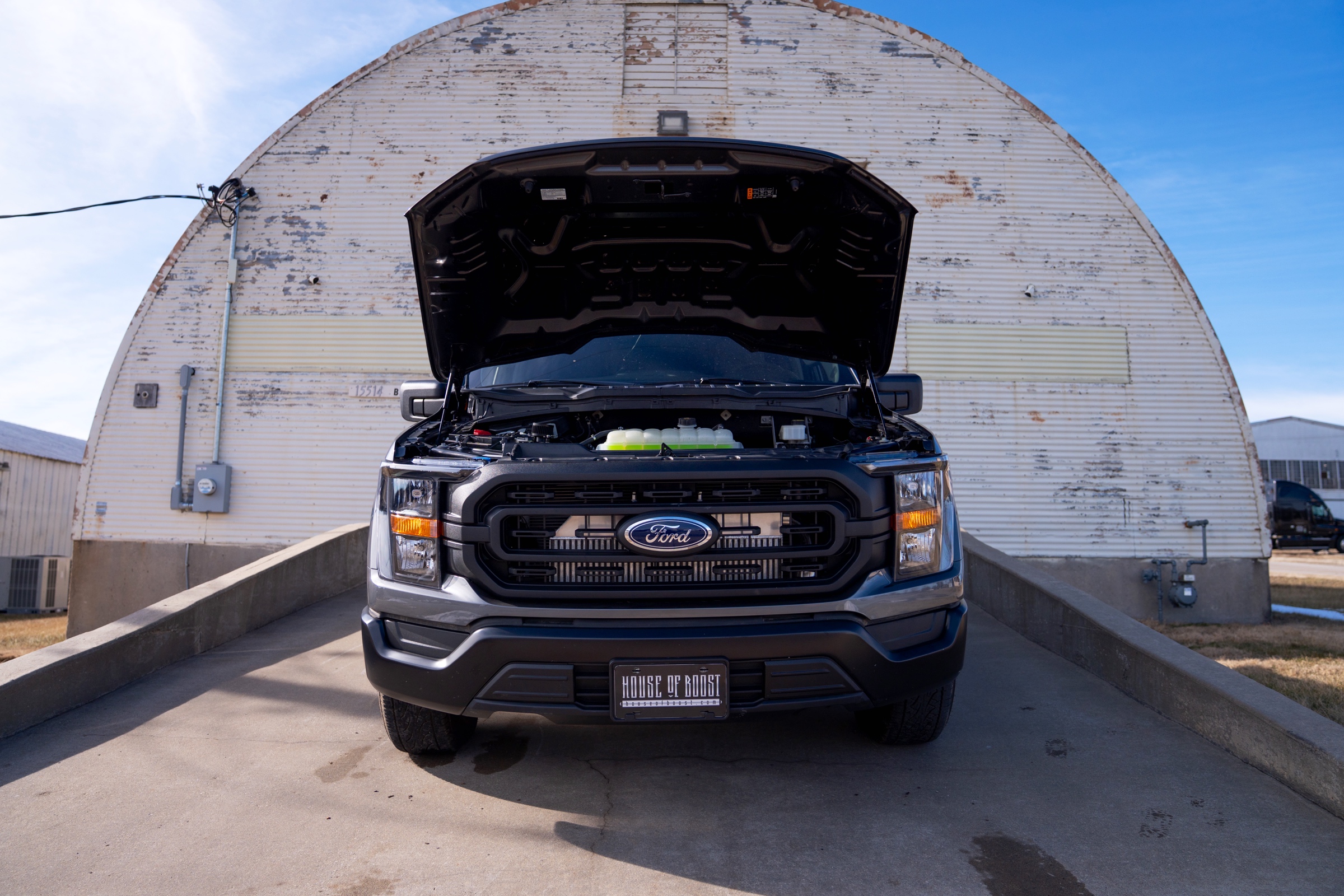
Project Airstrike’s mission is to see how high its performance can fly with centrifugal supercharging onboard. The FordMuscle and House of Boost collaboration is meant to deliver a street-driven F-150 capable of serious track performance. The first giant step for all truck kind is forced induction. We chose a path that is popular on Mustangs, but warrants further investigation on an F-150.
The Coyote 5.0-liter V8 thrives on airflow, and a centrifugal unit complements the engine’s high-RPM efficiency by building boost progressively in line with the factory powerband. In a full-size truck, that power curve is easier to manage than the instant torque hit of a positive-displacement blower because it reduces driveline shock, helps maintain traction, and keeps the chassis more composed as acceleration builds. Rather than fighting the power, the truck can apply it cleanly, especially after we enhance the suspension later on.
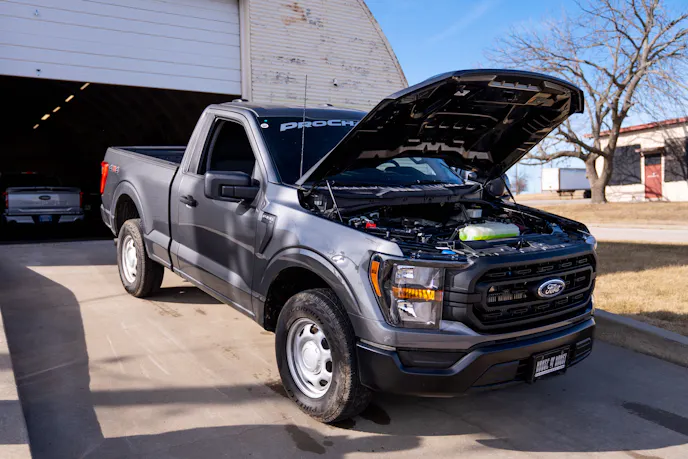
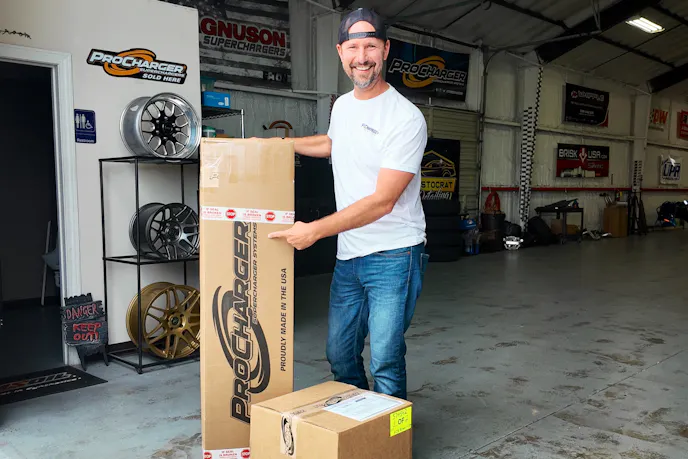
“As a guy who has been around boosted V8s my entire career, I can’t think I have ever been this excited about a platform,” Erik Radzins, Director of Communications and Calibrations at ProCharger, enthused. “These ProCharged F-150s are so fun to drive, I wish I could just pass one around to all my friends and family, just to see the crazy smile they would get when they pushed the loud pedal down. Hats off to every engineer at both Ford Motor Company and ProCharger.”
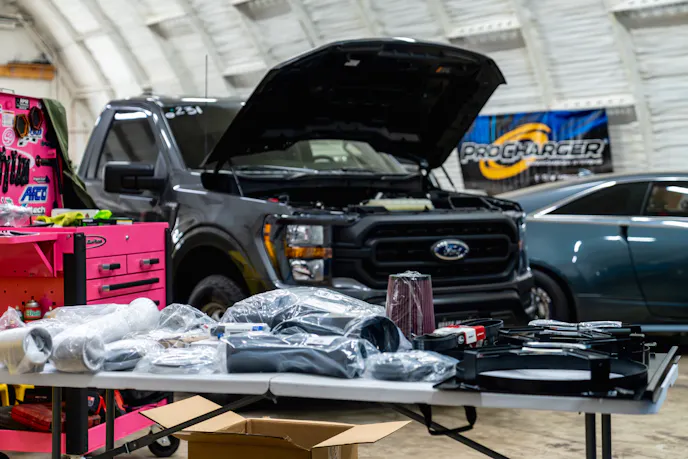
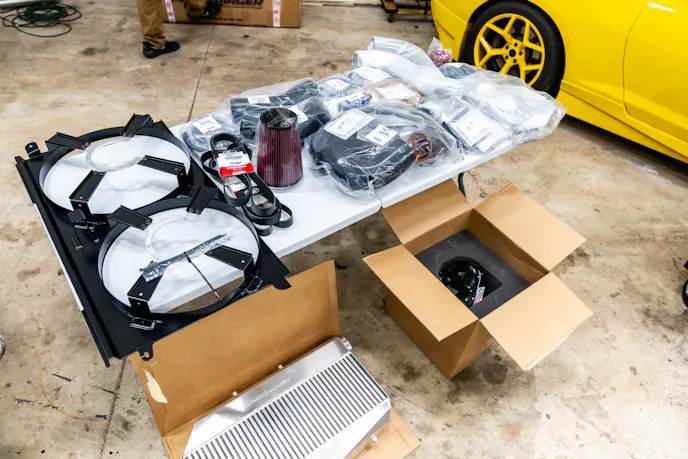
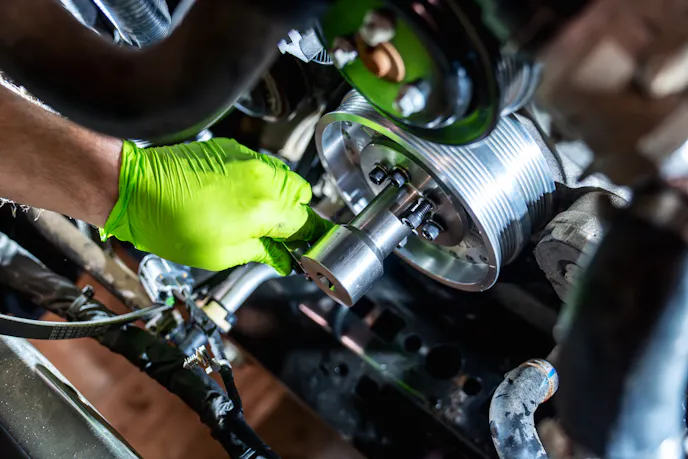
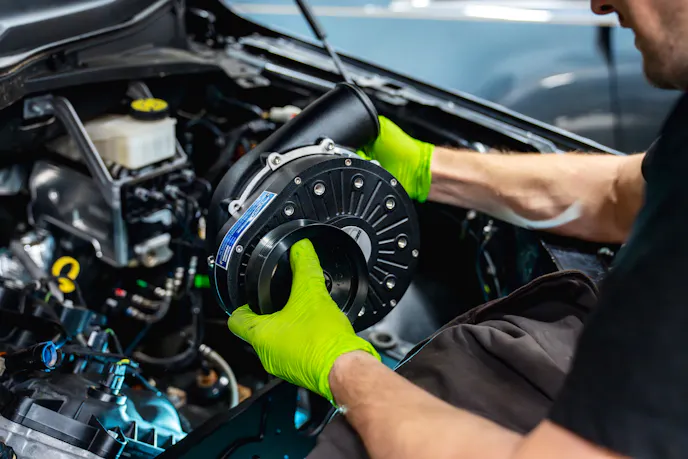
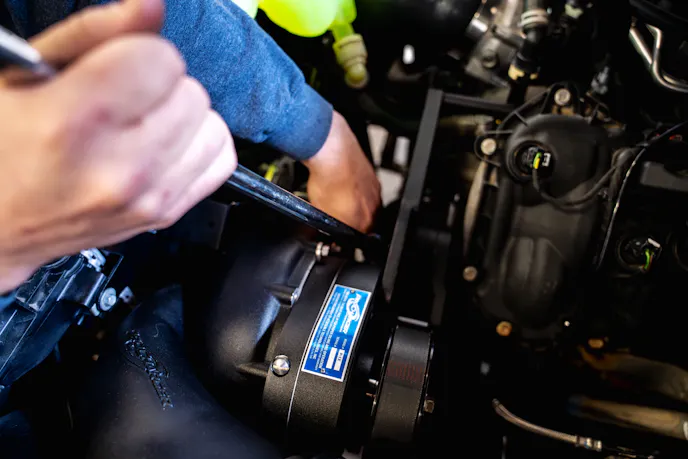
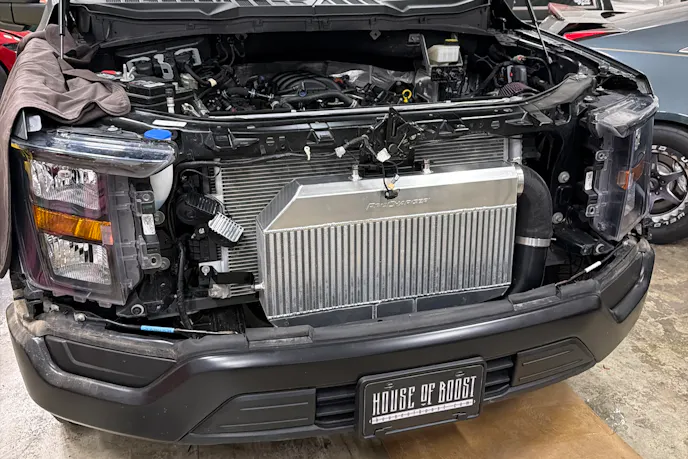
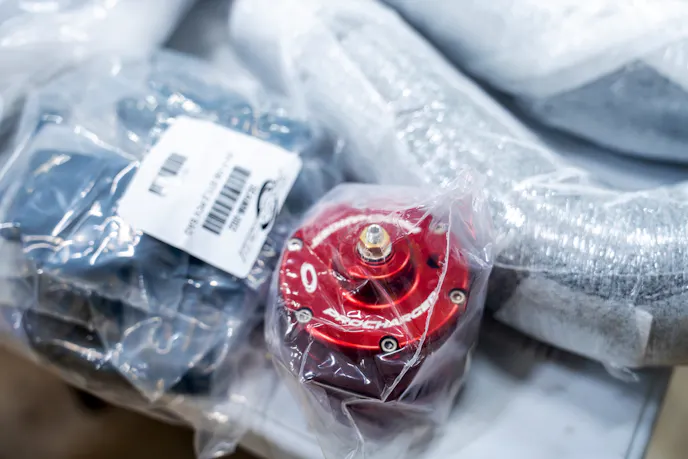
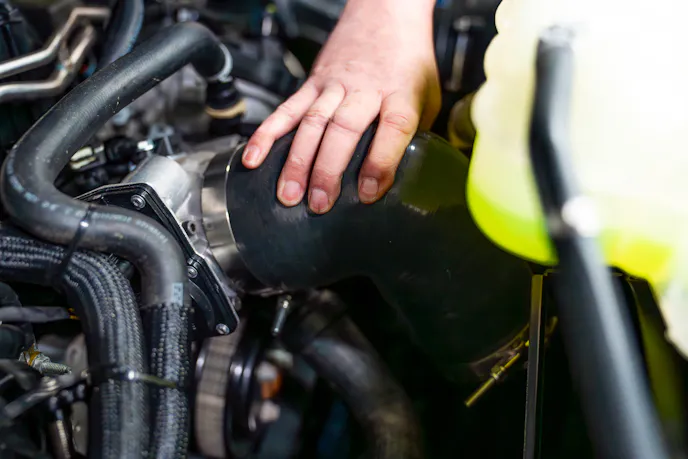
ProCharger’s Stage 2 system fits the bill for this build, especially when optioned with the vaunted P-1X head unit. It delivers a substantial increase in output while staying within the comfort zone of the factory long-block, establishing a durable performance baseline before additional power is introduced. The system is engineered as a complete package with matched hardware, intercooling, fuel injector upgrades, and a supplied calibration designed to bring the entire powertrain into sync once airflow increases.
Perfect Match
“What makes the P-1X great is also what makes the Coyote great — a massive powerband and huge room to grow. Just like a Coyote is perfect for making 400 or 1,000 wheel horsepower, the P-1X is the perfect blower for anything from 600 to even 1,000 wheel horsepower,” Radzins explained. “What’s great is that the P-1X still uses the fully billet gearcase that has been proven over the past 20-plus years, supporting both crazy power, as well as hundreds of thousands of miles of usage without breaking a sweat. The only changes were the ‘airflow’ side of things to match these amazing motors. I mean, seriously, they belt out wicked amounts of torque for a centrifugal compressor.”
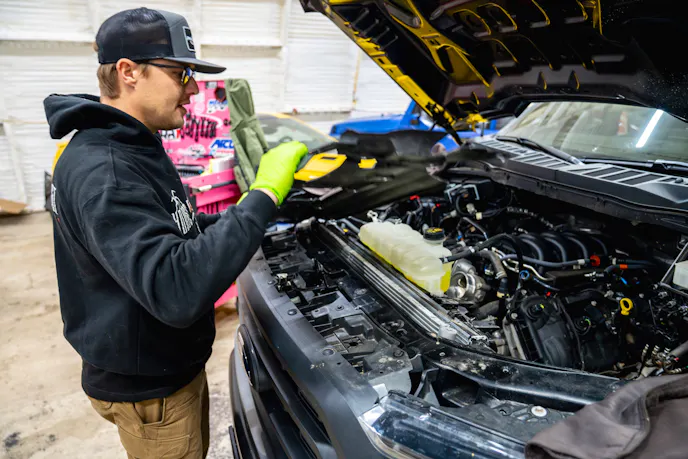
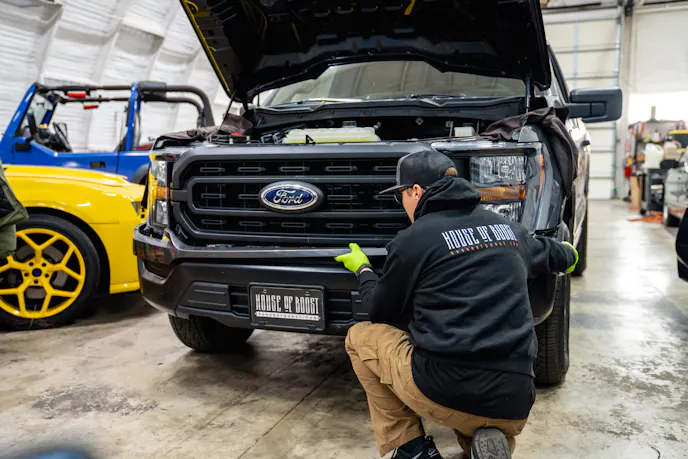
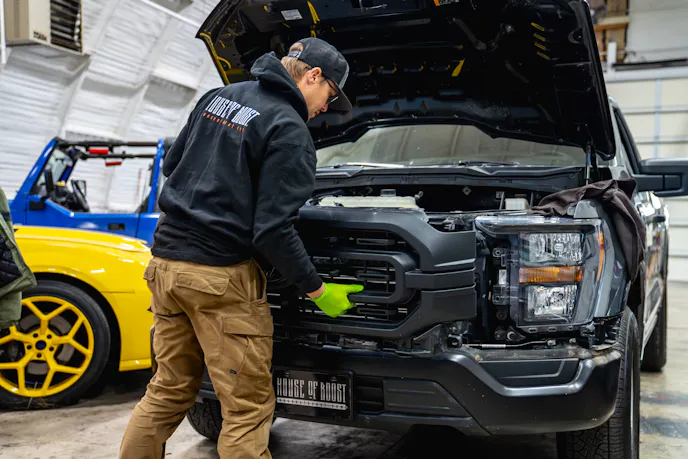
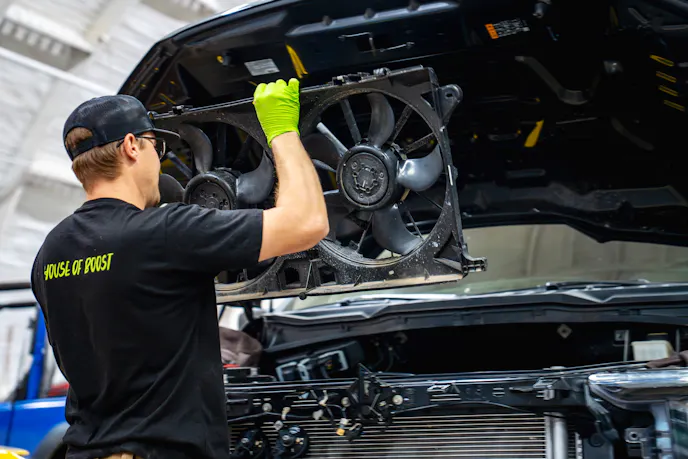
To match that airflow, the ProCharger calibration plays a critical role in optimizing the factory programming to make the most of the new hardware and increase airflow. Modern F-150s rely on torque-based engine-management strategies that directly influence the shifting characteristics of the 10R80 10-speed automatic. When airflow and cylinder pressure rise dramatically, the factory ECU must respond to those changes so the transmission responds appropriately for both performance and durability.
“Honestly, the engine side of things is pretty straightforward,” Radzins shared. “Most of the time is spent on the transmission side of the calibration to make sure the truck shifts lightning fast (right at 2 milliseconds) and still retains its torque management, so the trans will live a long and happy life. The ProCharger and the Coyote make it way too easy to make the horsepower.”
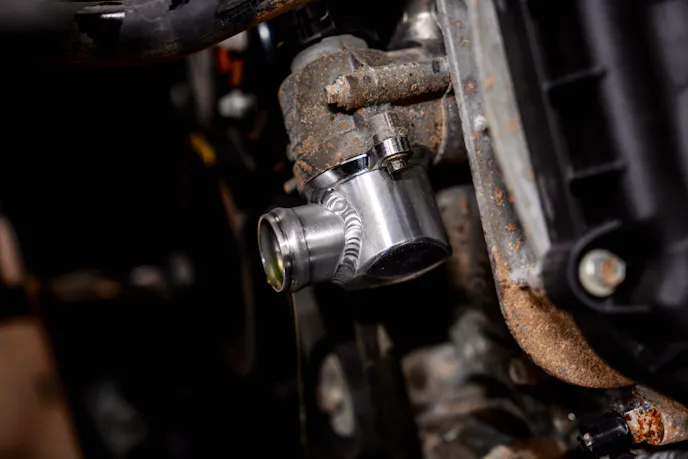
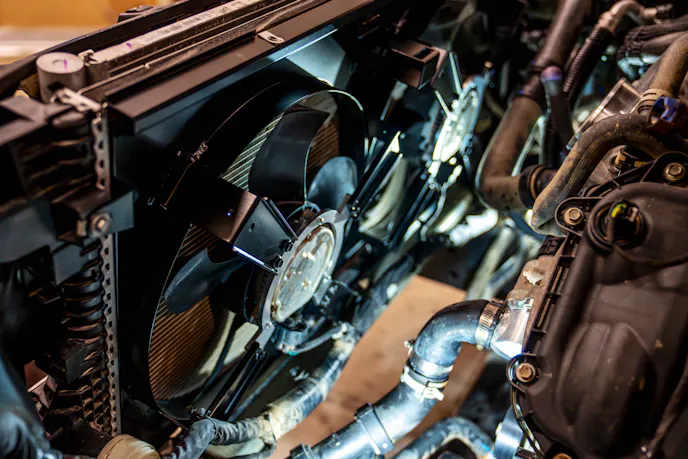
With the companion calibration provided with the kit flashed into the stock ECU, the truck behaves with OEM composure. Part-throttle driving remains smooth, shift quality stays predictable, and the powertrain operates as a cohesive system, which is ready to put the newfound power on the track.
Bolt-On Gains
“It feels amazing,” Jordan Overstreet, co-owner of House of Boost, added. “It drives like stock when you’re just cruising around, and it rips when you get on it.”
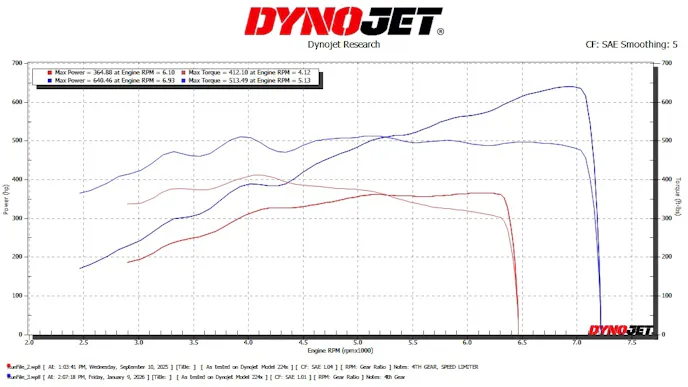
Baseline testing established that, in naturally aspirated form, Project Airstrike produced 364.88 horsepower and 412.10 lb-ft of torque at the wheels on House of Boost’s in-house Dynojet chassis dyno. Those numbers were respectable for a stock truck, but they also highlight how much headroom exists in the Coyote platform.
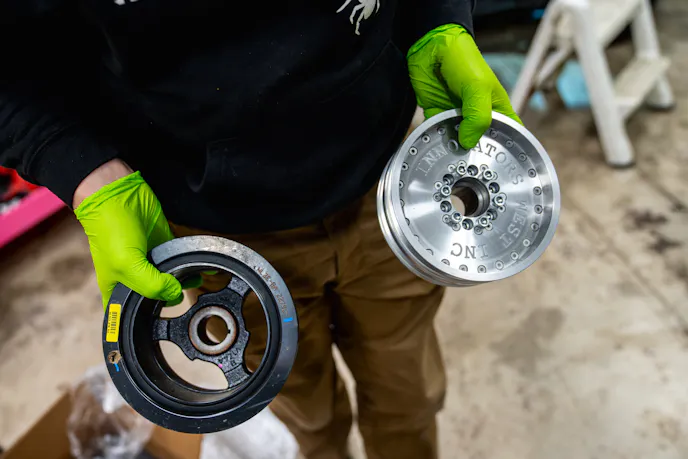
After installing the ProCharger Stage 2 system, larger injectors, and flashing the calibration, the truck returned to the rollers. Boost climbed smoothly during the pull, and the power curve carried with authority through the upper RPM range without instability or drop-off. When the dyno rollers spun to a stop, the screen showed 640.46 horsepower and 513.49 lb-ft of torque at the wheels, yielding an increase of roughly 275 horsepower without cracking open the stock Coyote.
“Anyone with a boosted F-150 knows that with stock cats/stock exhaust and run-of-the-mill pump gas, it’s pretty hard to crack the 600-wheel-horsepower mark without E30 blends or more boost,” Radzins said of the initial supercharged results. “So ripping off 640 wheel horsepower on the first pull is music to my ears as a calibrator. And, I know it can only go up from there, as the mods change and allow for more power production safely.”
Catch Me If You Can
When you start adding boost to Ford’s Gen 3 Coyote, managing crankcase vapor is a concern. After Project Airstrike gained ProCharger boost, it was time to keep the combustion chambers clean. Centrifugal boost builds with rpm and pulls hard up top, but increased cylinder pressure also raises the amount of oil vapor moving through the PCV system. Let that migrate into the intake, and you risk lowering effective octane while introducing deposits where you don’t want them.
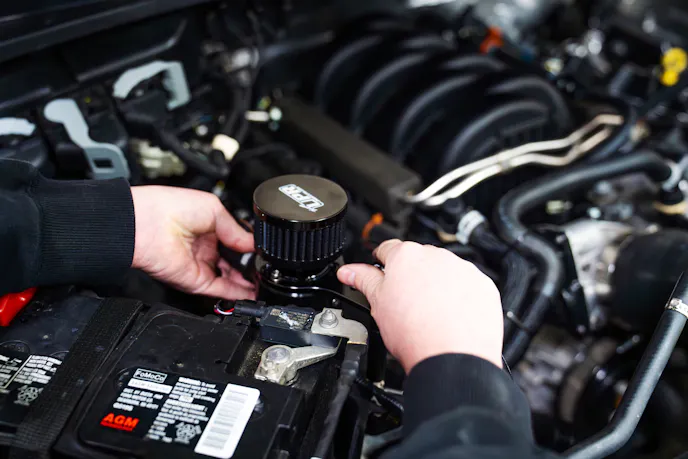
UPR Products’ Plug N Play Single-Valve Oil Catch Can Separator (P/N 5030-269-1; $219.99) is engineered specifically for the 2021–2023 F-150, and the install reflects that OE-minded approach. The billet-aluminum can attaches using an existing battery tray provision, and the Plug N Play fittings lock directly into the factory PCV routing. Since there is no cutting and no drilling, the truck can be returned to stock quickly if needed. Braided hose and billet ends replace the factory plastic lines, providing greater durability under boost and heat. Internally, the can’s patented multi-chamber diffuser promotes proper collection and condensation rather than relying on a basic filter.
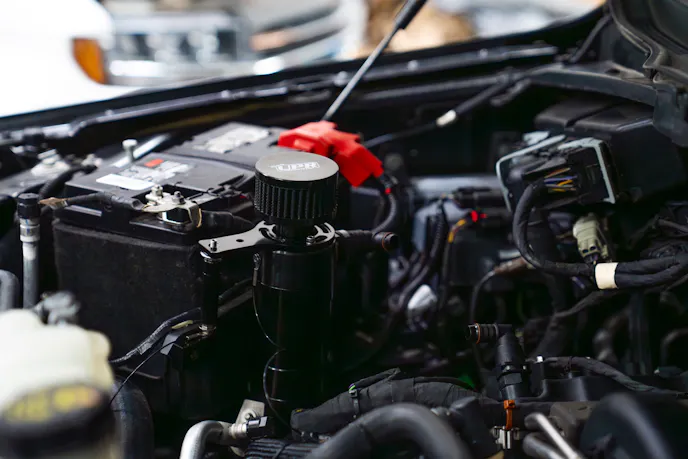
House of Boost also added UPR’s Clean Side Separator (P/N 5043-269-1; $149.99) and a high-flow check valve to improve crankcase evacuation. The result is steady idle quality and consistent throttle response during dyno sessions. Installation takes about 10 minutes, but the protection it adds makes it a smart upgrade for any hard-driven, ProCharged F-150.
Ready To Haul
Crossing the 640 rear-wheel horsepower threshold sets the stage for an impressive project moving forward. Project Airstrike is ready to move into its big-power era, and to really unleash that potential, our next phase will focus on supporting the output the engine is already capable of producing.
“It is an absolute riot,” Larry Hamilton, co-owner of House of Boost, enthused.
Increasing the fuel system capacity will provide the flow needed to support high-ethanol E85 fuel, while an upgraded exhaust will ensure durability and improve performance by reducing backpressure. These upgrades will build on that foundation and position the truck for the next horsepower level and much quicker elapsed times.
“It’s only up from here,” Hamilton added. “So, yeah, it’s gonna just be a party.”

You might also like
ARP Offers A Wide Range Of Specialty Nuts And Washers For Engine Builders
Rounding off cheap bolts ruins weekend garage projects. Upgrading to premium specialty nuts and washers guarantees a tight, reliable fit.