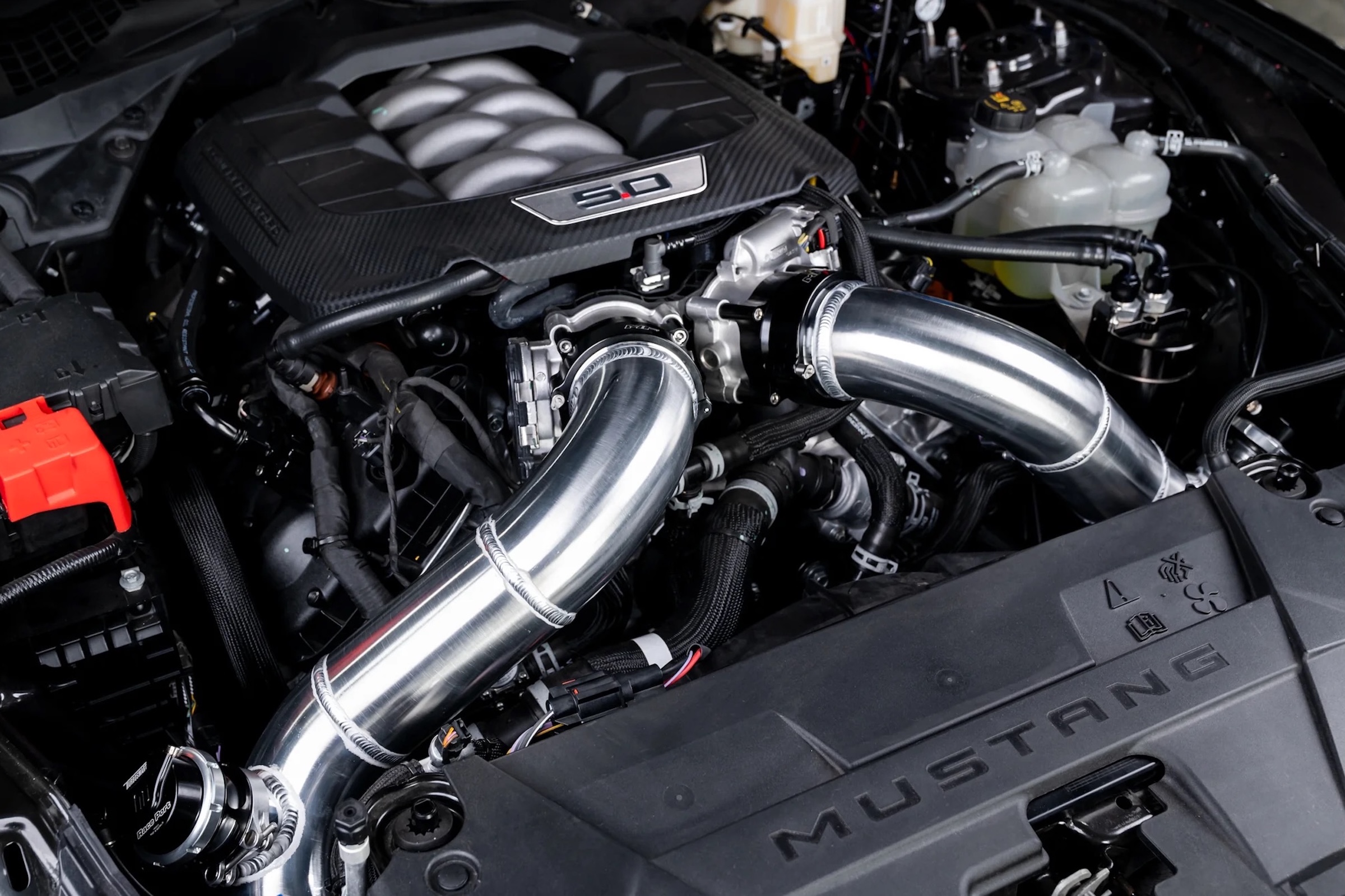
Ford’s vaunted Coyote 5.0-liter engines and boost have long been fast friends, and that hasn’t changed with the Gen 4 engine in the latest Mustangs. Once the aftermarket unlocked tuning for the 2024-and-newer stallions, power adders were on the table, ready to renew that high-output friendship. For those who want two turbos to amplify their engines’ output, SPE Motorsport has a comprehensive kit to do just that.
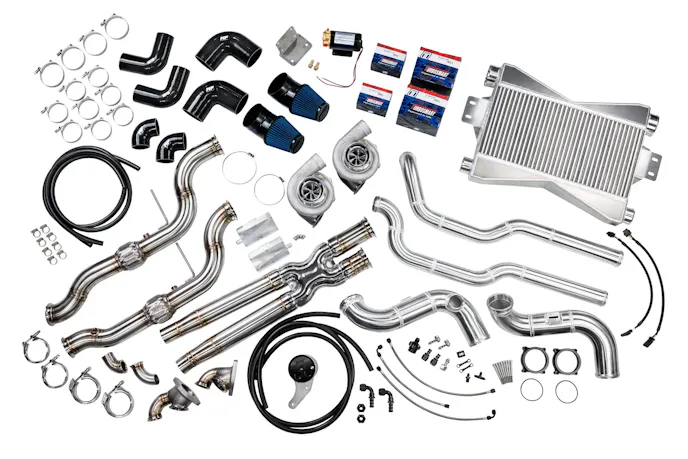
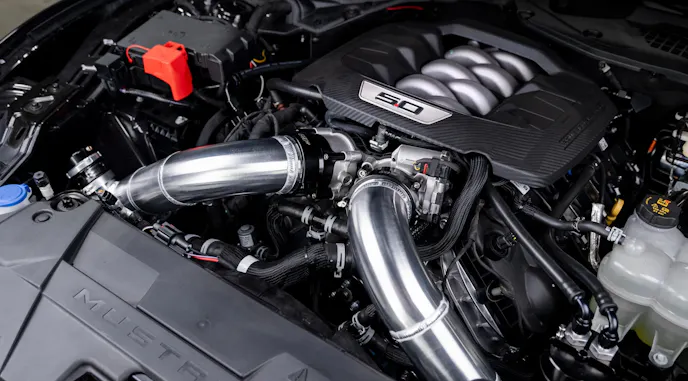
SPE Motorsport’s 2024+ S650 Mustang GT/Dark Horse Twin Turbo System (P/N: SPE-C100220; $9,000.00) is based on a mid-mount, factory K-member layout engineered for OEM-style integration and broad power scalability. The system is designed to support roughly 600 horsepower street combinations and extend beyond 2,000 horsepower depending on configuration, with boost adjustability from 3 to 50 psi.
To ensure DIY installers can add this upgrade, the company recently shared a detailed installation walkthrough that explains the process of bolting on four-digit potential.
“Essentially, what we’re going to do in this video is walk through everything that you have to take off of the car and everything that has to be done to put the turbo kit on the car,” Dan Snyder, of SPE Motorsport, explained. “This is going to be an overview… so that you know what you’re getting into and basically what it takes to put the turbo system on a car.”
Non-Invasive Install
A major theme throughout the installation is preserving factory architecture wherever possible. The kit retains the stock K-member and uses a large vertical-flow intercooler mounted to the front of the S650 chassis with minimal trimming required for clearance. The emphasis is on packaging efficiency and repeatability rather than custom fabrication, which resulted from real-world development work on the system.
“Now that we know how long the oil line actually is from up top, we’re going to strap the wiring to the return oil line,” Snyder pointed out. “It gives it a nice clean path all the way down to the pump, and I think it’ll just make it a little bit easier on everybody when installing it on a brand-new car.”
Factory integration extends into the induction system as well. The S650’s intake manifold runner control system is retained, but locked open for boosted operation, eliminating the need for custom machining or removal of OEM components.
“….Those runners are there to increase torque in a naturally aspirated application, but being that we’re boosted now, you want those open all the time,” Synder explained. “We give you lockout arms to take those off, lock them out, and keep them in the open position.”
Factory Flow
Boost reference routing is also simplified by consolidating multiple vacuum and pressure sources into a single service point for wastegates, blowoff valves, boost gauges, and controllers.
“The other thing that we include for the factory intake manifold is a boost block that we make to help finish your plumbing for things like wastegate actuation and blowoff valves,” Snyder said. “It gives you a tap for vacuum and additional ports for a boost gauge, boost controller, blowoff valve, or whatever you want to run. It’s just a nice little feature that we include in the kit to help make life a little bit easier.”
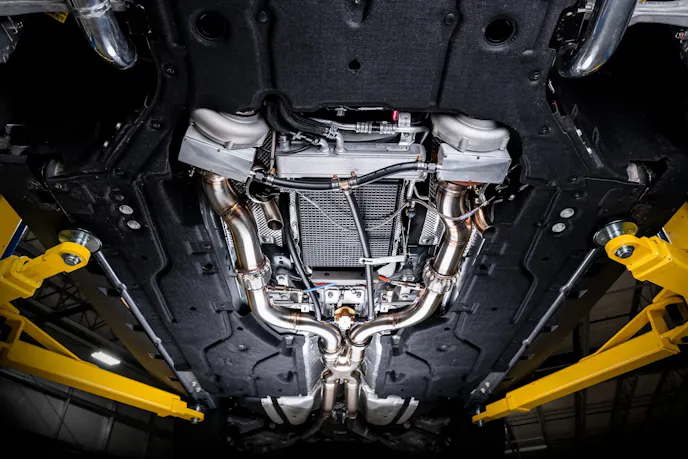
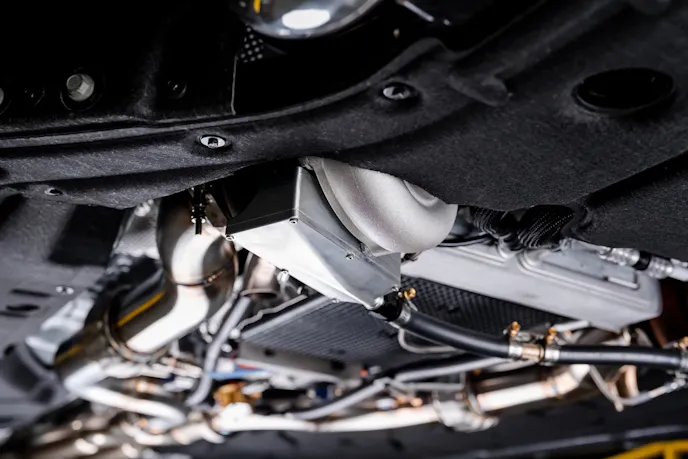
Air management is treated as a packaging and performance consideration rather than an afterthought. The air filters are shaped and positioned specifically to tuck into the belly pan area, maintaining clearance while preserving the airflow capacity required for high-horsepower applications.
“We made the air filters specifically for this kit, so they have the proper angle to tuck up into the belly pan and stay up out of the way. They’re not just stuck on the front of the turbo,” Snyder said. “The main reason we do that is we need enough surface area so that we can actually make the power through the filters.”
Final boost-control and plumbing decisions are intentionally left flexible to accommodate different turbo sizes, controllers, and build goals, reflecting the kit’s wide performance range from street setups to high-output combinations. And, while the system is designed as a DIY-friendly mod, SPE is clear that it still requires mechanical competence and proper installation practices. Fabrication isn’t required, but this isn’t exactly a beginner-level upgrade.
Bolt-On Not Basic
“All things considered, to put this kit on, I understand it’s not super easy to do, and you have to be mechanically capable, but as far as the things that need to be modified or done that are custom, it’s minimal,” Snyder says. “It’s very bolt-on.”
With a pump-gas tune, the system delivered robust rear-wheel output, and there is plenty more on tap by increasing the boost, but that kind of adjustability is one of the beauties of a turbo system. Not only is the boost variable via the wastegate, but the kit can be optioned with Precision P6266, P6466, or P6766 turbochargers, depending on the desired engine output.
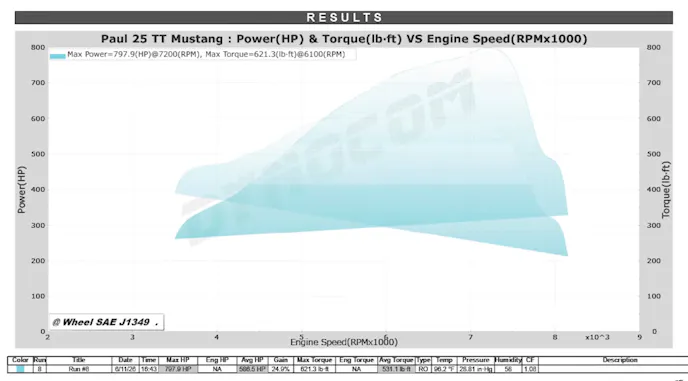
“As you can see, we ran the car on the dyno. We got a tune fired in it. We’re pretty happy with it. In the back of this car, there are some baby seats. So, Paul wanted like 1,100 horsepower, but we told him too bad,” Snyder laughed. “He’s not going to leave it there. But we’re at 800 on 93. The car is very happy. Paul’s still going to be happy with it, especially on this tire…”
SPE’s S650 twin-turbo system delivers a combination of OEM-style integration, scalable boost capability, and simplified installation strategy, making it a tantalizing power-adder option for Gen 4 Coyote Mustangs across a wide range of performance goals. For more information on the S650 twin-turbo kit, visit the SPE Motorsport website.
You might also like
Lyn St. James’ Widebody Fox Capri IMSA Racer Sells For Nearly Six Figures
Lyn St. James’ IMSA Capri is powered by a 338-cube Ford V8. Carrying lots of racing history, this Fox Capri recently sold at auction online.