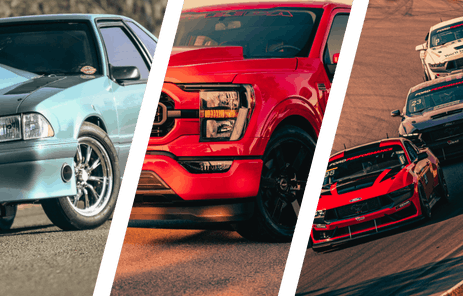
We’ve seen factory Coyote engines pushed to incredible heights with aftermarket upgrades. As such, when you let your Coyote-powered F-150 or Mustang rip at wide-open throttle, you likely don’t give it a second thought. Thankfully, Ford’s engineers have given it much thought to ensure that it delivers repeatable performance. Behind the scenes, Ford subjects these engines to punishment far beyond anything most owners will ever experience, all in the name of delivering greater durability on the street.
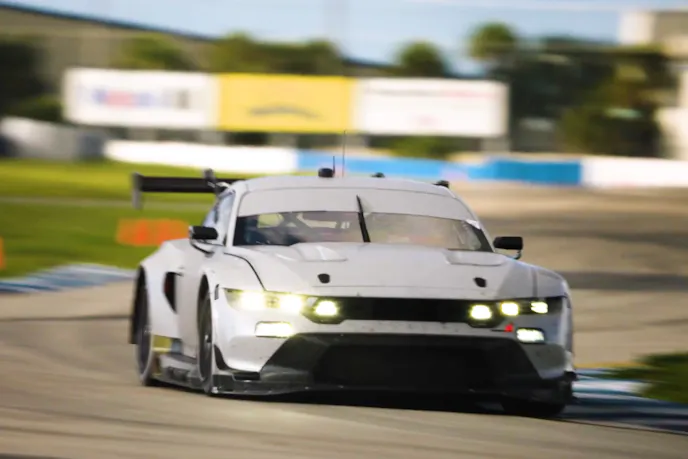
Rather than relying solely on laboratory simulations, Ford combines the relentless abuse of motorsports with exhaustive engineering analysis to identify weak points before they ever reach production vehicles. The strategy pushes Ford’s 5.0-liter V8-based race engines through hours of full-throttle, high temperatures, and extreme vibration, creating failure scenarios that typically don’t exist during everyday driving.
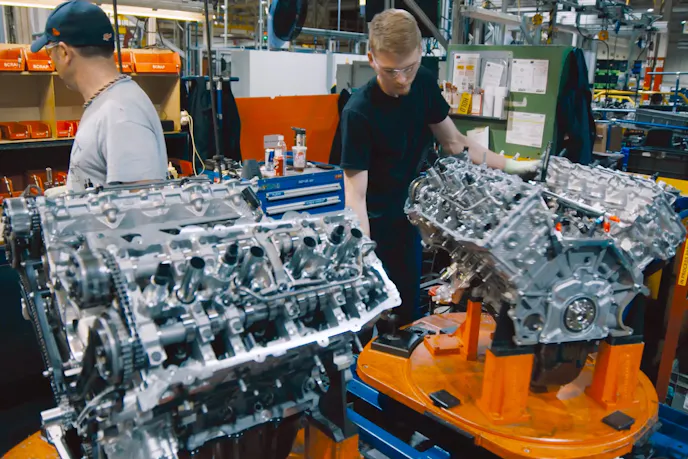
Those efforts recently paid dividends, leading to improvements in the Coyote’s camshaft drive system. According to Ford, engineers uncovered opportunities to strengthen the design while racing 5.0-liter V8-based engines under competition conditions far harsher than any production vehicles would experience. The revised design was refined on the track before making its way into the production 5.0-liter Coyote V8, giving retail customers the benefit of lessons learned at the limit.
This development process is built around close collaboration between two groups. Ford Racing engineers and pit crews collect real-time telemetry as engines endure the racetrack. At the same time, Ford Product Development engineers analyze that data, identify areas for improvement, and turn those discoveries into stronger production components.
Technology Transfer
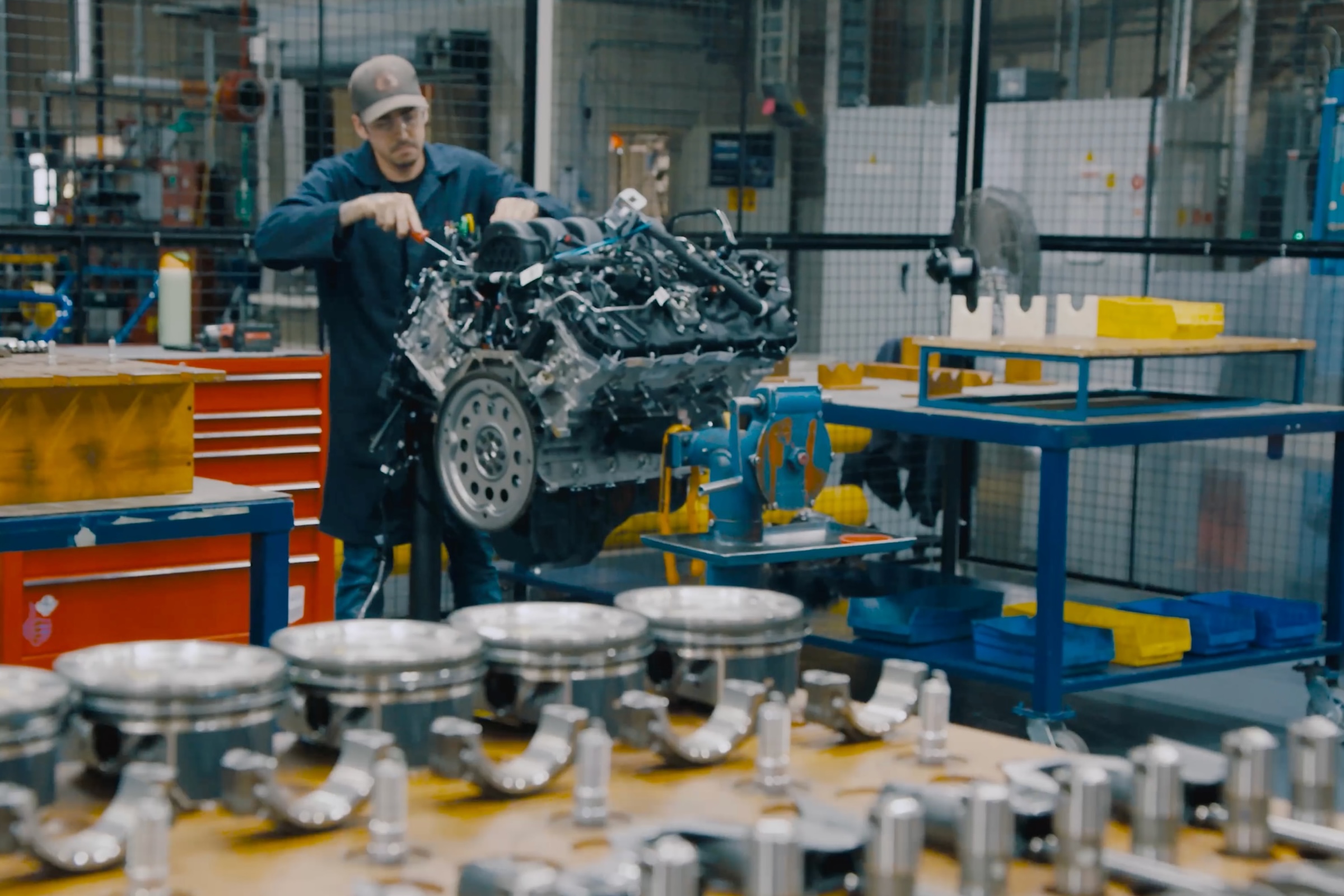
After their track time ends, the engines aren’t simply discarded. They’re shipped to facilities such as Ford’s Essex Engine Plant, where dedicated mechanics tear them down daily in search of wear patterns, fatigue, and other clues that could lead to the next durability enhancement.
“This requires us to look at failure differently,” Charles Poon, vice president of Vehicle Hardware and Software Engineering, Ford Motor Company, said. “We now celebrate internal test failures. The more issues we identify during testing, the lower the chance of our customers experiencing them.”
Ford says the process extends well beyond fixing broken parts. The ultimate goal is to validate engineering models by accurately predicting how components will perform under the harshest conditions. Those insights can then be applied to engines destined for customers.
Without the demands of racing, Ford says some of those improvements might never have found their way into production vehicles. By deliberately pushing engines beyond the limits of normal operation, engineers can identify weaknesses long before customers ever encounter them.
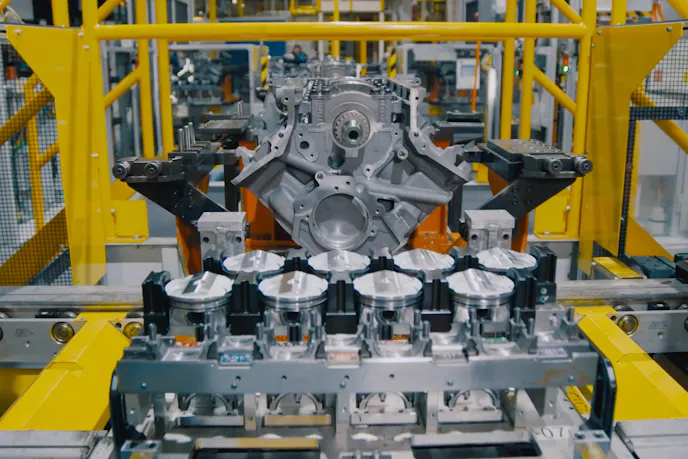
“Ultimately, testing is not simply about ‘finding new defects’ — it is about validating our engineering,” Poon added. “When a failure does occur, our goal is to predict exactly what will fail and when. That level of predictability is how we prove our engineering models truly align with real-world conditions.”
That philosophy continues to shape the evolution of Ford’s powertrains. While most owners won’t push their engines to these limits, the durability lessons learned under those extreme conditions help ensure the production 5.0-liter V8 is ready to meet the moment on the street or at the racetrack.
You might also like
This 1987 Saleen Mustang Came Back Home From The Ashes
A fire nearly finished this 1987 Saleen Mustang. See how a 331 stroker, Vortech boost, and Griggs suspension brought it back.