Racing at the top level in the FIA World Endurance Championship is no modest task. With that in mind, Ford Racing brought its Hypercar program in-house to deliver a competitive machine for next year’s racing season. Part of that development is ensuring that the 5.4-liter Coyote engine propelling that ride is up to the task. As a result, Ford simulated running the Circuit de la Sarthe on the engine dyno, and it sounds razor sharp revving through the virtual course.
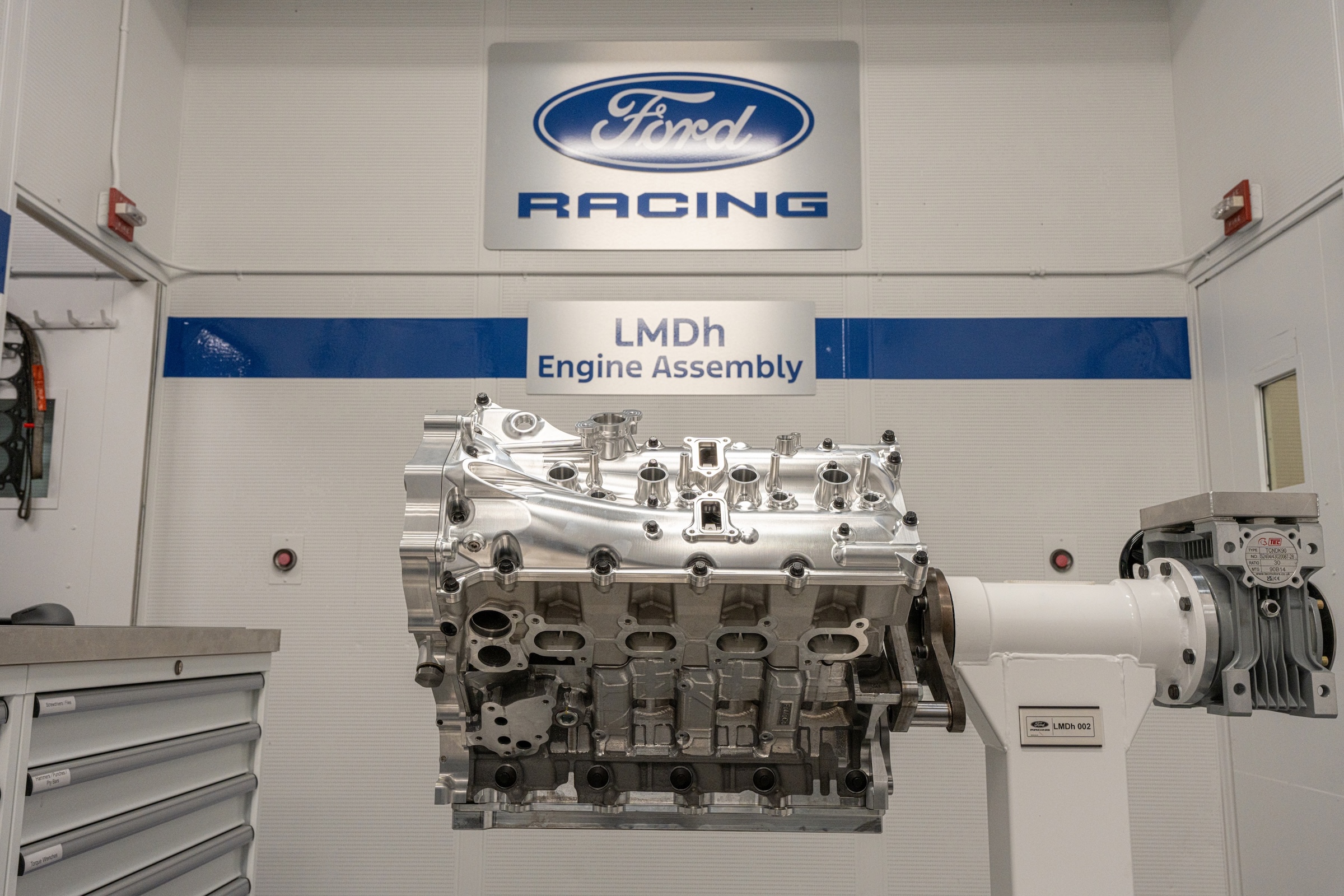
Before the Hypercar ever turns a competitive lap in France, it is already pounding out miles in Michigan. Ford’s latest behind-the-scenes video showcases how the company is validating its naturally aspirated, 5.4-liter, Coyote-based V8 by recreating an entire lap of the famed Circuit de la Sarthe on an advanced engine dyno in Dearborn.
Instead of waiting for limited track time, engineers can expose the engine to the same acceleration, braking, and shifting events it will experience during the world’s most famous endurance race while collecting a mountain of data along the way.
The soundtrack alone is enough to make any Blue Oval enthusiast’s heart flutter. As the dyno follows the virtual course, the V8 repeatedly charges beyond 9,000 rpm with the crisp, mechanical scream expected from a purpose-built endurance racing engine. It’s a reminder that while this powerplant traces its lineage to Ford’s Coyote architecture, nearly every component is engineered specifically for competition.
Performance Preparation
The exposed engine in the video reinforces that point. Beyond the unmistakable dual-overhead-cam layout, the engine features what appear to be beautifully machined billet cam covers. Even when it is not fully dressed and running, it looks ready to race, and it would seem this preliminary testing bears that out.
“Every time we fire up our dyno cell in Dearborn, the room holds its breath,” Christian Hertrich, Powertrain Chief Engineer at Ford Racing, said. “Then the engine catches, the numbers climb, and for a few minutes, we’re not in Michigan anymore. We’re at Le Mans.”
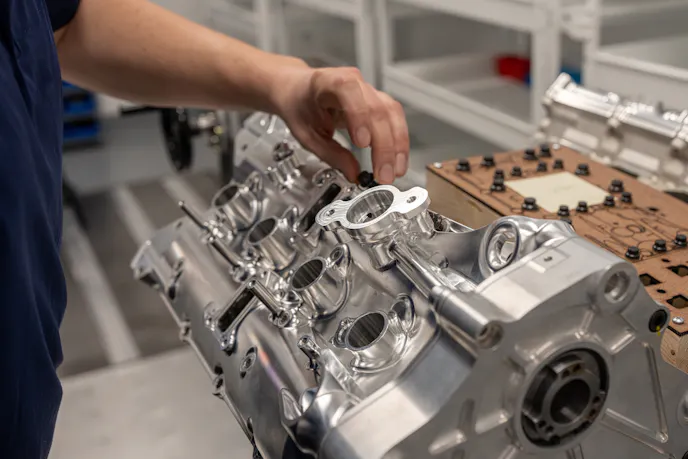
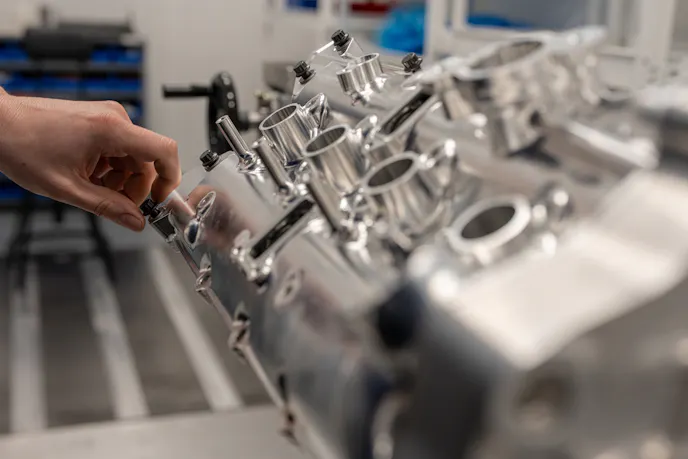
The simulation goes well beyond simply sweeping the engine through its rev range. Ford’s engineers have modeled the entire Circuit de la Sarthe so the dyno reproduces every gear change, the braking zone into Mulsanne, and full-throttle charge toward the Ford Chicane in real time. That allows the powertrain team to evaluate durability, calibration, cooling, and countless other variables under conditions that closely mirror the actual race.
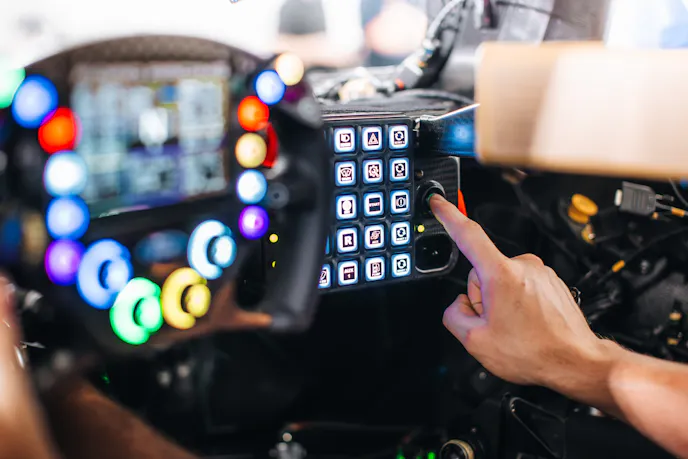
Those virtual laps are only one part of the development effort. Ford is also preparing its drivers at the company’s Technology Centre in North Carolina, where the team’s simulator allows them to familiarize themselves with the cockpit, controls, and race procedures before the Hypercar reaches the circuit. Every hour spent refining the engine and every session in the simulator reduces uncertainty once real-world testing begins.
Familiar Formula
The work also carries a fitting connection to Ford’s endurance racing heritage. According to Hertrich, the Hypercar engine is being tested only yards away from the facility where Ford developed the original GT40 program more than six decades ago. The technology has evolved dramatically since those championship-winning days, but the philosophy to be as prepared as possible remains the same.
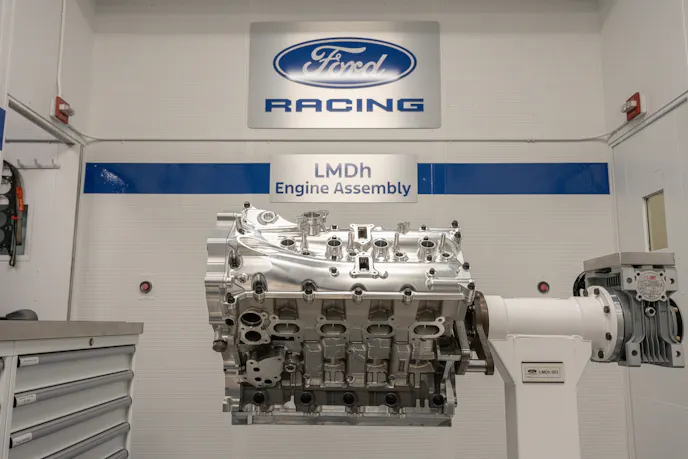
“The engine doesn’t know the difference, but your ear can tell when it is at wide open throttle and rockets past 9,000 rpm,” Hertrich added. “That’s what a world-class virtual proving ground buys you, and this engine work has been going on behind the scenes for months now. We don’t wait for the racetrack to start learning. We can’t afford to.”
With the first on-track testing approaching and Ford continuing development ahead of its return to the top class of the FIA World Endurance Championship in 2027, the virtual laps gave us a sneak peek at what this Coyote-based engine will sound like howling around the Le Mans course at 9,000 RPM next season, and we are here for it.
You might also like
Steeda Built A Sharper Special Service S650 For A Georgia Sheriff
Steeda built an S650 Mustang for Georgia’s Lowndes County Sheriff. The patrol car gained chassis, brake and airflow upgrades.