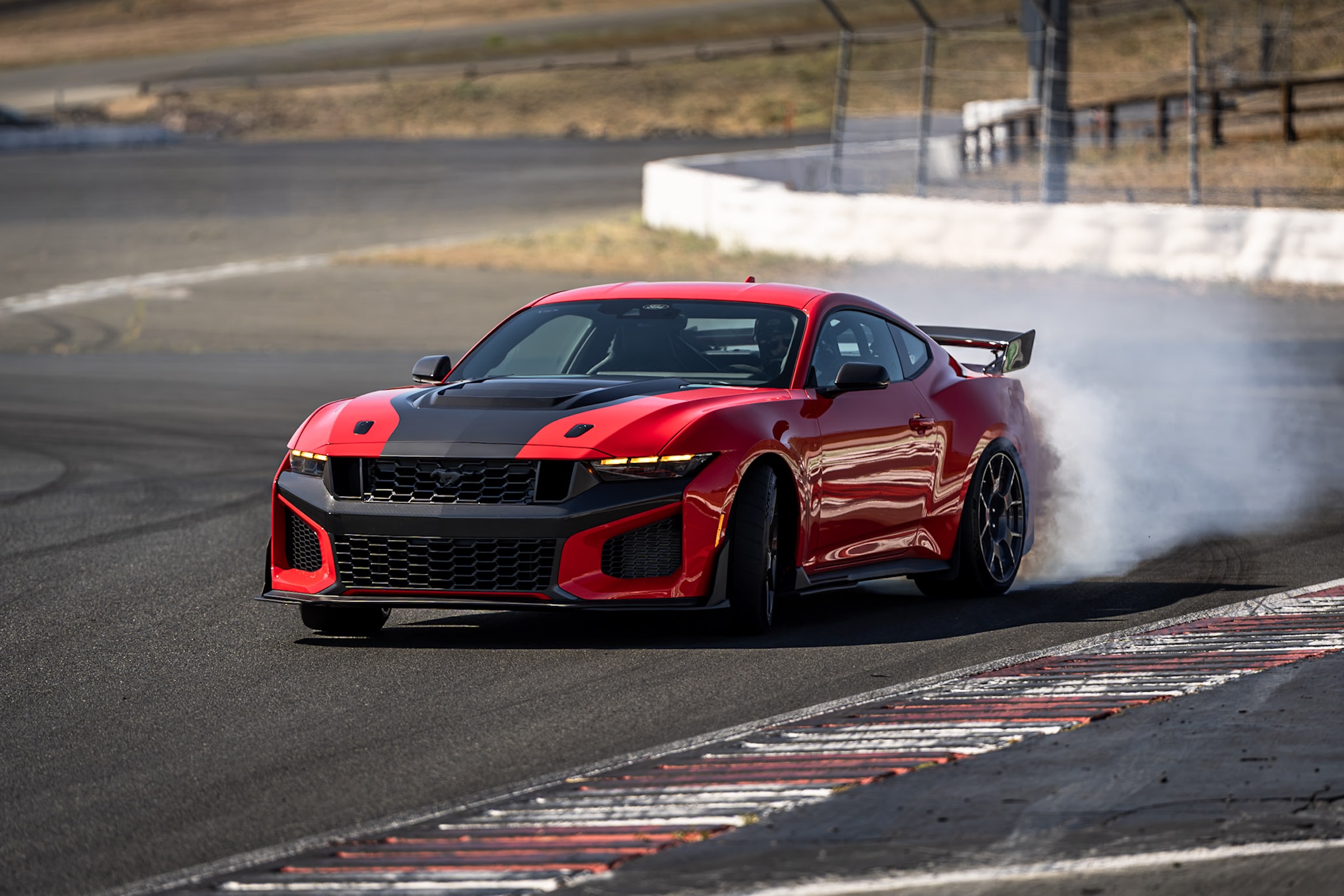
With the push of a button, the 795-horsepower Predator rumbles to life, announcing that this pony car is packing serious muscle. Soon after pulling away, it is clear that this car is something else. It might be easy to dismiss this as a GT500 2.0. Still, Ford Racing engineers combed through every facet of the mechanical and electronic systems to deliver more performance and balance in a car that can still be driven right off a dealer lot without an application process.
“What we wanted to do is really make it a vehicle that exemplified our standard mantra: flatter the novice, reward the expert. And to do that with a 795-horsepower supercharged 5.2-liter is a little bit tricky,” Carl Widmann, Ford Performance Chief Engineer, said of the 2026 Mustang Dark Horse SC. “You want to make sure every input and response is very linear and predictable, from braking, steering, ride, and roll, and then you want it to be faster than it’s ever been.”
Heading out toward Sonoma Raceway in Northern California behind the wheel of the Dark Horse SC, we stab the throttle at the sight of the first straight, empty road. The DCT downshifts, the boosted 5.2 revs, and as soon as it hits the midrange, the angels start to sing as you are pushed back in the seat. But given the venue, we have to cut the endorphin rush short and save it for the track. It is, however, readily apparent that the transmission calibration is sharper than the outgoing GT500, as engineers continued to hone the code to make better use of all that power.
“There are a few hardware changes, primarily to the cooling-line routing and new clutch materials. The rest is really calibration: improved shift smoothness, some shift scheduling changes, and some new strategies we learned from the GT3 program,” Calvin Trescott, Ford Racing Powertrain Engineer, said. “One example is if you’re on track and approaching redline RPM with high pedal input. Above 7,200 rpm, it will actually hold the gear to redline, even if you pull the paddle. Those are some of the things we learned from the race program, and then there’s a lot of refinement work focused on drivability to make the car drive nicer around town and on the road.”
“I think probably a lot of the transmission work. It’s all the details in the transmission, and I think everybody will notice the transmission, whether they’re doing drag strips, whether they’re driving on their favorite back road, or hard on the track,” Widmann added. “So I think it is so important in the power delivery. If I was going to say the one that exemplifies a whole bunch of little changes, it’d be the transmission at the end of the day. It’s a big assembly with a lot of little changes. But net-net, I think every time you get behind the wheel, you notice that.”
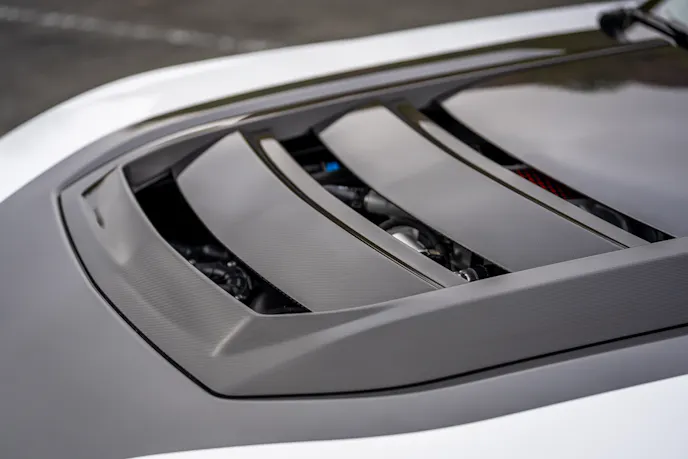
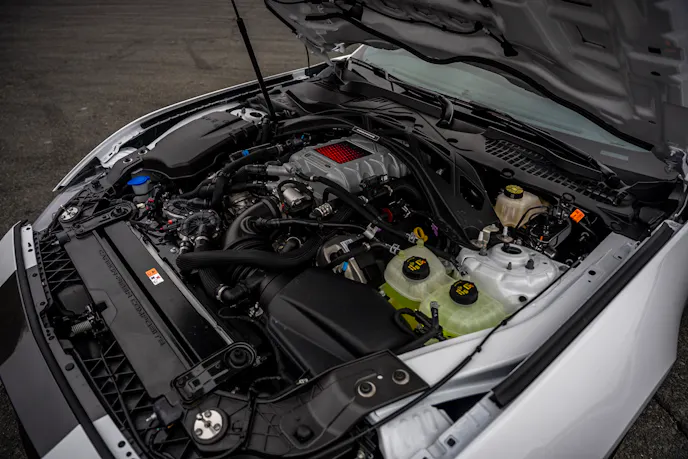
A Lot Of Upgrades
That litany of little changes exemplifies the creation of the most potent non-supercar Mustang yet, as Widman told us they changed “a lot of parts a little bit.” However, what is impressive about all those iterative efforts was how they come together in a cohesive package that allows anyone to strap into a supercharged Mustang and make the most of the experience.
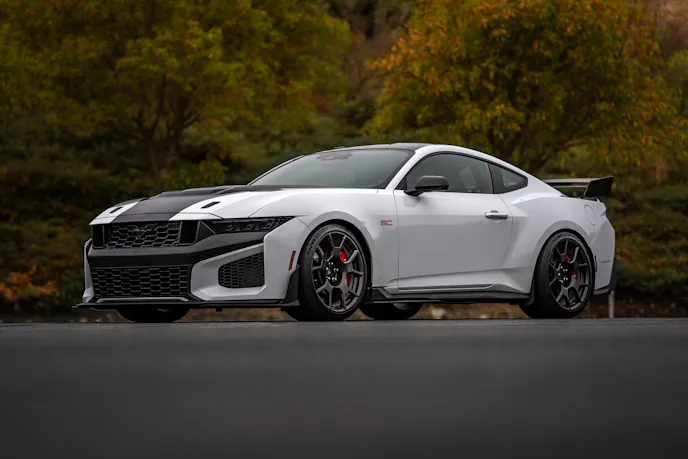
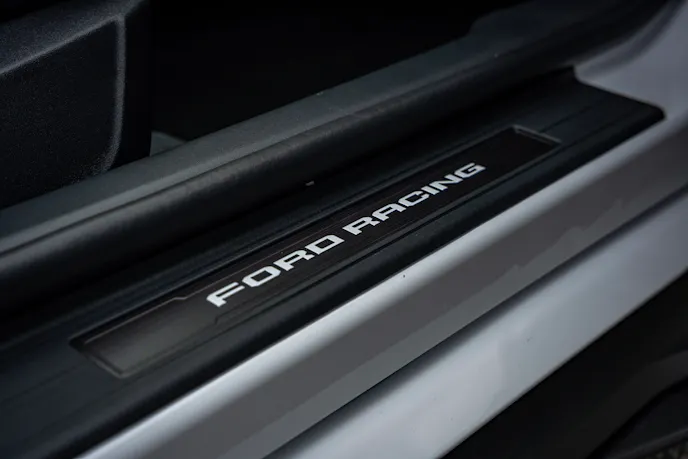
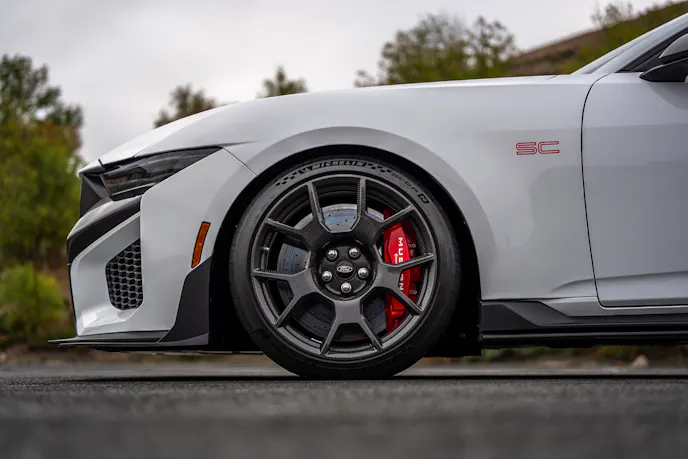
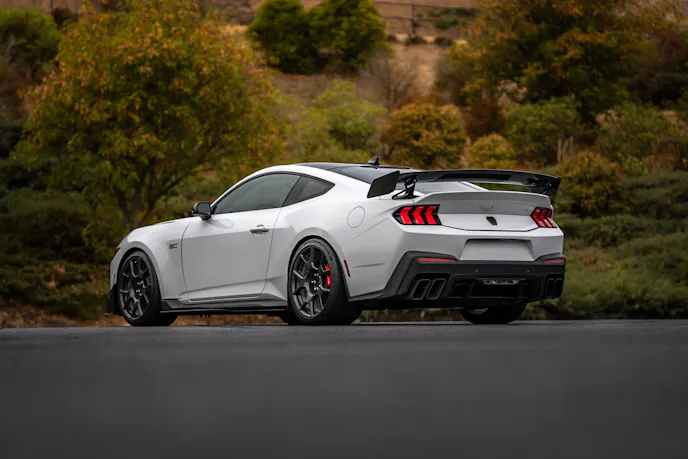
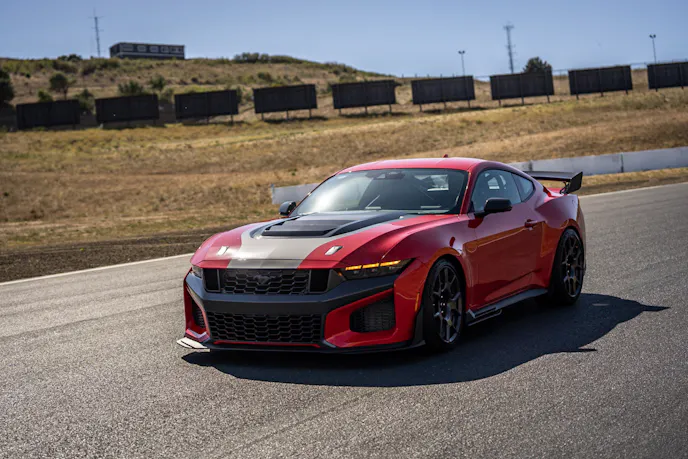
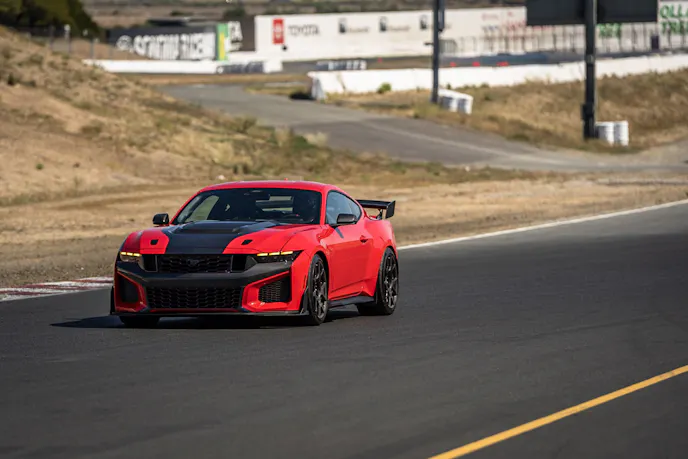
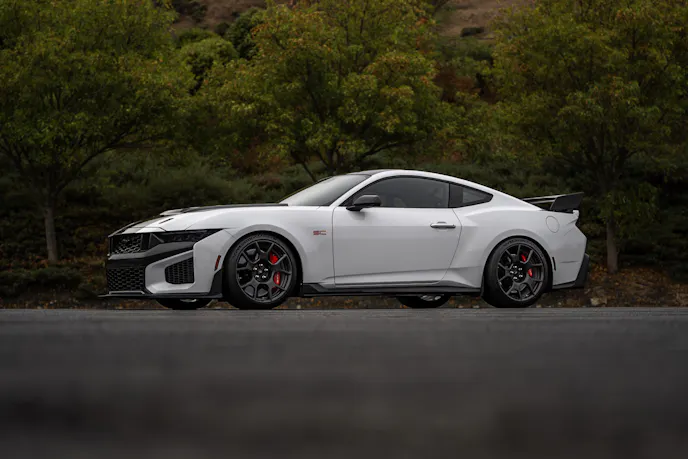
Your scribe teamed up with noted Mustang YouTuber StangMode on the drive out to the racetrack, and Ford set us out on a path through some dynamic and technical roads through northern California’s mountains and hills. The road turns were tight, but the pavement wasn’t perfect, so the path served as a real test for the configuration we selected, which was the top-spec Track Pack Special Edition, which adds painted graphics, Race Red Brembo brakes with carbon-ceramic rotors, the carbon-fiber package, red-striped seat belts, titanium paddle shifters, Solar Red Recaro seats, and more.
While some of that gear is for show, it is the functional Track Package gear that matters, particularly those carbon wheels and brakes. Mere minutes into our journey through the curves, my smirk grew into a Cheshire cat grin. While even the Track Package variant carries a substantial 4,110-pound heft to the party, the supercharged stallion glided through the turns and turned even a brisk trot into a corner-carving fun fest that entertained the driver without upsetting the passenger.
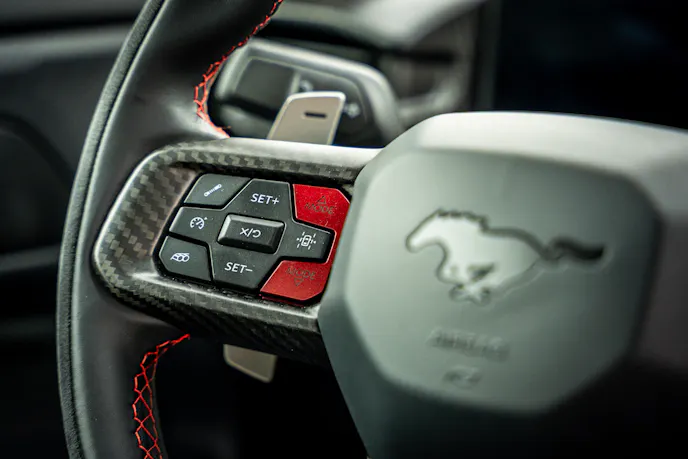
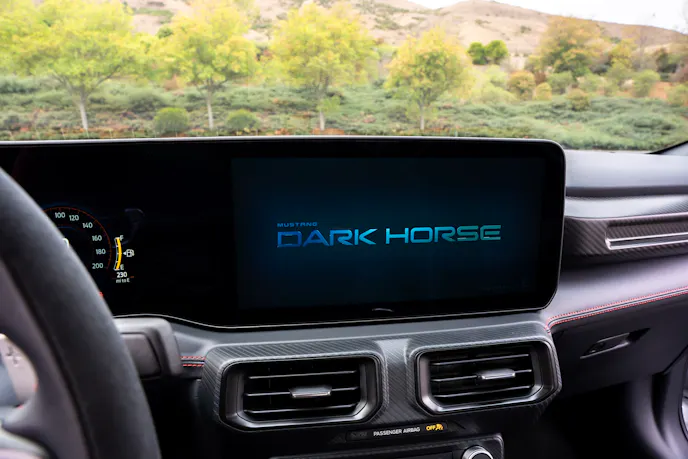
“We’ve got a brand-new steering gear, new controller logic, and new MagneRide logic,” Widmann said. “We really spent a lot of time uniquely setting up the Ford algorithms so we could pick apart on-road ride from what was happening in handling. That allowed us to get a wider breadth of capability for comfort, but also get more flatness out of the vehicle.”
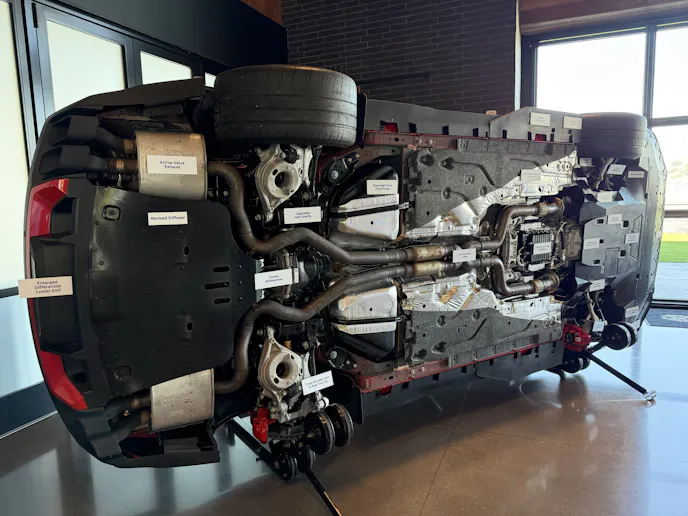
Of course, the tuning is only part of the picture, because many of those parts that engineers tweaked a little bit are underneath the car. After all, 795 horsepower isn’t much good if you can’t apply it to the pavement.
Sharper Handling
“When you kind of go through soup to nuts, I think the first thing we took a hard, hard look at was the suspension kinematics. We run a unique knuckle and link arms, and that sets us up to be an inch wider in track. Instead of doing simple things, we actually changed both of them to aluminum forgings,” Widmann said. “…That has to do with really getting the roll center down with the knuckle and then getting immediate response. The cross-axis is a ball joint, so in essence, you get response quickly.”
What really stood out as the car just glided through the tight corners and sped through the brief straight sections is that the ride quality was outstanding. Only in switching from Sport to Track modes were the imperfections noticeable.
“That’s really how you set up springs, the dampers, and the bars when you have the kinematic setup of the suspension, and really getting the algorithms so you can basically distinguish what’s going on between track and road. As you go more aggressive, you can clamp down on damping. MagneRide is super fast in response time, so you can take advantage of that,” Widmann said.
Enabling engineers to fully optimize that MagneRide magic, however, is the weight saved by the carbon ceramic brakes and carbon wheels.
“That gives you a lot less inertia for acceleration, a lot less inertial control vertically for ride. So you’ve got the capability then to tune the shock systems differently because of the inertia changes,” Widmann said. “You don’t have to really try to control 25 percent of inertia coming at you vertically, and then you’ve got a half-inch wider wheel and more brake capability to go with your tire. So you can go faster.”
Big Difference
Moving to the base, Dark Horse revealed that, while it might seem counterintuitive, the Track Package offers both better performance and better ride quality. The base car excelled on the smooth passages but communicated far more of the imperfections when they surfaced. Driving it required a lighter touch, and it would still feel a bit floaty as elevation shifted mid-turn. After spending the most time in the Track configuration, the delta between the two seemed the largest I have felt between a base car and a performance option yet, which is fitting given the $36,500 tariff it adds to the window sticker.
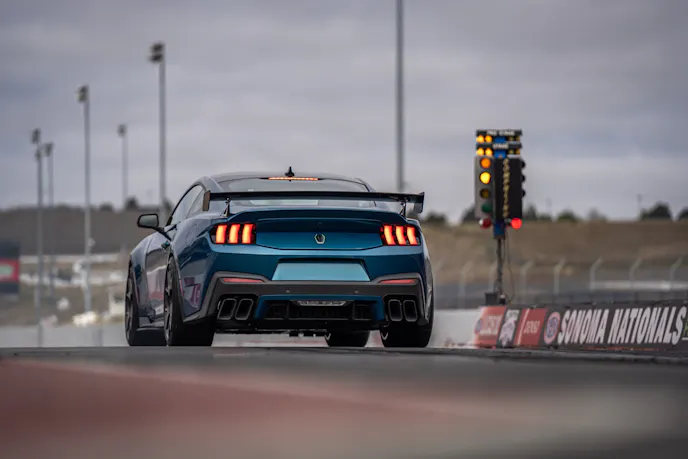
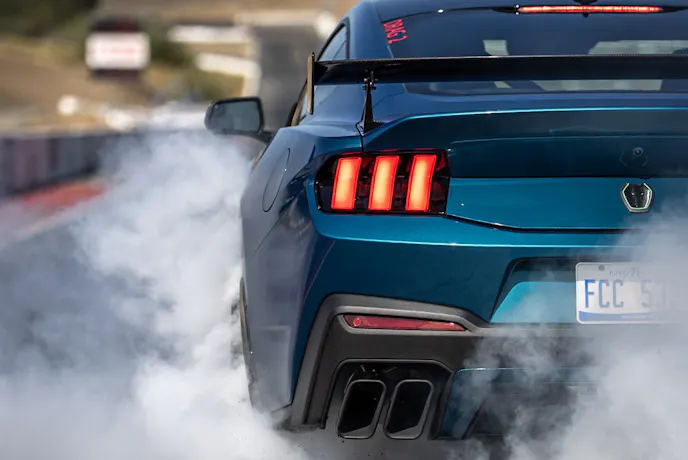
Upon arriving at Sonoma, we moved to a different set of Track Pack cars and headed to the drag strip. Using the familiar Launch Control and Line Lock Track Apps simplified the process of blasting this high-powered machine down the drag strip. In the few hot laps afforded to this author, the traction gods didn’t smile down enough to put the car into the 10-second zone, but several others on the property, including our street co-driver, StangMode, did crack into the 10s. Moreover, one rookie drag racer set the bar with a 10.7-second rip, which showed the efficacy of the onboard systems.
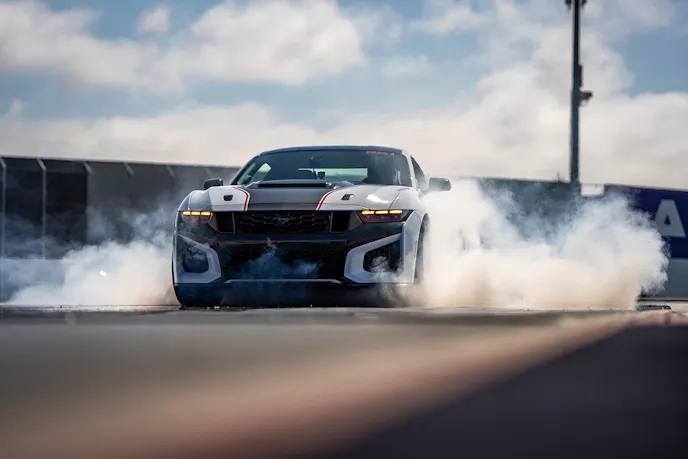
During development in more favorable conditions, Ford engineers piloted the Dark Horse SC to a 10.31 pass. In comparison, they brought out a well-worn GT500 test mule, which clicked off a 10.50, so it’s safe to say the latest supercharged stallion is a solid 10-second machine that is quicker than its predecessor.
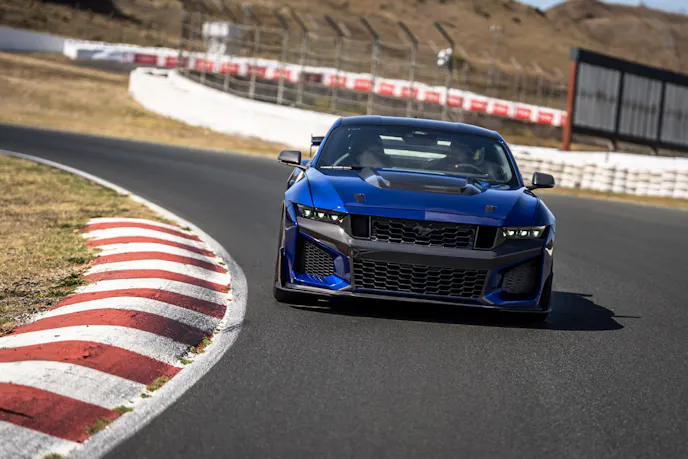
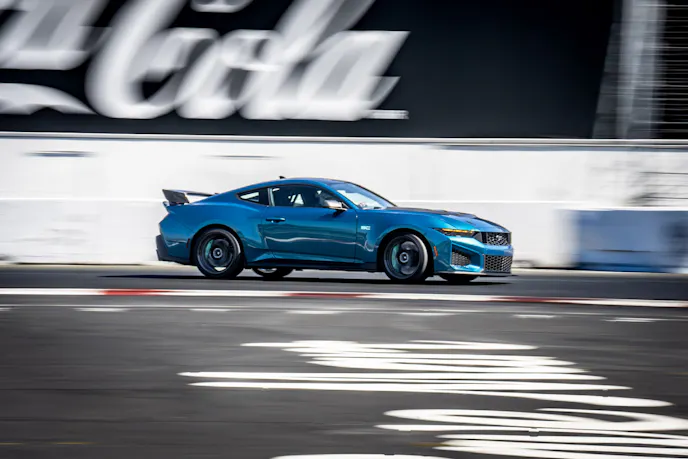
After rocketing right through the center of Sonoma Raceway like we were in a straight-line video game, it was time to buckle up and head out onto the road course. With a Ford engineer leading the way, we navigated the elevation changes and technical turns of the storied racetrack at speed while framed by the daunting prospect of concrete barriers.
Your scribe was never going to take a car this capable to the limit, but the same characteristics that immediately appeared on the tight street corners proved equally effective on the bigger racetrack at higher speeds. There was gobs of grip, piles of power, and beacoup braking capacity.
Gobs Of Grip
The traction afforded by the Track Pack option is bolstered by wider tires and summer tires that are nearly slicks.
“On the knuckle, we changed it to get more negative camber, and we also made it so we could put an 11.5-inch wheel on the Track Package. We had to do that because of the legal requirements. We can’t go outboard, so we’ve got to grow inboard,” Widmann said. “The 11.5-inch wheel really gave us a lot more capability with the tire on the Track Package to get contact patch, which contact patch is everything when you’re screaming at 120 miles an hour into a corner. You want to hit the brakes, you want to get that response and then accelerate out.”
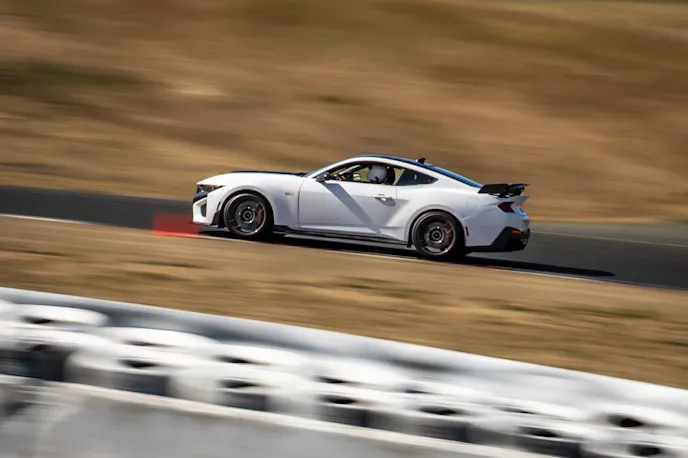
Over the course of a 15-minute session, your cautious author gained enough confidence to push a bit harder, and the car just kept delivering.
“We’ve done new rubber both for the Pirelli P Zero R on the standard vehicle and then the Michelin Cup 2s for the Track Package. That also gives us performance with the horsepower and the ability to get the roll centers down, more camber, and then more traction, more grip,” Widmann said. “That is, in essence, the chassis package that you see that will give you that capability, give you the response and the flatness that you’ll notice on-road and on-track when you drive the vehicle.”
Beacoup Brakes
With all that power and grip, the last thing you want as you hurtle toward the braking zone in Sonoma is a lack of braking, and these cars had that covered in spades. Fitted with massive 16.5-inch rotors in front and 14-inchers out back, the Dark Horse SC throws out the anchor with linear pedal feel, and though we weren’t going to approach the kind of velocity that might test their fade resistance, it would apparently be more than robust enough to endure a typical track session with aplomb.
“We basically co-developed between GTD and Dark Horse SC the carbon-ceramic package, so we could get more stopping power out of the front brake system. On the Dark Horse SC, because we’ve got more weight transfer, the front brake system is super critical to get track capability,” Widmann said. “It took a heck of a lot of weight off the front axle, along with the carbon-fiber wheel, which again helps ride because of less unsprung mass. It cuts out about 35 pounds off the front, about 25 percent.”
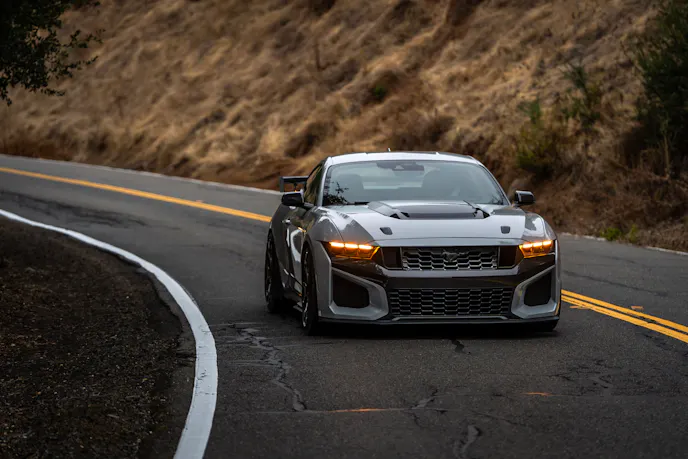
In all, your scribe came away impressed by the latest boosted Blue Oval machine. Where the standard Dark Horse is the pinnacle of naturally aspirated 5.0-liter performance, the supercharged version doesn’t quite reach the heights of its supercharged 5.2-liter cousin, the Mustang GTD. However, it does set a new standard for supercharged performance that you can buy at any dealership.
Of course, we are talking about a six-figure Mustang, which would have been difficult to imagine even a decade ago. The question is how deep you want to go into those six figures to get the performance you desire. For most Dark Horse SC buyers, the base car is plenty of pony car. However, even if you aren’t a road course regular, know that the optional Track Pack takes a potent machine and turns the performance up to 11 while actually improving its streetability in the process.
You might also like
Building A 10,000-RPM Coyote For A 7-Second NA Fox Mustang
Carlos Sobrino needed a naturally aspirated Coyote capable of 10,000 rpm. Elan Power Products engineered a 336ci build with a 7-second goal.