So far, Project Airstrike is on a successful path of building power with a ProCharger P-1X supercharger and a carefully curated cast of supporting upgrades. While those bolt-ons transformed it into a four-digit sleeper still rolling on the factory steelies, hooking up all that power will become a challenge. As such, we turned to Forgeline to create a set of beadlock wheels ready to lock in the tires when we drop the hammer at the drag strip.
That transformation has been anything but subtle under the skin. Our 2023 Ford F-150 XL started with a naturally aspirated Coyote 5.0-liter V8, a 10R80 10-speed automatic, and an unassuming set of factory steel wheels. The initial dyno session delivered 364.88 horsepower and 412.10 lb-ft of torque at the wheels, but the whole point of Project Airstrike was to see how far we could push this ordinary work truck with intercooled centrifugal boost.
The ProCharger P-1X established the foundation, and we continued opening up the combination with Stainless Works long-tube headers and test pipes, a smaller 4.25-inch blower pulley, Snow Performance fuel system, an SPE Motorsport intake, and a pair of carbon-fiber East Coast Driveshafts. The latest combination has now cracked four-digit territory, producing a whopping 1,018.19 horsepower and 722.12 lb-ft of torque at the wheels.
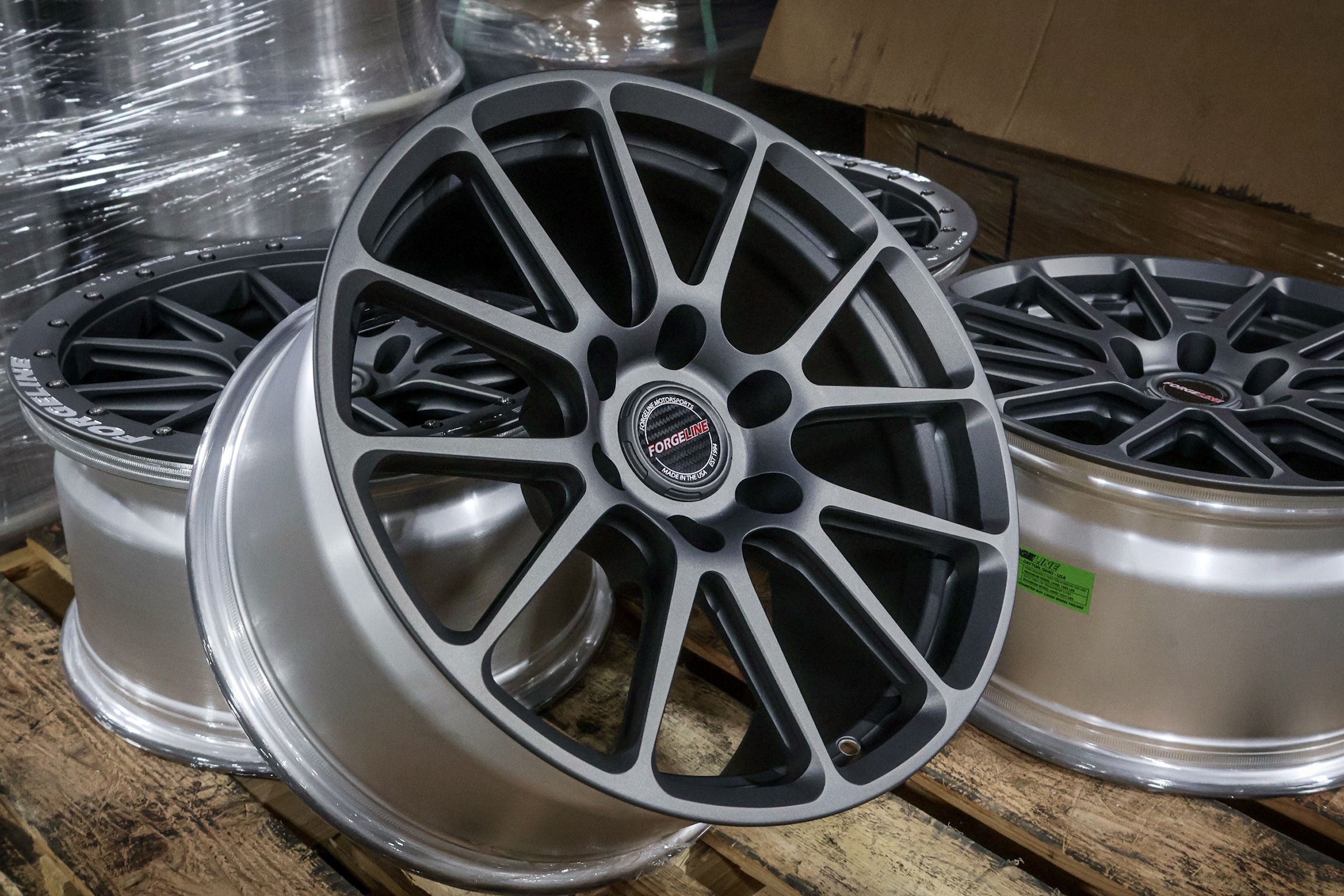
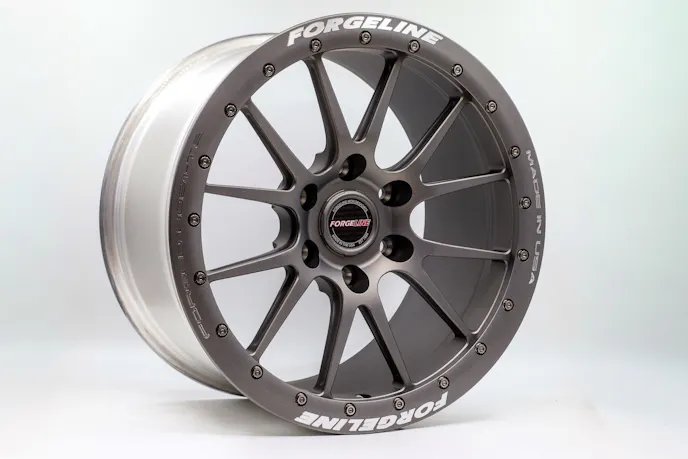
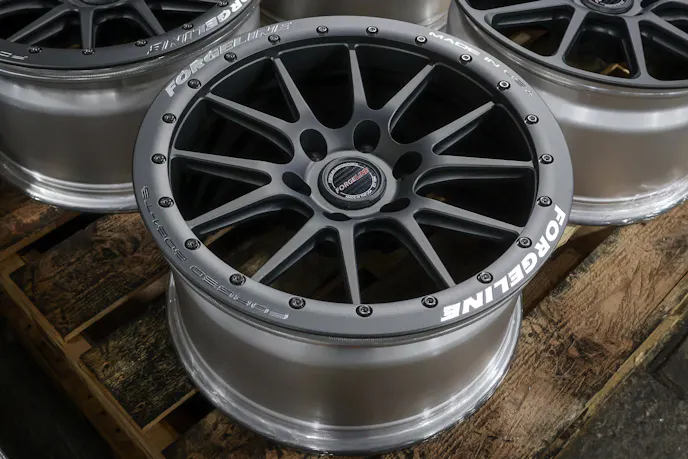
It’s time for the wheels and tires to catch up. To that end, we turned to Forgeline for a set of 17×10-inch GS1R-6 Beadlock one-piece forged monoblock wheels. Derived from the company’s track-proven GS1R-6 road-racing wheel, the beadlock version was specifically re-engineered for straight-line racing. It combines a forged 6061-T6 aluminum monoblock wheel with an integrated beadlock flange and a forged aluminum ring engineered to mechanically secure the tire bead.
Built For Speed
Since we are just getting warmed up and have more than 1,000 horsepower in forward motion. A beadlock doesn’t create grip, but it gives the tire a more secure mechanical relationship with the wheel when the combination is subjected to the violent loads of a hard launch. Instead of relying entirely on the tire bead’s friction against the wheel, the beadlock ring clamps the outer bead in place to help limit tire slip and prevent the tire from debeading at speed. And speed is something Forgeline knows well.
“There are many factors that make Forgeline unique. For starters, we are a low-volume, custom-made-to-order wheel manufacturer. So while most wheel manufacturers are about mass-producing a high volume of one-size-fits-all wheels for specific well-defined applications, Forgeline is among a small number of manufacturers who build wheels in custom fitments and custom finishes on a per-order basis,” Schardt said. “This allows the customer to create a truly unique wheel to match a truly unique vehicle application. This uniqueness could be defined by the design, the fitment, the finish, or all of the above. But it always means that the customer can get a truly bespoke wheel solution.”
That philosophy makes sense for Airstrike because this truck isn’t really doing typical truck things. The 17×10-inch GS1R-6 Beadlock needs to fit the F-150’s six-lug architecture, provide the clearance required by the truck’s brake package, and give us the right platform for a serious drag tire. Forgeline’s made-to-order process means those considerations were addressed during the wheel’s creation rather than after the fact.
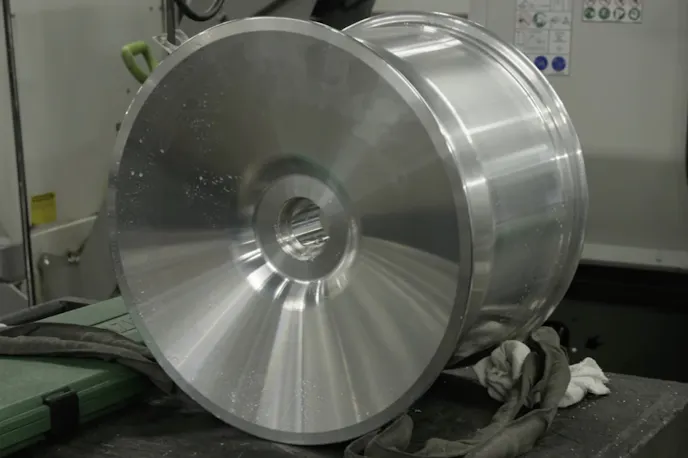
“…Unlike a mass-produced wheel that must depend upon manufacturing efficiency and thus generally utilizes an aluminum casting process, Forgeline’s custom made-to-order business model requires a smaller-scale approach,” Schardt explained. “This approach means that we precision-machine each wheel from aluminum forgings rather than casting them from molds. And the benefit of being precision-machined from a forging is not only the ability to accommodate small-volume custom wheel orders, but the product itself becomes stronger, lighter, and of a higher manufacturing quality with much tighter tolerances.”
Forged Strength
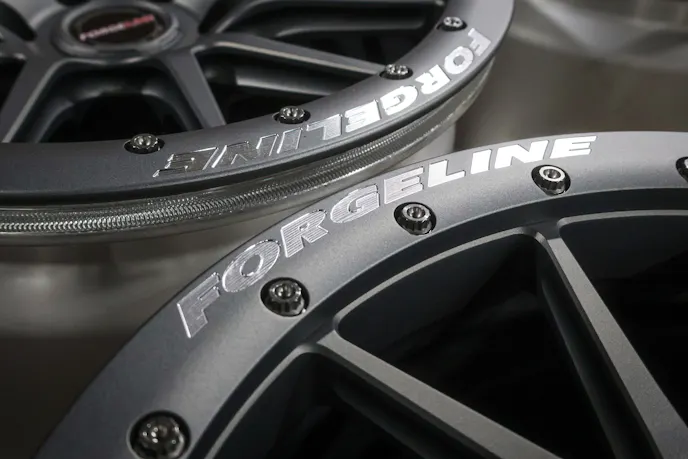
The GS1R-6 Beadlock is machined from a single forging of 6061-T6 aluminum, creating a one-piece monoblock wheel rather than a wheel assembled from multiple major components. More importantly, the beadlock flange is machined directly into the wheel face rather than being welded onto a conventional wheel. That eliminates the added structure of a separate welded flange while allowing Forgeline to maintain tighter control over the finished geometry.
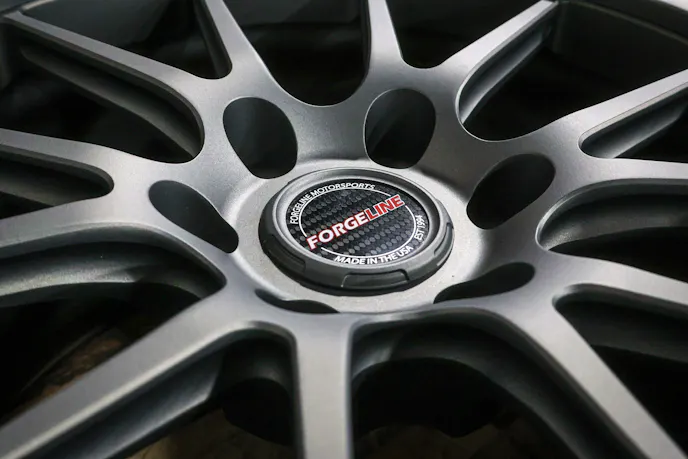
The design also incorporates Forgeline’s I-Beamed spoke technology and a concave profile, while maintaining generous brake clearance. Those details give the GS1R-6 its distinctive look, but the underlying design philosophy comes from motorsports rather than styling. Forgeline spent decades developing wheels around the requirements of serious racing applications.
“Even among the small number of custom-forged wheel manufacturers, Forgeline is still extremely unique, because throughout our 32 years, we have developed a unique expertise around top-level motorsport applications and the design and engineering requirements that define those top-level motorsport applications,” Schardt added. “Very few (if any) other manufacturers share our ability to engineer weight-optimized wheel solutions that are capable of meeting the strength and deflection stiffness requirements of modern top-level racing applications.”
That pedigree might seem like an odd fit for an F-150, but it becomes much more logical when you follow the GS1R-6’s development. The original five-lug GS1R was developed with professional GT road-racing teams. The six-lug GS1R-6 followed for Dodge Viper applications, and eventually the increasing popularity of 1,000-plus-horsepower twin-turbo Vipers running in high-speed drag-racing environments created the demand for a beadlock version.
Highly Evolved
“This evolution actually started with the five-lug GS1R wheel, which was engineered from the start as a wheel solution developed alongside professional GT racing teams for professional road racing applications,” Schardt said. “Market demand later led us to develop a six-spoke/six-lug version of the GS1R (originally for Dodge Viper applications), which became the GS1R-6. Then, as the Dodge Viper became a popular platform for 1,000-plus-horsepower twin-turbocharged airstrip racing applications, we were asked to create a single-beadlock version to ensure tire safety at speeds approaching 200 mph.”
We didn’t start with a purpose-built race truck, but the project has steadily moved into territory where the supporting hardware needs to be engineered with the same attention to detail as the power-producing parts. The beadlock is one of those pieces that becomes increasingly important as the truck’s output climbs because the tire is ultimately where all that power meets the pavement.
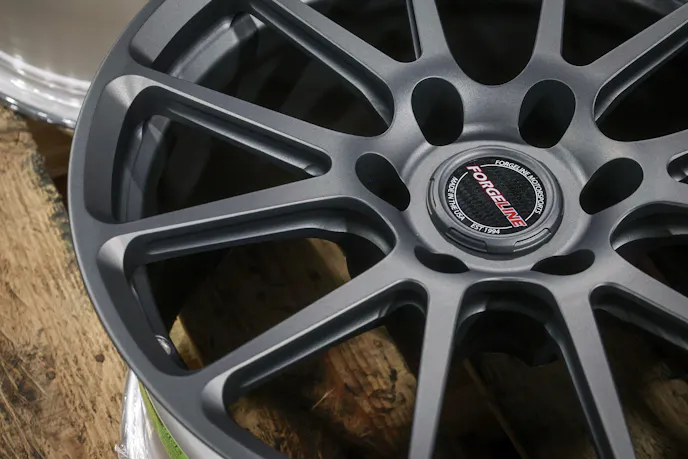
“Essentially, the GS1R-6 Beadlock replaces the outer tire bead seat with a flange that is machined into the outside face of the wheel to which a beadlock ring can be mechanically fastened to pinch the tire bead in place, preventing ‘debeading’ at high speeds (where a tire can potentially deform and remove itself from the wheel),” Schardt explained. “The beadlock ring uses mechanical tension to hold the tire onto the wheel, making it significantly less likely that the tire can deform and remove itself at high speeds.”
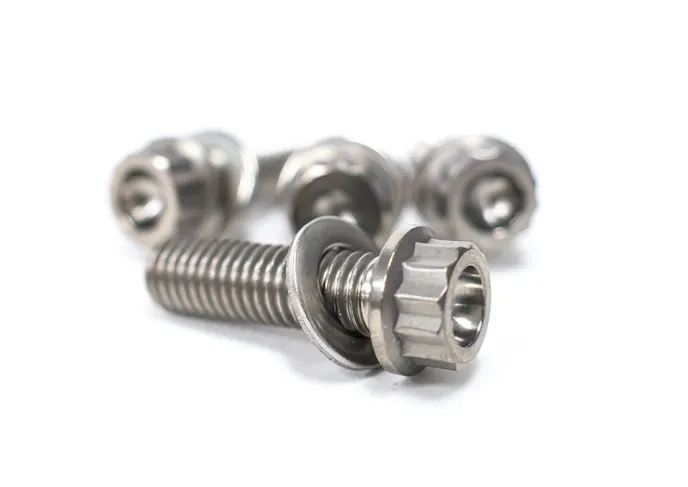
The ring is secured with 21 standard ARP titanium bolts, giving the assembly the mechanical clamping force needed to keep the tire bead where it belongs. That’s the real value of the design. We’re not bolting beadlocks to the truck because they look like race-car hardware. We’re doing it because the next phase of Airstrike is about finding out how effectively the truck can use the power on tap now, and as it grows in the future.
One Piece
The one-piece design also addresses another concern that becomes important once a beadlock-equipped vehicle spends time on the street: stiffness and lateral loading.
“By machining the beadlock flange directly into the wheel face, we save a significant amount of weight compared to a wheel onto which a beadlock flange has been welded into place. By machining the beadlock flange directly into the wheel face, we achieve much tighter manufacturing tolerances compared to a wheel onto which a beadlock flange has been welded into place,” Schardt explained. “And, because the forged monoblock wheel construction is inherently strong and stiff, these strength and stiffness benefits carry over into the beadlock applications as well.”
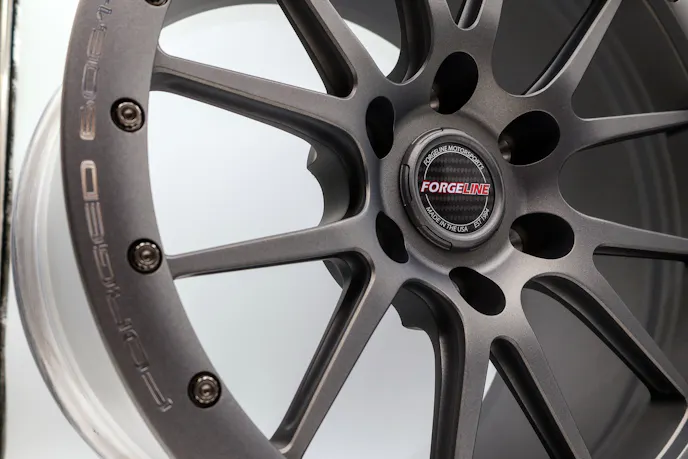
Because Project Airstrike is still a street-driven truck. It doesn’t spend its life strapped to a trailer between track sessions. It has to turn, and that means the tire sidewall, beadlock ring, and fasteners see loads that don’t exist during a straight-line blast down the drag strip.
“As a general rule, turning left and right puts enormous force loads through the side of the tire and into the beadlock ring and the related attachment hardware. A common complaint directed at other beadlock wheel manufacturers is the tendency for their beadlock assemblies to fail when subjected to these lateral loads,” Schardt said. “We were well aware of these concerns when we developed and engineered our beadlock applications. And these concerns strongly influenced our solid beadlock ring design and our fastener choices.”
Street Ready
That doesn’t turn a beadlock into a conventional street wheel. The company designed the assembly to tolerate the lateral loads that can occur when a beadlock-equipped vehicle is driven on the street, but its intended purpose remains high-performance racing.
“We still think it is probably a bad idea to regularly drive a beadlock wheel on the street,” Schardt added. “But knowing that it would happen anyway, we believe that we have sufficiently engineered our beadlock assemblies to tolerate these loads under most conditions.”
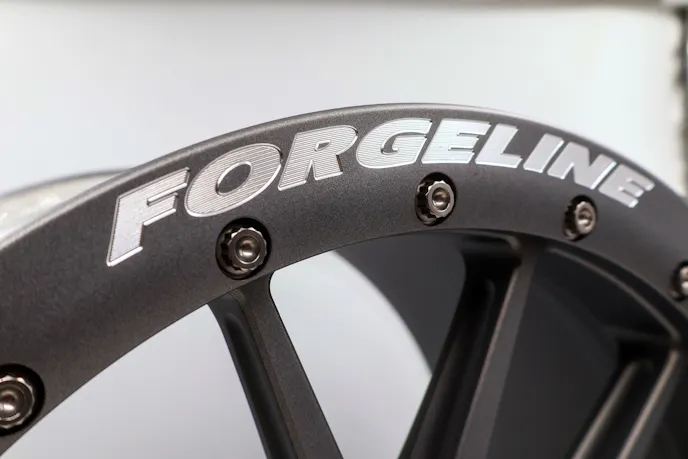
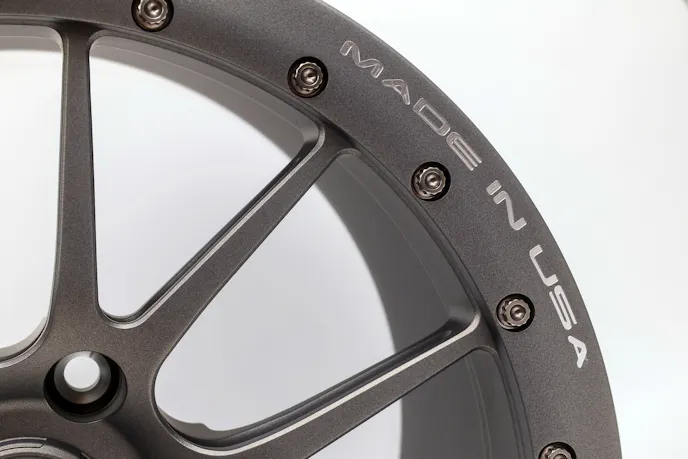
The truck is street-driven, but the reason these wheels are here is the track. As we continue developing the combination, the wheels and tires become just as important to the overall performance equation as the supercharger, intake, and exhaust upgrades. Making power is one thing, but transferring it without overwhelming the tires turns that power into quarter-mile performance.
Of course, it doesn’t hurt that these wheels will look absolutely sick on the truck. It won’t look like a basic F-150 XL anymore. Now it will live up to the four-digit horsepower numbers under the hood. Schardt was quick to call out the visual appeal of his company’s custom wheels.
Race Prepped
“We can pretend that you are considering the engineering and manufacturing quality when making your wheel selection for Project Airstrike, but we all know that the real reason that you want them is because they look cool…” Schardt said. “We get it.”
The GS1R-6 Beadlocks bring plenty of attitude to the F-150, but the important part is that the aggressive appearance is backed by legitimate motorsports engineering. The forged construction, integrated beadlock flange, I-beam spokes, and 21-bolt ring aren’t purely decoration. They are both functional and beautiful, but the application is still somewhat unusual for Forgeline.
“There are a handful of modern pickup truck applications using our forged beadlock wheels, but most of our forged beadlock wheels are being utilized on twin-turbocharged exotics, particularly Lamborghinis, Audi R8s, Porsche 911s, and Dodge Vipers,” Schardt added. “Project Airstrike will be somewhat unique.”
That’s just the way we like it. The same wheel technology developed for serious road-racing and high-powered exotic applications is now sitting under an F-150 that might just give those rides a run for their money in a straight line. Follow along with Project Airstrike as we put these Forgeline GS1R-6 Beadlocks to work and continue transforming our former humble work truck into an all-out performance machine.
You might also like
Ford Launches Podcast Celebrating 125 Years Of Ford Racing
Ford Racing celebrates 125 years with the “You Better Win” podcast. Eight episodes explore the people and races behind its legacy.