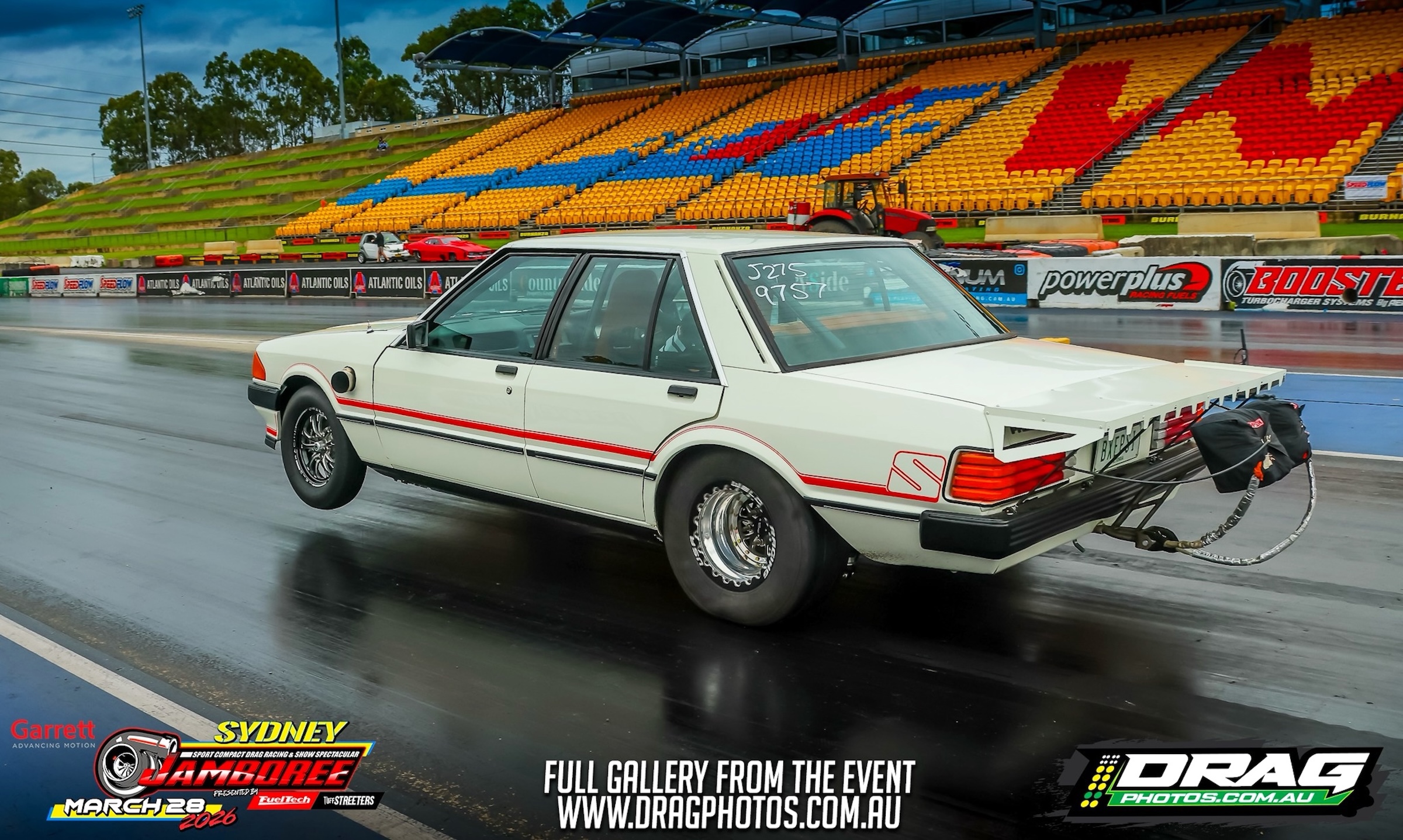
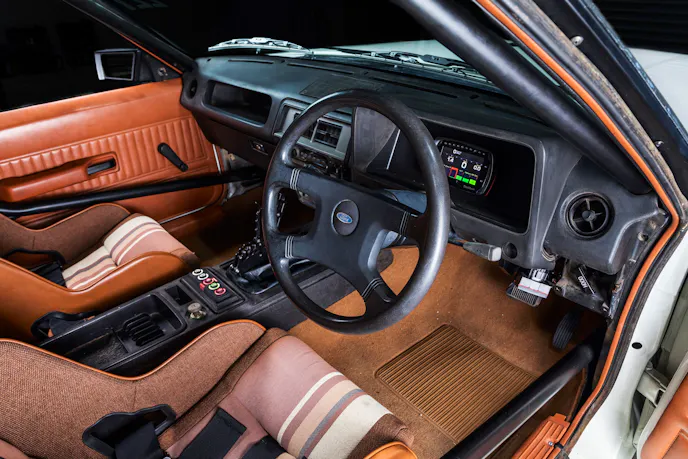
When you hear 6-second pass, you are likely to imagine a radical race car that is lightened and powered by an engine made of custom, unobtainium hardware. When it comes to the car that just pushed the Godzilla 7.3-liter envelope to its quickest and fastest level yet, that isn’t the case at all. Danny Howe’s 1982 Ford XE Falcon clocks in at 3,615 pounds and is powered by a Godzilla engine that maintains the stock dimensions and cooling system.
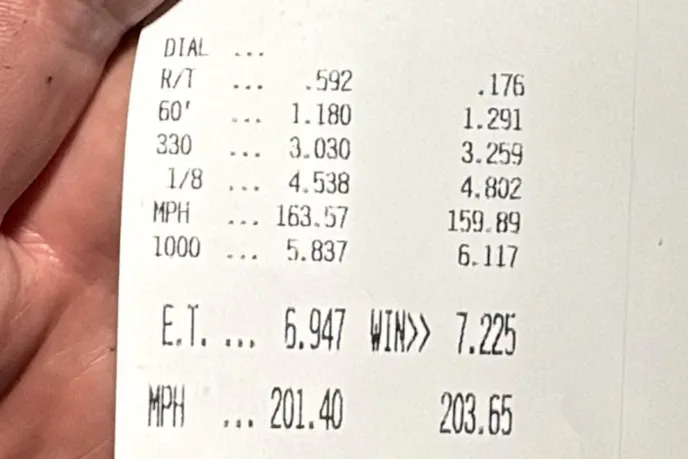
Over the weekend at the Sydney Jamboree at Sydney Dragway in Eastern Creek, New South Wales, Australia, Howe piloted his classic Falcon to the quickest and fastest Godzilla pass yet. He just edged out the previous elapsed-time record but pushed the top speed mark significantly higher with a drama-free 6.947-second rip at 201.40 MPH.
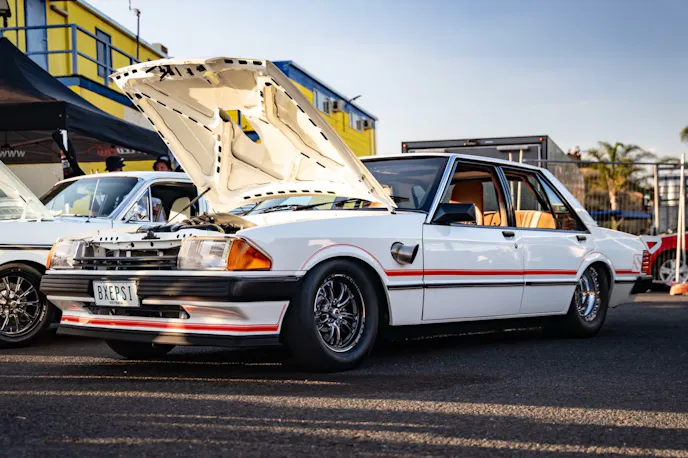
While that is a significant milestone, the project had far more humble beginnings before the proverbial performance snowball started racing downhill. Before long, a simple street car became a single-digit racer built by Howe with fabrication work by Ryan O’Donohue from Riot Lab, but it still retains some of that streetable personality in its final form.
“Initially, we just wanted to build a tough, naturally aspirated small-block Ford cruiser,” Howe confessed. “Then, talking with Ryan from Riot Lab, who handled all the fabrication, we shifted direction to a Godzilla V8 and went supercharged. Ryan pushed the idea further, saying I already had enough blown cars and should build something different, so we went all-in on a twin-turbo, 6-second-capable street car.”
Factory Foundation
The Godzilla 7.3-liter engine is based on a Ford Performance bare block and built by Dandy Engines in Melbourne, Australia, a shop that has performed extensive research and development on Ford’s latest pushrod engine platform. It retains the stock bore, stock stroke, and still makes use of its factory cooling passages, rather than being fortified by block filler.
“One of the biggest factors for sticking with such a factory-based setup was that, in the beginning, there was little to no aftermarket support. So you didn’t have a choice in what was put inside, you just had to make what you had work,” Nathaniel Ardern, Tech Support Analyst at FuelTech, said. “So we pushed on what we had, and found our limitations based on that.”
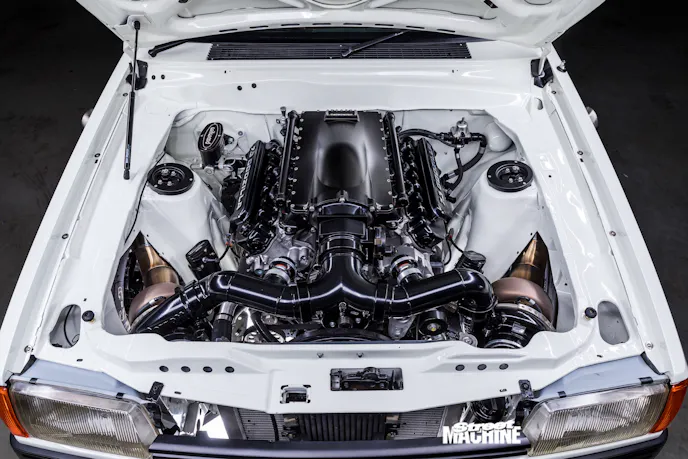
As a result of that R&D, the block is filled by a carefully curated combination of robust upgrades, including Carrillo custom alloy rods, Traum pistons, and a custom Todd Warren hydraulic-roller camshaft. That short-block is topped by hand-ported factory cylinder heads still fitted with stock valves and locks, but enhanced by 10K Technology 560 springs, Johnson short-travel lifters, and CME dual-roller timing chain kit. A Peterson R4 oil pump and a ProFab Motorsport Fabrications oil pan supplanted the cumbersome factory oiling system.
“No one has really pushed this engine as far as we have while keeping it this close to factory. There are others doing similar things, but not many sticking with the OEM foundation like this,” Howe explained. “It’s still a water-filled Ford Performance block, OEM crank, OEM rockers, and a hydraulic cam. It’s a very basic build. It proves that Ford’s last production V8 can handle serious power, and that you can put it in a 3,600-plus-pound street car and run 200 mph and 6-second passes.”
Monster Performance
Even with all the stock-based components, this hydraulic-roller Godzilla spins to 8,200 rpm out the back door under the tutelage of a complete FuelTech FT600 engine management system supported by a complementary FTSpark ignition module and FuelTech 720-pound fuel injectors. This arrangement also actuates the Turbosmart eGates that help a pair of Garrett G42 turbos deliver as much as 40 pounds of boost that pushes this monster engine to nearly 2,000 horsepower.
“It’s no different from anything else,” Howe said of the approach to calibrating the combo. “Start conservative and work your way up to what the combo wants. There’s a lot of talk online saying these engines can’t handle more than 25 psi, but we’ve confidently run 40 psi multiple times and gone 6 seconds without seeing any real limitation.”
“I have been involved in many different Godzilla setups, from N/A setups making 700-plus-horsepower and pump-gasoline supercharged combinations with just a camshaft change making 1,000-plus horsepower to my own 1, 500-plus-horsepower supercharged combination and Danny’s 2000-horsepower combination. So I would say being involved with many different setups, we have learned a bunch along the way on what can help to keep the engine alive but still definitely kicking,” Ardern, who is an integral part of the project, added. “One thing that gives me confidence with what we have done with these combinations is the control I have with FuelTech electronics, including engine control, power management, and data collection. If we didn’t have these powerful tools, none of it would be possible.”
It wasn’t all smooth sailing, however, as there were some growing pains along the way to creating the 6-second magic.
Fully Developed
“I originally had a similar setup with steel rods, but we pushed it too far and broke one at 170 mph,” Howe said. “After that, we switched to alloy rods and focused on getting the combo to make proper power reliably.”
That power is funneled through a ProTrans TH400 automatic transmission to a Riot Lab-fabricated rearend fitted with a 3.40 gear to Mickey Thompson 275 radials charged with supplying the hook. As evidenced by the passes at Sydney Jamboree seen in the videos, the combination is optimized, but that doesn’t mean this monster is ready to rest on its laurels.
“It’s hard to say exactly, but there’s definitely more in it. We’re not done yet,” Howe said. “We’ll keep pushing for a lower ET and more MPH. Earlier in the event, we saw over 45mph out the back, but on the 6.94 at 200 pass, it only showed 38 mph, so there’s clearly more left if we can bring it all together with more boost earlier and carry it through.”
As Howe keeps pushing the combination, we might eventually get to see this dual-purposed, Godzilla-powered Falcon stateside, but for now, he’ll keep competing Down Under, and it will be interesting to see how much quicker and faster this combination can run.
“We’ll keep running a few more race meets this year, then aim for Drag Challenge toward the end of the year,” Howe added. “Longer term, the goal is to get the car over to the US for something like Sick Week or Drag Week. If the right sponsors come on board, we’ll make that happen. Anyone keen to be part of it, reach out.”
You might also like
Building A Solid Fox Foundation To Take On Exotic Performance Machines
A 1990 Mustang LX gets a serious chassis makeover for Fox v Ferrari. LP Racing preps the Fox for Coyote power and an 8HP swap.